Archives for category: 80s

Released: August, 1980
Lineup: Sioux, Steve Severin (bass), John McGeoch (guitar), Budgie (drums)

Tracklist:
Side 1:
Happy House
Tenant
Trophy
Hybrid
Clockface
Lunar Camel

Side 2:
Christine
Desert Kisses
Red Light
Paradise Place
Skin

Recorded in 1980 with Nigel Gray, who produced the first two Police albums, and would shortly go on to produce the third, Kaleidoscope is a nearly perfect pop album. It’s more interesting and more diverse, and has a more mature sound than that heard on the first two albums. The two singles from the album, side openers Happy House and Christine were released in March and May. Musically the sound is tight and clean with a greater focus on dynamics than on grabbing the listener by the collar. And it doesn’t sound like anything else from the period, either.

A lot of this is down to the skills of guitarist John McGeoch. There are some musicians who might point to four albums over the course of an entire career and say, ‘Yeah, those were real high points. I got what I was after.’ McGeoch recorded four such in 1980. He left Magazine after recording their third, The Correct Use of Soap; He also provided most of the guitar on Generation X’s Kiss Me Deadly, and Visage’s debut (alongside Magazine colleague Dave Formula and Midge Ure and Billy Currie who would go on to form Ultravox) before Kaleidoscope.

New drummer Budgie, who had taken over for Kenny Morris for the Join Hands tour, stayed with the Banshees until they broke up in 1996. Previously he’d played with Liverpool bands the Spitfire Boys (with Paul Rutherford, later of Frankie Goes to Hollywood, and Pete Wylie, later of the Mighty Wah), Big In Japan (with Bill Drummond, later of The KLF, Holly Johnson, later of Frankie Goes To Hollywood, and Ian Broudie of The Lightning Seeds), and played on the Slits’ debut album Cut (including the single Typical Girls).

I bring all this history in to suggest that the new additions to the lineup (who would also record the next two albums, before changing guitarists twice more) brought a certain experience and firepower, and the results show.

Side 1 is smoother listening than side 2, and there seems to have been a real effort at a thematic organization with the music speaking directly to the lyrical content.

Some songs, such as Lunar Camel and Red Light retain the synth/drum machine arrangements of the original demos and seem too sparse. I think this adds to the variety of the album’s color (as hinted in the title).

Happy House, which always felt to me like a report from inside an asylum, describes the differences between the public personas of nuclear family members and the insanity behind closed doors. This might still be a report from inside the asylum.

Tenant is a thematically logical extension of Happy House wherein the subject is trapped inside. ‘we crawl into corners — ignore any callers… Still they cling to the walls and knock on our doors… But they have eyes at the keyholes and ears at the walls.
The madness inherent in the nuclear family envelopes any who find no means of escape.

Trophy is about those mementos of a successful youth which we hang, but no longer live up to.

Hybrid is my favourite track on side one. While musically more complex than most of the songs on the album (the exception being Paradise Place, my favourite track on side 2 and for the same reason), it’s lyrically really obscure in a way the other songs aren’t. I like the tone poetry of it. The more I read the words, the more it seems to reflect a relationship between two people who were friends but aren’t anymore due to those things that break people up, but are hard to explain…

When you walked through the door / Marked “enter if you dare”
Reasoned with a friend marked “do not bend” / Bit on that finger marked “handle with care”

It’s more emotionally complex than I expected, even though I’ve been listening to this album for a long time.

The wordless Clockface and Lunar Camel, which seems to be about just what the title says, but I’m not sure. round out side one.

https://youtu.be/uktcCvhRGXA

The single Christine, about a woman with (what was then called) multiple personality disorder, opens side two. Danceable and strange, it flows into the rest of the album, but is somewhat apart from it thematically. Desert Kisses has this gorgeous layered feel, in which the guitar effects and bass provide an almost psychedelic backdrop for Sioux’s lyrics of (possibly) ship wreck and sun stroked hallucination. Red Light pulls us back into the present and the modern with the vocals played only against synths, drum machines, and samples of a camera taking photos. This is appropriate to lyrics about a pornographic photo shoot. There’s a certain psychedelia to Paradise Place as well as we hear disjointed lyrics describing, a plastic surgeon’s practice (You can hide your genetics under drastic cosmetics). The original LP closed with the double-time percussion of Skin, which describes wearing fur and leather with a certain ambivalence (cover me with skin / accuse me of sin). It’s an odd closer, but fits nicely, especially with the two songs that precede it.

Next up: Juju

(ETA: My friend Kevin added the following: ‘I am somewhat surprised you limited this to those affected by his ignoring AIDS. His policies in Central America, both under Reagan and on his own, went far further than was revealed in Iran Contra and resulted in untold deaths, mass impoverishment, and the overthrow of legitimate governments by USA backed and armed narco cartels who persist to this day.  Lastly we can point out that Bush and William Casey were responsible for the perpetuation of the Iranian hostage crisis, which cost Carter the election.’ These things are absolutely true, and any one of them could have earned another 500 words. The AIDS crisis struck closest to home at the time and is much in my thoughts these days for other reasons.)

I’ve been thinking about the death of George Herbert Walker Bush and why I won’t ‘dignify’ his memory by keeping silent. By 1988, HIV had been identified as the source of AIDS and AIDS had been named for three and five years respectively. Bush had remained silent the entire time, as had his predecessor, Ronald Reagan. (Reagan’s silence, even as friends of his such as Rock Hudson died, was despicable enough.) When ACT-UP and other gay groups protested in forms of extreme street theatre and were arrested for it, they were working in the same realm as the Freedom Riders two decades before, and playing for similar stakes. The people who risked and suffered violence and arrest at the hands of police forces coast to coast in many cases could have lived relatively quiet closeted lives, but as soon as they put themselves on the line for queer causes, they risked being disowned by their families (as the price of coming out had always included), firing, often their entire livelihoods. (This is why Harvey Milk pushed for all gays and lesbians to come out – to make it impossible to ignore that we were everywhere.)

s-e-dThis was a fair risk because their friends were dying. (I would so love to be able to say that I took the risks, but I lived safely then and rarely demonstrated, and generally only when it was safe. I won’t rewrite my own history.) Friends and lovers were dying horrible, lonely, painful deaths. Let’s not forget that the opportunistic infections associated with AIDS were slow and had few treatments. And there was no cure on the horizon.
As the leader of the free world, Bush had the responsibility and the duty to speak out, But, I hear you say, it wasn’t politically expedient to do so.

No, butt the crimes and death that result from political expedience are unforgivable. Instead of standing up and saying These are our brothers, sisters, sons, and daughters, he declared a whole segment of the population ‘Other’, a nuisance, and therefore disposable. That nuisance continued to die on his watch at an alarming rate. When he took office over 82,000 cases of AIDS had been reported in the US and almost 62,000 had died of it. When he left office in 1993, those numbers had increased threefold in the US alone. In his time in office, and in the succeeding quarter century, Bush has always been unwilling to stand up and own up and repent and do some kind of good work in this regard.

When his own Department of Health and Human Services produced a report on teen suicide that included the specific risks of gay and lesbian youth, Bush caved to far right groups and suppressed the report. The report was only released when its findings were leaked.

Bush’s successors have blood on their hands too, and I’m not willing to give them a pass, either, but in this moment of hagiography, I must say no. The man was not a saint of any kind. When the crisis was in its infancy, and leadership was required, he continued to do what was expedient. Were I the sort who believed in such things, I’d say that Hell had prepared a room.

ETA: The Rude Pundit has a column on this matter that’s a whole lot less nice than mine.

Of all David Bowie’s albums, Let’s Dance is one that’s had very little airplay in my headphones. Which might be a shame. I’ve been listening to it lately and trying to place myself in the shoes of someone giving it an honest listen in 1983. Fans had waited three years for a follow-up to Scary Monsters and Super Creeps, his last album for RCA which had spawned minor US hits in Fashion and Ashes to Ashes. In the meantime, MTV had launched and given some airtime to videos from his previous albums. I recall seeing the videos for those two songs and DJ from 1979’s Lodger. That said, the title track from Let’s Dance landed like a bomb on MTV, followed by Modern Love and China Girl. Those three songs and a reworked version of Cat People (Putting Out Fire), originally recorded for the closing credits of Paul Schrader’s film of the same name and released in March 1982, comprise half of the album’s eight tracks. A fourth single from the album, Without You, didn’t get much airplay and didn’t chart.

db-ldThe problem, for me, is that by the time I listened the album in its entirety a few years after its release, those first three tracks had turned into background noise. Modern Love barely sounds like a Bowie song at all – the piano and horns driving the sound instead of the guitar, and lyrics that don’t seem to be about anything at all. The live video didn’t give a story to it. Mind you, that’s what was expected of 80s videos and even 35 years later, when I listen to the songs that did have story videos – China Girl and the title track – I still see the videos in my head. And by the time Modern Love was released as the third single in September, we’d spent the summer being bombarded with tracks two and three.
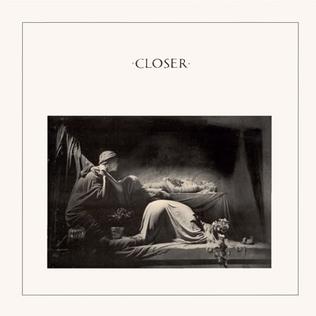
China Girl is a reworking of a song Bowie had written and produced with Iggy Pop seven years earlier and released on Pop’s The Idiot.

And then there’s the title track. I’ve heard those opening snares and Ah Ah Ahs hundreds of times and tried to feel that moaning ‘tremble like a floooow-ah’. But the album version is a different beast. Clocking in at seven and a half minutes (as opposed to the single/video at just over four), it takes the listener on a different journey. Dub elements which at the time were used to create club mixes sit right in the middle of the album mix and pull it into the fade out.

Without You relies on Bowie’s falsetto, and what sounds like plinking keyboards but is either Stevie Ray Vaughan or producer Nile Rodgers who shared guitar duties throughout. It doesn’t have the drive of the other songs on side A, but as a simple declaration of love it’s not without its merits.

Whereas side one has one song that’s not so well known to me, side two’s Ricochet, Criminal World, and Shake It are all tracks I’ve never listened to much.

Ricochet is proper weird Bowie. Sometimes, its underlying sax lines sound lifted from Low; elsewhere the song is much funkier. Lyrically, it seems to be addressing industrialization and fascism, some of those big themes that he’d explore in songs like Loving the Alien and Time Will Crawl later in the 80s. Moving on, Criminal World is a cover of a 1977 song by Peter Godwin’s band Metro – musically it fits with the rest of the album because Rodgers has arranged it (and the whole album, for that matter) to flow.

And then the album concludes with a throwaway piece of disco/funk called Shake It. Lyrically it doesn’t have much to say – the most interesting lines are ‘We’re the kind of people who can shake it if we’re feeling blue / When I’m feeling disconnected well I sure know what to do.’ In his catalogue, it seems most connected to the discofied John I’m Only Dancing (Again) released around the time of Young Americans. That’s not to say that it’s bad, just that it’s not worthwhile as a Bowie song.

My overall assessment is that it holds together or hold up not as a David Bowie album, but as a Nile Rogers or Chic album that just happens to have Bowie doing the singing and most of the words. Lyrically the album is half-baked and musically, it’s mostly disposable. According to interviews in a recent issue of Mojo, this is, on a certain level, what Bowie was after. At the height of New Romanticism, Bowie heard his own influence on new music and felt the current crop had drained the life from pop. Having not had a serious hit stateside in almost eight years (Fame), he made the leap, and spent the next six years barely involved, by his own admission, in his own music making at all.

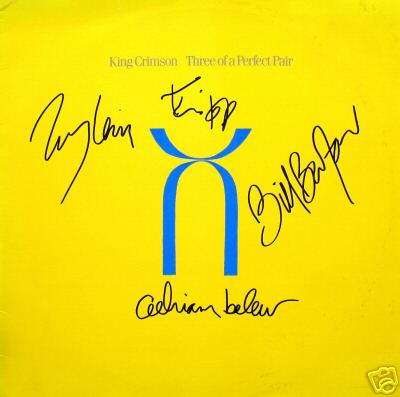
This past weekend included a listen to Joy Division’s Substance (1988) and continued reading of bassist Peter Hook’s Joy Division memoir Unknown Pleasures. I first heard Joy Division in 1987 when I went out record shopping with my friend Natalie. She and I had a lot of overlapping tastes, but she was a proper goth and I was just into the music. I knew a lot of Joy Division-adjacent stuff, but hadn’t heard anything by them. She recommended their second album, Closer. I was 20, living in San Francisco, and (as I would for several years) spent a lot of my time not processing my father’s death the previous year. I was hard to reach and generally hard to communicate with. The thing Joy_Division_Closerabout Closer, and JD in general for me at the time – I knew a little of the history – I’d even seen New Order (the band formed out of the remains of Joy Division) perform. That would have been in 1985 at the Santa Monica Civic – hadn’t heard any of their music prior and the show was boring – listening to live recordings from that period now – yeah, they were a dull live act). I recall playing this album a lot that year, and feeling all kinds of despair associated with it, primarily because I knew of the untimely death of lead singer Ian Curtis. One of my flatmates at the time told me it was familiar and asked if he would have heard something else by the band. It’s possible, I probably told him, but this tastes and mine were quite different. Yeah, I listened intently to Closer, but I didn’t know (yet) their biggest hit, Love Will Tear Us Apart, which was a little weird. But this was before someone could send you an email saying ‘you’ll like this song’ and before you even read the next sentence, you could be listening to the song.
So, yeah, Lawrence probably had heard Joy Division before me, though hipster that I was, I was loath to admit it.

Anyway, Closer threw me into a funk that was hard to escape but I was compelled to listen to it more and more. I bought Substance the following year and found that I especially liked the post-punk stuff (Atmosphere, Love, Dead Souls, These Days), but really didn’t know what to make of the earlier, punkier tracks. Later I’d buy the Short Circuit compilation (which includes At a Later Date recorded when they were still a punk band called Warsaw) on the same day I purchased Iggy and the Stooges’ Metallic KO. The following week, a friend told me the apocryphal tale of Ian Curtis committing suicide on the eve of Joy Division’s first American tour because he believed they’d never make a record as good as Metallic KO. A cursory search indicates that Curtis played Iggy Pop’s The Idiot and watched a Herzog film before taking his own life at the age of 23. His epilepsy wasn’t a secret to those nearest him, though in the late 70s, people didn’t know so well how to be supportive of an epileptic friend.

Hook notes that everything Joy Division recorded was classic – something he credits to band chemistry, youth, and Curtis’ lyrical brilliance. With this in mind, I can probably say that everything JD recorded , especially after An Ideal For Living, supersedes everything on Metallic KO (much as that document of two late shows from the original incarnation of the Stooges, including their last show in 1974, is brilliant in its own twisted way). Whether JD’s work supersedes The Idiot, well that’s a bit subjective.

Later I would have a huge poster of the cover of Closer on my wall, next to a huge poster of the cover of Aladdin Sane. As usual, there’s no real conclusion to this story. Even the fact that I’m reading Hook’s memoir right now is a little random. I purchased it for the kindle months ago when it was probably on offer for 99p, about what it cost to see Joy Division open for the Buzzcocks in 1979. It simply came up when I was scrolling through to find what next to read.

E’G/Warner Bros., 1984

One could argue that the three albums by the Fripp/Bruford/Levin/Belew lineup, and especially the last two, have the flavour of Belew’s solo albums of the time, just featuring legendary supporting players, but that’s really not fair. For all of the bits of it that are very much of their moment, there’s also a lot of that transcendent KC magic here. The more I listen to it, the more falls together and achieves a kind of unity that Discipline has, but that I feel Beat lacks.

Addressing the album song by song doesn’t do it justice. As a work, the pieces fall together quite effectively.

The Left Side

king-crimson-3-of-a-perfect-pairOpening with four vocal tracks, none of which (on the face of it) is that demanding on the listener. Title track/opener, Three of a Perfect Pair is an interesting one because it stayed in King Crimson/Crimson ProjeKct set lists well into the 21st century, and as a fan, it’s easy to find that it’s just a little overplayed. Belew is right to be impressed with his ability to play the guitar in one time signature and sing in another, but it’s only because he’s the vocalist that this makes him unique in the band. The song itself being about the breakdown of a relationship seems an apt one as this incarnation of KC was on the verge of collapse at the end of the Beat sessions (and after the tour for this album, these four would not reconvene for 10 years).

Model Man, oddly, presents us with another relationship song in which the narrator begs for understanding (‘imperfect in a word…but I give you everything I have’) from the one who always has him on edge (‘look[ing] for the sights…the symptoms…the slight calm before the storm).

Sleepless, the single that should have been a hit. Warners even ponied up for a video in which everyone seems a little uncomfortable. The song is the most distinctly new wave of the album (especially the Clearmountain remix which was used instead of the original on the first pressings of the album). The interplay of the rhythm section is what I find most interesting about this song.

Man with an Open Heart should have been both a single and a hit. Of the four lyric tracks on the album, three address relationship issues and this one seems especially personal. Its changing time signatures anchor it in the KC universe as well.

The most surprising aspect of this album (and Beat for that matter) is how far in the shadows Robert Fripp seems to be. His guitar work through Discipline is always the most distinctive aspect of a KC recording. However, with Nuages (That Which Passes, Passes like Clouds), the instrumental that closes the Left Side, Fripp’s voice comes to the fore. It feels like one of his soundscapes as it flows through the ears, but has a rather non-cloudlike feel for a song with its title. It’s anchored by an almost underwater-feeling percussion.

The Right Side consists of three interesting instrumentals and a decidedly different vocal.

Industry is almost an extended meditation that relies heavily on the interplay between Fripp and Levin. It works on one level, as a continuation of Nuages, not the opening of a different suite of songs. It’s structured more as a bolero – each instrument building in intensity and than slipping away again.

Dig Me, welcomes Belew’s voice back into the fray with an oddly sad follow-up to the previous album’s opener, Neal and Jack and Me. In this episode, what was once a proud automobile stretching out on the open highway is now rusting, unhinged, and what ‘was deluxe becomes debris’. On a certain level, it’s of a piece with the relationship songs on the Left Side, but is also markedly different.

No Warning feels like a more pure KC improv, but kept short and to the point. It has the energy of one of those moments where the band just locks together.

And then there’s the album’s closer, Larks’ Tongues in Aspic Part III. It’s an oddly titled jam that doesn’t seem of a piece with the other two songs that are its namesake. After more than twenty years of listening to this album (as with all the other entries in this series of reviews), never so diligently and with such interest as I have in the last week, I’ve never quite gotten what it was about this composition that invited adding it to the other two. And I’m still not, but I’ve got a feeling there’s something in the musical structure that lends itself or was consciously taken for that reason.

Sleepless has long been my favourite track on the album for purposes of sheer grooving. Of the vocals I’m now more drawn to Man With An Open Heart than I ever was before. I’m not sure I have a favourite of the instrumentals – they all feel of a single piece.

Next up: Vrooom and Thrak, but I’m going to take a KC break first.