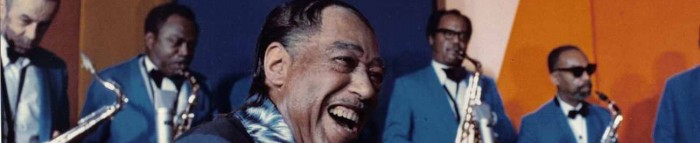
Island Records/Atlantic Records 1969 Produced by King Crimson
The signal blast that opens this album’s opening track, 21st Century Schizoid Man, is the announcement that there may still be insanity in the Fripp camp, but it is not cheerful. The improvisational center of the song with its nearly uncontrolled horns lays it out, as do the sections in which the time signatures shift without seeming to hint at any plan before roping it all back in. Fripp and company (this time Michael Giles, Greg Lake, Ian MacDonald, and lyrics by Pete Sinfield) are engaging in what sounds like a proto-fusion jazz experiment.
And almost as soon as it starts, it’s over.
The new recording of I Talk to the Wind, more reliant on the flute than on the Judy Dyble / GGF version recorded the previous year, is more complex and more controlled. The interplay of the instruments hints at the band’s wider ambitions than the silliness found on Cheerful Insanity.
Following the proto-jazz metal of Schizoid Man, this song’s pastoral arrangement is unexpected, but it’s thematically of a piece with the opener. The alienation of Schizoid Man’s last verse ‘Blind man’s greed / Poets starving, children bleed / Nothing he’s got he really needs’ dovetails with ‘On the outside, looking inside, what do I see / Much confusion, disillusion, all around me’. Just because it’s sung clearly with pleasing music doesn’t mean it’s not the same character.
There’s an argument to be made that the opener is an id-driven, gut-level response to the times and to the madness of the world in general. It’s the only musically heavy track on the album and a strange thing to open an otherwise soft album with. But in the sense of the album, it’s perfect. The first listeners must have been struck by the contrast between Schizoid Man’s coda and the opening of I Talk to the Wind, but, again, the themes of the album are supported by its calm. The emotional response to the world’s insanity, when articulated to communicate woe, is lost on the world. ‘My words are all carried away…the wind cannot hear.’ The pun of having a wind instrument carry the song wouldn’t be worth the bother if the song didn’t hold together. (Question though: Can someone sing the lyrics to Pete Shelley’s Homosapien to the tune of this song? ‘Said the shy boy to the coy boy…’ This would amuse me greatly.)
Epitaph, which closes side 1, is the album’s fulcrum and thematic and musical heart. Our narrator looking at the world and seeing its fate ‘is in the hands of fools’ sounds eerily timely. Balancing the possibility of survival (‘If we make it, we can all sit back and laugh’) with an honest assessment of the possibility of destruction (‘Yes I fear tomorrow I’ll be crying’), we know from the title where the song things the scales will fall.
Side 2’s first track, Moonchild, opens with a folk song subtitled The Dream, which after a couple of minutes slips into several minutes of nothing much, for want of a a more articulate reaction. Subtitled ‘The Illusion’, this is the least interesting stretch of music, possibly in the entire KC canon. It’s almost a surprise to hear the opening notes of the album’s title track which follows. I find this a little sad, because the lyric portion of the song is so beautiful.
Finally, In the Court of the Crimson King. The album’s title track has a weird structure moves from folky to jazzy to full on progressive before we knew what that meant. The lyrics about fire witches and puppets might indicate that the schizoid man has finally gone from close to the edge to over it and possibly towards peace in his own head. Musically the band is still playing games with both rock and roll and free improvisational jazz, while taking what it needs from the folk and classical traditions that were the wellspring of the UK progressive sound. The Dance of the Puppets, which takes us through the last two minutes of the album presents a strange coda which only in the last moments pulls back into the song’s musical theme.
Next up: In the Wake of Poseidon.
 Suite No. 1 and Erudite Eyes, which close side B have a more Frippish feel to them than the rest of the album. Suite No. 1, which clocks in at just under six minutes, starts with some Paganini-like runs that are joined by bass and keyboard, but after a minute and a half or so, the baroque gymnastics are replaced with a piano/strings/vocals arrangement that brings to mind the Chi-Lites’ Have You Seen Her. This segment is followed by a harpsichord-guitar duet which is followed by a reprise of the Paganini. A single track broken into three possibly unrelated forms, pulled together by a reprise of the theme? The application of jazz theory to folk motifs is one of the main threads of early progressive rock – it’s just weird to hear it applied so strangely.
 Unsane are one of these crews I wish I’d gotten into
 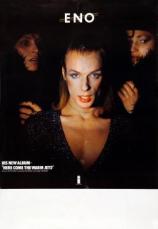 And there’s a reason Haynes used it: That opening rush of instrumentation (which accompanies a rush of glam-rocking teenagers chasing a pop star) pulls the listener right in. The intrigue doesn’t let up through the album’s 42 minutes. Lyrically, it’s almost all (in the words of Blank Frank) incomprehensible proverbs, but musically it’s a gorgeous grab-bag of styles, the way the best glam albums were back in ’73. This new remastering does a wonderful job of separating the musical components so that you can hear the strange fuzzed out guitar on the title track as something separate from the drums, keyboards, and the vocals (which are still too indistinct to figure out).
 Lyrically, side one has more of the depth found in their earlier work. I can’t really tell if they arranged the tracks for LP release or CD, but major releases still came out on vinyl at the time. After Nighttown, side two has the disco 1-2-3 of the title track, Big Fun, and the aforementioned KC and the Sunshine Band cover. Big Fun has big horns and lyrics about going out and (long before Daft Punk) getting lucky. The chorus of Well-e-o, well-e-o here we go / We got a bite like a pit bull yeah we don’t let go / Well-e-o, well-e-o under the sun / Everybody looking for…big fun doesn’t really suggest the seriousness of purpose the band was known for. On the other hand, the bass and the brass are used to good effect. Even considering the lyrical silliness of Big Fun, the only real embarrassment of the album is the rap that Andrews injects into Get Down Tonight. (All one can say is that it was a thing at the time.)
