The organ is the strongest instrument on Still Life, dominating large sections of most of the tracks. Interestingly, the opening track, Pilgrims, is lyrically of a piece with the closing epic, Childhood Faith In Childhood’s End. While the latter takes its theme most obviously from the Arthur C. Clarke novel to which its title refers, the former, with lyrics such as ‘The time has come, the tide has almost run / and drained the deep: I rise from lifelong sleep’ does as well. Pilgrims ends beautifully without a resolution and the title track picks up with a gentle vocal backed by simple organ chords which are maintained until the third verse when the rock and roll kicks in. Lyrically Still Life extends a metaphor of marriage to encompass death, decay, and despair. I guess it’s a little late to suggest that Hammill’s poetry is not of the light and fluffy variety. (Here’s a live version from 2011.)
 That said, but this album has a much greater pop sensibility than its predecessors. It helps that two of the five songs clock in at less than 8 minutes and two more at less than ten. Yes, I’m stretching the definition of ‘pop’, I know.
La Rossa is the most distinctly metal song on the album, though the musical styling seems very much at odds with the lyrical content (yeah, I know, what else is new) in which the narrator tries to harness his desire for an object, but knows he must succumb.
My Room (Waiting For Wonderland) opens side two with soprano sax, drums, and vocals. However, the gentleness of the delivery belies the harshness of the lyrics which describe (perhaps, as always with this band) a person succumbing to depression, loneliness, and anxiety. Possibly the most cohesively beautiful thing they’ve done to date.
 On first listen, the four tracks that make up Godbluff are a bit less varied than those on Pawn Hearts (not hard, given the multiple sources of side two and the extensive recording process). It seemed to be all hard all the time, sort of like ConstruKction of Light/Power To Believe-era Crimson. The dynamics are mostly set to full on. This might have to do with it being the first VDGG album without an outside producer.
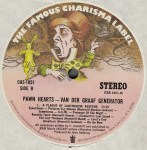 And then there’s side 2. A ten-part medley that on a certain level brings Genesis’ Supper’s Ready to mind, but possibly a little more scattershot. The lyrics still speak to the human position in the face of the disasters of modernity:I can see the lemmings coming, but I know I’m just a man / Do I join or do I founder? Which can is the best I may?
 The opener, Killer seems to be about both sharks and love, is to be the most straight up rocker of the album, and has a really nice piano break.
  After the deluge of Darkness (11/11), Refugees is a beautiful interlude with some nice harmonies before White Hammer, another example of proper early prog histrionics. Lyrically the latter owes too much to its source material (the 15th century treatise on witchcraft, Malleus Maleficarum). That said, the interplay of the sax and keyboards can occasionally make you forget the words. I hope I can find a live version, because the fadeout (given that this song closes side A) is annoying. Honestly not sure where I got my hatred for the fade, but in general I think the shows that the producer was sleeping on the job.
 Joe Jots