Archives for category: Politics
My friend Craig, a journalist, world traveller, and scholar, made two interesting points in a recent FB post about Middle East terrorism. The first: While there is “no philosophical connection between Islam and terrorism…there is a very strong connection between Saudi Arabian Wahabist Islam and terrorism.”
Wikipedia offers that Wahhabism is a fundamentalist sect of Sunni Islam. Adherents consider the term Wahhabi derogatory and prefer Salafi. Its 18th century founder, Mohammad bin Abd Al-Wahhab allied himself with Muhammad bin Saud whose name might recall to you the current ruling house of Saudi Arabia. Today Al-Wahhab’s teachings are state-sponsored and the dominant form of Islam in Saudi Arabia.
oil-rigToday Wahhabism is considered an ultra-conservative Saudi brand of Salafism whose adherents brand non-Wahhabi Muslims apostates. One of the main things to note, however is that while Wahhabis are only about 23% of the Saudi population, they control the holy cities of Mecca and Medina.
Craig’s second point: That Wahabist extremism and the rise of western Islamaphobia share a root cause: “the utter cowardice of Western powers when it comes to challenging Saudi’s policy of exporting religious extremism.”
As purchasers of Saudi oil, and sellers of Saudi-bought arms (a trade in which France has a disturbingly long history), we are complicit.
Of course this whole discussion is on Facebook and I’m not necessarily privileged to copy it here in full, but in the comments Craig answers a question put to him on the matter: Does religion trump economics? with a resounding Yes. “The codification of a culture’s most cherished values – whether expressed as a concept of God or as a doctrine  of Human rights – does, and indeed must, trump economics…If we acknowledge economics as being the repository of our culture’s most important guiding principles, then we have already lost.”
Precisely. There are several directions one could go with this discussion including how our society’s wealth of all kinds is distributed, but this clash of religion and economics raises an interesting question: Is the current state of Saudi oil pricing an attempt to destabilise western economies? From my very non-expert point of view, this could be almost as, if not more, effective than our wars that destabilise Middle East regimes.
Mind you, one of the more seriously affected regimes is that of Mr. Putin in Russia. The governing elites derive most of their power from oil revenue and Putin very early on made the case that Russia would not be sharing the benefits and risks of its natural resources when it blocked attempts by to sell industries to the west. In December, The Independent asserted that this change in fortune might mean that Russia “may not be able to afford to wage her little wars.” (Falling oil price benefits consumers in the West but comes at a  high cost to global stability, 20 December 2014) I fear this is not the case – Russia’s resources, ambitions, and economic instability make the country one of many fine starting points for the next big war.

 

Some friends are having a pretty vehement discussion over on Facebook about Charlie Hebdo, the Je Suis Charlie movement (if one can call it that), and the nature of privilege when it comes to old straight white males viciously lampooning minority populations.

Je suis CharlieNone in these discussions felt that violence was justified, but a couple have pointed to what might be called the bullying of the Charlie Hebdo cartoons. It’s more nuanced than taht, to be sure, but they acknowledge the power differential between, for example, the French muslim population and the white majority. The host of this discussion included this in her analysis of the situation:

Imagine you have a neighbour, living next door. Imagine that every morning, you leave for work at the same time. Your neighbour greets you, compliments you on your outfit, says something nice about the weather and wishes you a good day. Assuming that these sentiments are genuine, and that your neighbour is not simultaneously inflicting wild all-night parties or boundary disputes on you, then I would assume that you are living at peace with your neighbour.

But what if, every morning, you and your neighbour leave for work, and instead of compliments, your neighbour always finds something about you to laugh at. Maybe you choose not to wear makeup, or your job requires you to wear jeans rather than a suit, or your uniform is specified by your employer. Every morning, your neighbour points and laughs, because he or she fundamentally does not understand your situation, finds it threatening, and tries to rid you of your perceived power and difference by poking fun.

Are you living at peace with this neighbour?

So in light of this discussion, I asked my French muslim colleague, a young woman from northwestern France, “What do you make of the Charlie Hebdo situation?” to which she asked me to be more specific. “What do you think of the Je Suis Charlie response to the massacre of the Charlie Hebdo journalists?” Her reply was essentially one of support for Charlie Hebdo – “Listen, they attack everyone. No group escapes them – Catholics, Jews, liberals, conservatives.”
It may make a difference that she’s university educated, middle class, and liberal. I’m not sure.

Mehdi Hasan, a journalist for the Al Jazeera and the Huffington Post, on the other hand, shares
As a Muslim, I’m Fed Up With the Hypocrisy of the Free Speech Fundamentalists, in which he takes on the politicians, journalists, and celebrities embracing Je Suis Charlie. Money quote:

Lampooning racism by reproducing brazenly racist imagery is a pretty dubious satirical tactic. Also, as the former Charlie Hebdo journalist Olivier Cyran argued in 2013, an “Islamophobic neurosis gradually took over” the magazine after 9/11, which then effectively endorsed attacks on “members of a minority religion with no influence in the corridors of power”.

Good point, that. This discussion will continue, but I had a few points to add.

I suppose if my thoughts had tended that way, I would have noticed that things were finally moving forward on the Cuban front. (The last front of the Cold War?)

Cuba!At 47, the embargo’s lasted longer than I’ve been alive, fuelled primarily by ageing Florida refugees whose assets in Cuba were seized in Castro’s revolution. This rather small community has held Florida’s electoral votes hostage since 1964, but finally, it seems, their influence has waned and very soon all those meticulously maintained ’59 Chryslers will find themselves crowded out by new imports.

Rachel Maddow made an interesting point on the subject last night (17 Dec.): The US is the only country to have held to the embargo. When the rest of the world enabled travel there, the US stood still. I had a number of American friends in Prague who traveled there. (One brought me a Cuban cigar – alas in the period between my requesting it and Dan returning from his travels, I gave up smoking. Another friend found it very tasty, though.)

In my youth, we had Ronald Reagan creating bogeymen out of the entire Communist world (while he himself engineered an invasion of another Caribbean island, Grenada. Even as the Cold War ended, and Russia no longer afforded to prop up Cuba with economic subsidies, we couldn’t see through to making some peace. Those refugees who had gotten rich off Bautista’s corruption (and whose class as a whole gave Guevara and Castro their raison d’être) were still relatively young 25 years ago.

The Democrats were still so beholden to this group seven years later that Clinton enshrined the embargo (which had for 35 years been maintained by executive order (from what I gather) into law. I’d need to do some research, but I’m pretty sure congress (by that time Republican in both houses) passed the bill in the wake of the Elian Gonzales fiasco. This leaves President Obama in the weird place, again, of doing a bunch of work by executive order that the new double Republican majority may undo. It’s interesting that many of the negotiations wrapped around these new changes were conducted with the Vatican. I have a guess that the erstwhile majority Catholic island of Cuba is reaping a certain benefit from the first Latin American pope.

The spy exchanges, I suppose, are an interesting aspect to this story, but I’m really curious as to how the status of the Guantanamo Bay detention facility will play out, especially in the wake of the torture report.

And, yeah, there’s the torture report. We knew this shit was going down ten years ago. John Woo defended the CIA’s use of torture before congress at the time. The New Yorker wrote about it. The extent of what we did might be surprising. The details of the techniques might be new. We might even be amazed that Dick Cheney is still defending it. But the report is not news. Putting the bastards on trial: That’d be news. A presidential pardon, which at least acknowledges the heinous criminality of the thing – that’d be news too.

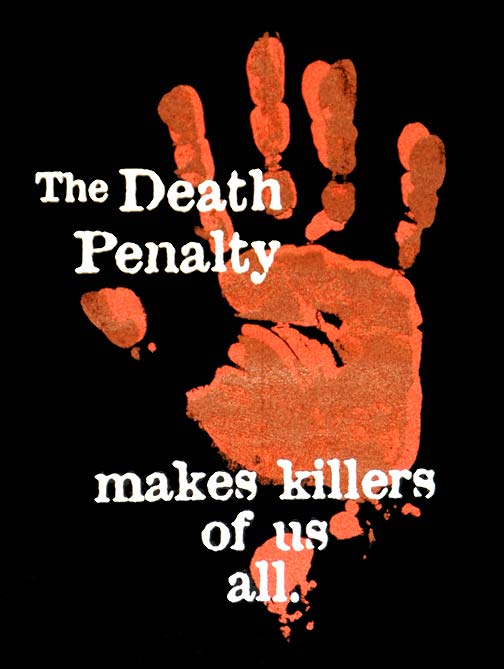
It’s no secret to the people I know that I’m adamantly anti-death penalty. Every few months the US tries to execute another prisoner and Texas apparently is doing it again tonight [Note: This was written a few days ago and the situation seems to have changed.]. As is often the case, the prisoner has mental health issues. According to Rachel Maddow, Scott Panetti represented himself at the trial and believes an alter-ego is the guilty party.

Strangely, the US supreme court has already ruled in this case that the guy is not mentally fit to execute. The current Supreme Court wisdom is that an execution falls under the heading of cruel and unusual punishment if the condemned is unable to comprehend the punishment.

Death-PenaltyIf we’re going to have capital punishment, that’s a pretty low threshold. Even still, Governor Perry is convinced the guy is faking it and has been for many years. Under that surety,  the state set a date and didn’t see fit to tell defence counsel, who read it in th he paper, with barely enough time and almost none of the resources to file for an extension and judicial review.

Sad, as always, but not surprised.

It seems that, despite Governor Goodhair’s best efforts, the 5th Circuit Court of Appeals has issued a stay. Fingers are crossed, but this doesn’t ameliorate the fact that the US maintains the death penalty as a punishment for certain crimes. The company this practice puts us in (China, Iran, North Korea) is often used as an argument against its continuation. Surely the US can take the moral high ground on an issue like this? I don’t think that’s a useful argument because it doesn’t sway those who hold the eye-for-an-eye point of view. Life for a life. Others say the victim’s family should have some say in how a punishment is meted. My preference is that justice be blind, especially where it is not tempered with mercy. Justice in places that still exercise the death penalty isn’t even colour blind, much less properly blind. There are reams of paper on how inept, incompetent, and massively underfunded defence counsel can be in Texas DP cases. Groups that take up DP defences do it essentially pro bono. The fees they get from the state barely cover the hours it takes to visit the law library much less actually put in the time it takes to fairly defend a client.

That such firms are paid at all, I suppose, is a step in the right direction. My grandfather was called to the bar in Washington, D.C. in the 1930s. He once told me that if you were a lawyer, you were required to take pauper’s defence cases for no fee. I gather it was something like jury duty – lawyers were all on a rota to take these on. Alas, I never asked what types of cases he ended up with, given that he generally practiced tax law. (My father was called to the bar in California in the mid 60s and did not have this onus.)

Of course, the problem is now compounded, no pun intended, by the means by which we can actually execute prisoners. No legitimate US pharmaceutical company will supply the US with execution drugs fearing protest and firms abroad won’t do it either. From what I gather, Iran usually uses the rope – and cranes – and China uses bullets, the better to harvest organs. That sounds really creepy. I don’t have a source to hand, but I’m pretty sure I read about that from a legit journalistic source. (Oh, they’ve decided to stop this practice come the new year, according to NPR.

From top to bottom it’s a problem before we even get into the morality. The actual sausage is bad enough.

I’m not saying anything new when I say that killing people in order to say that killing people is wrong sends the wrong message about killing in general. I’m a big fan of the financial argument – our legal system, even taking into account the paltry sums paid to represent defendants too poor to afford counsel of their own, is expensive. A recent Kansas study of 34 cases between 2004 and 2011 found costs for DP cases were much higher than those of non-DP cases:

The numbers below are in thousands:
DP                       non-DP
Defence costs (1)                     395.7                   99
Trial court costs (1)                72.5                     21.5
Defence costs (2)                    130.5                   64.7
Trial court costs (2)                16.3                      7.4
Prison housing/year               49.4                     24.7
(1) indicates cases that go to trial; (2) indicates cases in which a guilty plea is entered that didn’t go to trial.

In terms of time, DP cases that go to trial took approximately 40 days, whereas cases where the death penalty was not sought too about 17 days on average.

I’m not sure if Kansas is representative, but the page behind that link has studies for multiple states as well as federal numbers. One study suggests that commuting all of California’s current death row sentences to life without parole would save the state USD 170 million per year. At a guess, that would pay the salaries of about 2500 public school teachers.

170 million would feed and house and counsel a lot of PTSD-stricken veterans and mentally ill. These groups wind up in the criminal justice system at alarming rates themselves because we haven’t figured out how to address their needs on the scale our wars and systems generate them. (It’s been nearly fifty years since Governor Ronald Reagan shut the state-run mental health facilities, so it might be time to stop blaming him for California’s homeless issues and start fixing them.)

The racial disparity in DP cases, and the US prison population in general, is also hard to ignore and is also a legacy of Reagan, but one we can still blame on his political strategies. The drug sentencing laws (that Obama recently rescinded) are one aspect. Many argue that if we’re going to have a death penalty, at least it be fair. I think the voting populations of many states are just as fine with having 40% African American prison populations (when blacks make up 12% of the general population). Our demagogues happily promote such figures as reflecting the criminal nature of the population rather than the criminal nature of the US criminal justice system.

A lot of people who have thought about and lived the Black experience in America will have better and more cogent responses to the current situation. What with another unarmed black boy killed this week, more needs to be done. The hat of a young woman on the train with me reads “Comme der Fuckdown” which would be a good start. Again, I’m checking my privilege poorly, but I don’t think riots are the way to go. I’m also aware that if the media is showing a riot, that does not mean There’s a Riot Goin’ On. More needs to start with law enforcement. I recall a quote posted after Mr Brown’s murder that read something like “Why are Black boys considered problems before they are considered people?” I don’t think there’s a blog post solution to endemic racism and police militarization.

Slyfam-riot1My first thought after reading of the murder of Tamir Rice in Cleveland this week, however, was that police forces need to act more like machine shops. I want news reports that start ‘{insert city here} has gone 21 days without the death of an unarmed suspect. Without the deaths of a men or women just going about their business. Without a presumption that being Black is being Guilty. Without police forces conflating their work with that of the justice system.

And how about a competition that rates police forces on how well they protect and serve their entire communities?

And how about funding municipal governments in such a way that (unlike Ferguson, MO) they don’t rely on fines imposed unfairly on one group?

It’s not much of a start, but I’d love to see the result.