
(Title nicked from a 70s-era compilation of Beatles covers.)
Last year the band Einsturzende Neubauten released Lament, an album commemorating the 100th anniversary of World War I. In interviews, frontman Blixa Bargeld advanced the argument that the first world war never actually ended – the parties that marched across Belgium and France in 1914 continued to battle in other forms in other locations. All the results of the Sykes-Picot Agreement could be said to be further battles in that war. (My favourite track on that album is The Willy-Nicky Telegrams, in which Bargeld and Alexander Hacke recite the texts of communiques between Kaiser Wilhelm and Tsar Nicholas that led up to the war. The two were cousins.)
Side note: This week marks the 100th anniversary of the first recorded chemical weapon attack on soldiers in Ypres and seems a good place to share the Green Fields of France.
Disclosure: I am neither a political scientist nor an historian.
That said, I have recently stated to whomever will listen; and possibly here, that I’ll be quite surprised if we get out of this decade without a world war. I think now that it’s too late for that if. I’m pretty certain it’s already begun; we just haven’t declared it yet. Peace has been on life support since we took down the World Trade Centre and I think it’s time, as they say on the hospital dramas, to call it.
On Rachel Maddow’s 20 April 2015 show, she discussed a variety of the conflicts in the middle east including Yemen and Libya. Iran is currently supporting Yemen against the Saudi forces there. (Note: The BBC now report s that the Saudis have concluded their air campaign in Yemen.) On that front, the US supported Saudi. In the fight against ISIL, a Sunni force, the US supports Shiite Iran.
ETA: NYT now reports that Saudi air strikes in Yemen have resumed.
Moving east, we have the smoldering war in Ukraine. Between that (admittedly large) country and the very hot war in Syria, there’s only Turkey, another front in ISIL’s advance.
In addition, recent reports of Russian ships cruising near Britain add credence to arguments that Putin’s hostility isn’t limited to former Soviet republics.
And trade wars – the sanctions against Russia over its recent hostile actions may be yet be enough to push us all into a much hotter war.
I’m not without hope in these matters, but the decisions lie with very wealthy corporations that don’t look kindly on efforts to slow the continued accumulation of wealth. This is why we defend oil fields to the death, but care little for those who try to live their lives farther from those natural resources or who fight the conglomerates whose extraction efforts also make such places unliveable.
I don’t have numbers but the worldwide refugee crisis is only getting worse. Syria is one hotspot. (Israel could have taken the moral high ground at the start of the civil war, but unsurprisingly, Bibi didn’t.) Libya currently has the headlines because of the horrific tragedies occurring almost daily in the waters between Libya and Italy. These aren’t new, but Berlusconi had an agreement with the Gaddafi regime to keep a lid on those trying to escape. With Gaddafi dead (and Libya on the verge of being a failed state) and Berlusconi no longer Italy’s autocrat, it’s no longer in force.
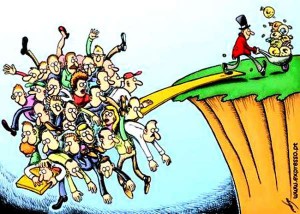
 This is the choice we’re after – we can educate and take care of the next generations or we can continue to mess it up. In the US, the war on education has taken a number of forms – one the age-old battle against teachers’ unions and the despicable salaries we pay to those who spend the vast majority of their waking hours either looking after our children or finding ways to make sure they know enough to get to the next level. Another is the fight against teaching science in all its forms, but primarily the teaching of evolution. I share the belief that no questions for which science provides an answer have been better answered by religion. (I’m sure there’s a better quote from someone like Sagan or Tyson, but that’s the gist.) In some regions, I’m distinctly in the minority and 90 years after the Scopes trial, we’re still fighting the same battle.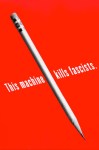
 First off: I live in a country where the highest tax bracket is 52% and one reaches it pretty quickly. I’m an experienced technical writer by profession and could probably make USD 75-85,000/year if I returned to the US. I’ve worked in The Netherlands for over seven years and almost the entire time have had the benefit of what’s called the 30% ruling. Under this plan, the first 30% of the income of expats who qualify (based on age and earning capacity, primarily, though the tax authority here can be capricious) is untaxed. For the next 2 1/2 years, I will still benefit from this ruling. After that, half my income goes to the taxman.
 Joe Jots