Archives for category: United States

First off: I live in a country where the highest tax bracket is 52% and one reaches it pretty quickly. I’m an experienced technical writer by profession and could probably make USD 75-85,000/year if I returned to the US. I’ve worked in The Netherlands for over seven years and almost the entire time have had the benefit of what’s called the 30% ruling. Under this plan, the first 30% of the income of expats who qualify (based on age and earning capacity, primarily, though the tax authority here can be capricious) is untaxed. For the next 2 1/2 years, I will still benefit from this ruling. After that, half my income goes to the taxman.

When that time comes, I will probably complain a bit, as will my wife who earns a great deal more than I do. That said, we took on a mortgage three years ago and are generally happy to continue living here, even after our taxes go up. When we moved here, there were no austerity measures in place and the euro was a great deal stronger, but the system here mostly works. First responders are responsive, the city is clean, there are very few homeless. While we live in a college town about the size of Cambridge (123,000) and a little larger than Santa Barbara (90,000), even Amsterdam basically works as well – more homeless, more crime, but we’re not talking San Francisco levels of either.

I want to suggest that my tax euros go towards making the place I live a place I want to live. (Yes, I also pay a very small portion of Geert Wilders’ salary. It’s another price one pays to live in a democracy.) I don’t have a hard time saying that I don’t necessarily want those at the next income level above me to take a tax hike so that I can get a break. I don’t know much about the capital gains, inheritance, or corporate tax laws here. I also can’t speak for my family and friends in the US (where the top tax rate is much lower than it is in Nederland). That said, I think most of them aren’t so interested in tax cuts of their own, but would like to see higher taxes on the very wealthy so that the infrastructure of the US might work again.

NPR suggests, in a blog entitled State of the Union: 5 Things To Watch, that President Obama will introduce a plan to raise taxes on the wealthy in order to provide a tax break to working families. I know that money is tight all over, especially now that the 85 richest people in the world have as much wealth as the 3.5 billion poorest, and I would’t begrudge any working family whatever break they can manage. I would, however, say that tax increases on the wealthy might benefit working families in more ways:

  • After school programs so that kids have something to do while whatever parentage they have in the home can work until quitting time without worrying about what junior is up to
  • And on the subject of schools: smaller class size and better supported teachers.
    And on that topic: When did public school teachers, who do some of the hardest and most thankless work, become the bogeymen for all that is wrong in America?
  • Funding for public hospitals
  • training programs for the unemployed and underemployed
  • Fully staffed mental health facilities and VA hospitals

For a start.

When I moved to San Francisco in 1985, there were homeless, but they were mostly holdovers from the late 60s and people who followed expecting the city to resemble the parking lot at a Grateful Dead show. (A fine dream, but one that generally only existed at some music festivals.) That’s a bit disparaging, I know, but that was my experience of SF’s street population, such as it was when I was relatively young. The issues in San Francisco become much bigger with successive booms and busts and of course it’s happening again and on a larger scale with the most recent boom. With all the money that city has had for the last three decades, it’s never been able to address its own social issues, or think big enough to tackle them effectively. Higher taxes on business and the wealthy – if put to good use – might help. I use SF as an example I know (not that I know too many people who can still afford to live there – of 70 or so close friends who lived there when I left in 2002, I’m certain of four, two of whom managed to buy their own houses at auspicious times. Cities large and small across the US have impossible tasks of making the infrastructure work for the greatest numbers of people. I’m sure there’s more to say on the matter, but I think NPR’s bloggers, and possibly Obama as well, have it wrong if they think tax cuts are the only possible balance to tax increases on the wealthy. It’s not a zero sum game, either. Do those at the top really feel that a better functioning society isn’t to their benefit too?

ETA: I’ve now skimmed much of the SOTU address and was rather glad to see that Obama addressed these things as well. Of course with the Republicans in charge of both houses, we’re in for a rocky, suicide pill-laden two years, but I’m hopeful.

 

I suppose if my thoughts had tended that way, I would have noticed that things were finally moving forward on the Cuban front. (The last front of the Cold War?)

Cuba!At 47, the embargo’s lasted longer than I’ve been alive, fuelled primarily by ageing Florida refugees whose assets in Cuba were seized in Castro’s revolution. This rather small community has held Florida’s electoral votes hostage since 1964, but finally, it seems, their influence has waned and very soon all those meticulously maintained ’59 Chryslers will find themselves crowded out by new imports.

Rachel Maddow made an interesting point on the subject last night (17 Dec.): The US is the only country to have held to the embargo. When the rest of the world enabled travel there, the US stood still. I had a number of American friends in Prague who traveled there. (One brought me a Cuban cigar – alas in the period between my requesting it and Dan returning from his travels, I gave up smoking. Another friend found it very tasty, though.)

In my youth, we had Ronald Reagan creating bogeymen out of the entire Communist world (while he himself engineered an invasion of another Caribbean island, Grenada. Even as the Cold War ended, and Russia no longer afforded to prop up Cuba with economic subsidies, we couldn’t see through to making some peace. Those refugees who had gotten rich off Bautista’s corruption (and whose class as a whole gave Guevara and Castro their raison d’être) were still relatively young 25 years ago.

The Democrats were still so beholden to this group seven years later that Clinton enshrined the embargo (which had for 35 years been maintained by executive order (from what I gather) into law. I’d need to do some research, but I’m pretty sure congress (by that time Republican in both houses) passed the bill in the wake of the Elian Gonzales fiasco. This leaves President Obama in the weird place, again, of doing a bunch of work by executive order that the new double Republican majority may undo. It’s interesting that many of the negotiations wrapped around these new changes were conducted with the Vatican. I have a guess that the erstwhile majority Catholic island of Cuba is reaping a certain benefit from the first Latin American pope.

The spy exchanges, I suppose, are an interesting aspect to this story, but I’m really curious as to how the status of the Guantanamo Bay detention facility will play out, especially in the wake of the torture report.

And, yeah, there’s the torture report. We knew this shit was going down ten years ago. John Woo defended the CIA’s use of torture before congress at the time. The New Yorker wrote about it. The extent of what we did might be surprising. The details of the techniques might be new. We might even be amazed that Dick Cheney is still defending it. But the report is not news. Putting the bastards on trial: That’d be news. A presidential pardon, which at least acknowledges the heinous criminality of the thing – that’d be news too.

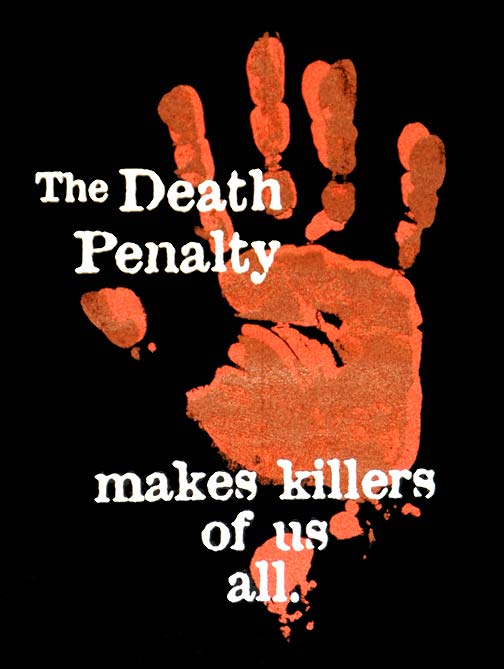
It’s no secret to the people I know that I’m adamantly anti-death penalty. Every few months the US tries to execute another prisoner and Texas apparently is doing it again tonight [Note: This was written a few days ago and the situation seems to have changed.]. As is often the case, the prisoner has mental health issues. According to Rachel Maddow, Scott Panetti represented himself at the trial and believes an alter-ego is the guilty party.

Strangely, the US supreme court has already ruled in this case that the guy is not mentally fit to execute. The current Supreme Court wisdom is that an execution falls under the heading of cruel and unusual punishment if the condemned is unable to comprehend the punishment.

Death-PenaltyIf we’re going to have capital punishment, that’s a pretty low threshold. Even still, Governor Perry is convinced the guy is faking it and has been for many years. Under that surety,  the state set a date and didn’t see fit to tell defence counsel, who read it in th he paper, with barely enough time and almost none of the resources to file for an extension and judicial review.

Sad, as always, but not surprised.

It seems that, despite Governor Goodhair’s best efforts, the 5th Circuit Court of Appeals has issued a stay. Fingers are crossed, but this doesn’t ameliorate the fact that the US maintains the death penalty as a punishment for certain crimes. The company this practice puts us in (China, Iran, North Korea) is often used as an argument against its continuation. Surely the US can take the moral high ground on an issue like this? I don’t think that’s a useful argument because it doesn’t sway those who hold the eye-for-an-eye point of view. Life for a life. Others say the victim’s family should have some say in how a punishment is meted. My preference is that justice be blind, especially where it is not tempered with mercy. Justice in places that still exercise the death penalty isn’t even colour blind, much less properly blind. There are reams of paper on how inept, incompetent, and massively underfunded defence counsel can be in Texas DP cases. Groups that take up DP defences do it essentially pro bono. The fees they get from the state barely cover the hours it takes to visit the law library much less actually put in the time it takes to fairly defend a client.

That such firms are paid at all, I suppose, is a step in the right direction. My grandfather was called to the bar in Washington, D.C. in the 1930s. He once told me that if you were a lawyer, you were required to take pauper’s defence cases for no fee. I gather it was something like jury duty – lawyers were all on a rota to take these on. Alas, I never asked what types of cases he ended up with, given that he generally practiced tax law. (My father was called to the bar in California in the mid 60s and did not have this onus.)

Of course, the problem is now compounded, no pun intended, by the means by which we can actually execute prisoners. No legitimate US pharmaceutical company will supply the US with execution drugs fearing protest and firms abroad won’t do it either. From what I gather, Iran usually uses the rope – and cranes – and China uses bullets, the better to harvest organs. That sounds really creepy. I don’t have a source to hand, but I’m pretty sure I read about that from a legit journalistic source. (Oh, they’ve decided to stop this practice come the new year, according to NPR.

From top to bottom it’s a problem before we even get into the morality. The actual sausage is bad enough.

I’m not saying anything new when I say that killing people in order to say that killing people is wrong sends the wrong message about killing in general. I’m a big fan of the financial argument – our legal system, even taking into account the paltry sums paid to represent defendants too poor to afford counsel of their own, is expensive. A recent Kansas study of 34 cases between 2004 and 2011 found costs for DP cases were much higher than those of non-DP cases:

The numbers below are in thousands:
DP                       non-DP
Defence costs (1)                     395.7                   99
Trial court costs (1)                72.5                     21.5
Defence costs (2)                    130.5                   64.7
Trial court costs (2)                16.3                      7.4
Prison housing/year               49.4                     24.7
(1) indicates cases that go to trial; (2) indicates cases in which a guilty plea is entered that didn’t go to trial.

In terms of time, DP cases that go to trial took approximately 40 days, whereas cases where the death penalty was not sought too about 17 days on average.

I’m not sure if Kansas is representative, but the page behind that link has studies for multiple states as well as federal numbers. One study suggests that commuting all of California’s current death row sentences to life without parole would save the state USD 170 million per year. At a guess, that would pay the salaries of about 2500 public school teachers.

170 million would feed and house and counsel a lot of PTSD-stricken veterans and mentally ill. These groups wind up in the criminal justice system at alarming rates themselves because we haven’t figured out how to address their needs on the scale our wars and systems generate them. (It’s been nearly fifty years since Governor Ronald Reagan shut the state-run mental health facilities, so it might be time to stop blaming him for California’s homeless issues and start fixing them.)

The racial disparity in DP cases, and the US prison population in general, is also hard to ignore and is also a legacy of Reagan, but one we can still blame on his political strategies. The drug sentencing laws (that Obama recently rescinded) are one aspect. Many argue that if we’re going to have a death penalty, at least it be fair. I think the voting populations of many states are just as fine with having 40% African American prison populations (when blacks make up 12% of the general population). Our demagogues happily promote such figures as reflecting the criminal nature of the population rather than the criminal nature of the US criminal justice system.

A lot of people who have thought about and lived the Black experience in America will have better and more cogent responses to the current situation. What with another unarmed black boy killed this week, more needs to be done. The hat of a young woman on the train with me reads “Comme der Fuckdown” which would be a good start. Again, I’m checking my privilege poorly, but I don’t think riots are the way to go. I’m also aware that if the media is showing a riot, that does not mean There’s a Riot Goin’ On. More needs to start with law enforcement. I recall a quote posted after Mr Brown’s murder that read something like “Why are Black boys considered problems before they are considered people?” I don’t think there’s a blog post solution to endemic racism and police militarization.

Slyfam-riot1My first thought after reading of the murder of Tamir Rice in Cleveland this week, however, was that police forces need to act more like machine shops. I want news reports that start ‘{insert city here} has gone 21 days without the death of an unarmed suspect. Without the deaths of a men or women just going about their business. Without a presumption that being Black is being Guilty. Without police forces conflating their work with that of the justice system.

And how about a competition that rates police forces on how well they protect and serve their entire communities?

And how about funding municipal governments in such a way that (unlike Ferguson, MO) they don’t rely on fines imposed unfairly on one group?

It’s not much of a start, but I’d love to see the result.

When former Washington Post editor Ben Bradlee died a couple of weeks ago, a lot of ink was spilled on how fearless he was generally, and most specifically in light of the stories brought him by a pair of reporters named Woodward and Bernstein. The record is long on Watergate and what these two reporters divulged about high crimes committed by members of the Nixon administration.

Nicked from http://creativecrista.wordpress.com/2013/02/04/concentration-of-media-ownership/The thing is, this kind of reporting doesn’t happen anymore and even at the time didn’t happen often. And the cojones it took to print it, unheard of in today’s media. A lot of that has to do with media consolidation. Whereas there were, I’m guessing, at least a hundred major media outlet owners in 1973, there are vastly fewer today. I would need to do a little more research to back up that number, but blogger FrugalDad created an infographic a couple of years ago that stated 90% of media outlets in 2011 were owned by six companies, whereas that number was 50 companies in 1983. freepress.net offers more useful numbers. The Bain/ClearChannel and NBC Comcast stats are especially scary.

FrugalDad’s 2011 infographic is here.

I’d like to believe that the illusion of press freedom was put to bed about ten years ago when Dan Rather reported on George W. Bush’s preferential military service treatment during the 2004 presidential campaign. Alas, there’s a lot of doubt regarding the authenticity of the documents Rather and CBS news relied on for their reporting. On the left, there was a lot of desire for some of the shit that was flung about Resident Bush to actually stick. Alas, not only did the Killian document assertions not stick, they weren’t the shit we were looking for either.

I digress. In the 70s, Bradlee expressed a bravery that was uncommon in the news biz. No one in US history had suggested printing a story that might take down a sitting president. I’d like to believe that if the story had involved a president on the left, Bradlee (a confidante of JFK’s) would have made the same call.

Reporting today at least in the West has lost a lot of that editorial bravery. You still have reporters from around the globe going into the most dangerous places, but it seems in the US and the UK we’ve lost the bravery to take on the crimes of our leaders. Reporting the truth can get you killed in many parts of the world, but here it just gets you ridiculed.

It used to be that there were a few conflicts of interest – nuclear power, for example, is still never covered on NBC and its affiliates, given that NBC’s parent company from 1986 to 2013 was General Electric.

ETA: There’s a really good Bradlee story here: http://www.washingtonpost.com/posteverything/wp/2014/10/22/how-ben-bradlees-outrageous-use-of-white-privilege-turned-my-life-around/