I should write something about the truck murder of four young Israeli soldiers by a Palestinian to provide balance of some sort to my recent pro-Palestinian posts. There’s not much to say. The attack was despicable as was the praise heaped on the attacker by Hamas.
A couple of days I started taking some notes towards a discussion of the fascism coming to roost in the US. This was before the latest reports of Trump’s Manchurian nature, coming in the form of possible compromising photographs of Trump with prostitutes in a Moscow hotel. It hasn’t mattered in months how much he’s said and done that positively disgusts most of America. For all her faults, and all the sleaze of her presidential campaign, Hilary Clinton is 100 times the president Trump could ever hope to be, but for a few nasty issues.
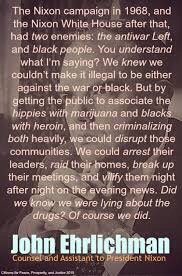 An essay I read a couple of years ago asserted that no Republican president since Eisenhower had taken office without the shadow of treason. Nixon subverted the peace talks in Vietnam; Reagan made deals with Iran that subverted negotiations to release the US hostages; George W. Bush rode in on Sandra Day O’Connor’s vote to shut down the Florida recount. (Poppy Bush seems to have defeated Michael Dukakis fair and square. The two justices he put on the Supreme Court, David Souter and Clarence Thomas, voted on opposite sides of Bush v. Gore.) Of course I can’t find the reference now.
(On Nixon: he lost by a hair in 1960, won by a hair in ’68 and only because RFK was assassinated and Humphrey wasn’t up to the task, and committed treasonous acts to win in ’72. Only for those did he and his administration pay. The text in the sidebar doesn’t even come into play, nor does it acknowledge some of the good Nixon did, such as signing the bill to create the soon to be gutted Environmental Protection Agency.)
We seem to have forgotten in the last two months about the highly questionable razor thin margins by which Trump supposedly won key battleground states. Were the actions of election officials treasonable? Possibly. Were the goons challenging every effort at a recount in Michigan. (This is another case of having read an article on the subject and now finding only articles on the challenges to Jill Stein’s recount efforts. My Google-fu has never been great. I gotta start bookmarking those articles.)
Are partisan gerrymandering and the implementation of onerous voter ID laws treasonous? Probably not. Are they (small-d) democratic? Absolutely not. And the fact that many states are gerrymandered now to the point that ten times more votes are needed to elect a Democrat than to elect a Republican now pretty much guarantees Republican majorities in those legislatures and in the federal government. I fear for our ability to recover the country from that imbalance.The allegations of Russian involvement in the election certainly point to treasonous offences on the part of the Republican party. James Comey sitting on this information but releasing that idiotic non-report regarding (again) Secretary Clinton’s emails days before the election certainly points to a misdeed if not an actual crime.
And I would mind the state of affairs less if Republicans behaved honourably. If they took legislative proposals and debated them on their merits. If they worked with the executive branch in good faith. For the last eight years they’ve taken the position that thwarting the president and the needs of the people, as long as it kept some other group happy (insurance companies, bankers, oil companies, racist constituents, for example) was fine. And it’s not as though left-wing legislators were acting that far to the left. It’s become astoundingly rare for any legislation that benefits the working class to make any headway at the federal level. This page is in support of a petition to challenge federal corruption, but the study it quotes finds that public opinion has little to no effect on what actually gets passed into law. Not surprising, but terribly troubling.
Last night I saw Watch on the Rhine with Bette Davis and Paul Lukas from 1943. It’s an interesting counterpoint to Casablanca in which an American woman and her German husband and their three children return to the woman’s home in Virginia in 1940 to connect with family members. The husband fought against Franco in Spain and had been fighting against Hitler’s forces in Germany and Austria trying to keep the resistance alive. The conflict involves a dissolute Romanian count who hangs out at the German embassy and tries to blackmail our hero. While it covers similar ground, Watch on the Rhine lacks Casablanca‘s emotional growth and romantic punch. And the acting (or perhaps the direction) isn’t as good, though Lukas won best actor at the Oscars that year for his role. That said, its clarion call to get on the right side of the battle and to keep fighting is unmistakeable.
I’m not sure I have a point right now, and if I do, it’s that the times ahead are going to get worse before they get better and I’m confounded if I know how we’re going to get out the other end with any kind of national soul intact. And the battle lines are being drawn.

 Running times are shorter, arrangements are less improvisational, but the vocals are still speaking/howling combinations we’ve come to know and love. Replacing horns with a violin produces a slightly more listener-friendly sound, which works well with the shorter songs.
 Opening track When She Comes closes with an interesting Spanish castanet thing, but it’s a proper rocker. For the most part. The second verse almost had me feeling I’d tripped into a Leonard Cohen song: ‘And you think she’s really with you, / and you think that she’ll always stay, / always ready to forgive you, / always ready to grant you her mercy / but in her own way,’ but Hammill twists in his own vision of things, namechecking ‘The Belle Dame [is] without mercy’ from Arthurian mythology.
 That said, but this album has a much greater pop sensibility than its predecessors. It helps that two of the five songs clock in at less than 8 minutes and two more at less than ten. Yes, I’m stretching the definition of ‘pop’, I know.
 On first listen, the four tracks that make up Godbluff are a bit less varied than those on Pawn Hearts (not hard, given the multiple sources of side two and the extensive recording process). It seemed to be all hard all the time, sort of like ConstruKction of Light/Power To Believe-era Crimson. The dynamics are mostly set to full on. This might have to do with it being the first VDGG album without an outside producer.

