I gotta say, I had forgotten how good Dramarama’s Cinema VeriteShe's so subliminal was. I bought it in ’86 or so after seeing them open for the Psychedelic Furs at the Warfield. They were the epitome of the absolute cool the 19 year old me could not hope to achieve. Bought the album, taped it, and played it loads. I know I got sick of how much Anything, Anything got overplayed, to the exclusion of so much other good stuff they produced both on this and on subsequent albums. Not having heard it in a few years (possibly only once or twice in the last 12 years – it doesn’t get airplay on NL on CZ radio, as far as I can tell), listening to it again tonight, I hear the brilliance in it. “I got wasted, she got mad, called me names and she called her dad,” captures the immaturity associated with love and desire and how it’s all wrapped up with possession and that desperate ned to hold on to someone captured in the refrain “I’ll give you candy, give you pills, anything you want, hundred dollar bills.”

They married some of the lowlife dinginess of the Velvet Underground’s third album to a sparkling 70s power pop aesthetic.And while Anything, Anything got the airplay, it’s not the only perfect pop song on the album. The pounding tom-toms that open Visiting the Zoo introduce a song of fuzztone guitar artistry that Cheap Trick would have been proud to own.

At a time when the VU were still in legend status – in the mid-80s Lou Reed was still growing up in public and hadn’t made the elder statement of New York – Dramarama closed side A with Femme Fatale, imbuing it with a combination of sadness and bemusement, perhaps at the gap between the warnings to a suburbanite dropped in mid-60s New York and the harder first-person experiences of the originals on the album. (Note that Cinema Verite‘s cover sports Edie Sedgwick, about whom Femme Fatale was written.)

The album’s other cover, David Bowie’s Candidate (an album cut from 1974’s Diamond Dogs) opens the more varied side B. It’s an odd choice, but helps the band lay claim to the glam sensibility that dominates the second half of the album. The piano introduction to Some Crazy Dame reflects that, though the song is squarely in the seedy downtown category, as its subject seems to be a porn starlet (“She’s on camera she’s an actress now / Such charisma on the mattress now”).

When I say the second side has a glam sensibility, I might mean that stylistically, the second side wanders somewhat. Etc’s cryptic lyrics (“30 biscuits on 30 plates / Different colors cause they were made on different dates”) supported by a lead bass line are followed by the almost folk of Transformation, the introduction for which wouldn’t have been out of place on a 70s era Styx or Andrew Gold album, ditto for its guitar solo. All I Want is nearly a proper punk song, whereas the solo acoustic closer Emerald City almost feels like a folk song. The drugged haze of lyrics such as “I’m lost in a sweet dream / I’m living on chocolate ice cream / I’m letting off my steam” indicates that all is still not well

Nearly thirty years later, I still give it four stars. While Cinema Verite, and follow-up, Box Office Bomb are available on iTunes, only the subsequent studio albums are available on Spotify.

You can enjoy all of CV on youtube, however: https://www.youtube.com/watch?v=x59-cFofXu8
Dear lord. I wish I was surprised by anything I’ve read or heard so far about the CIA torture report. Torture was reported at the time, and defended by the Bush and Yoo and Cheney and all their apologists. We didn’t know the full extent of it, but we knew about the waterboarding and extraordinary rendition and the conditions at Gitmo and Abu Ghraib.

I’m just going to share a link or two until I get my own thoughts on the matter written down.

Former chief of staff to Colin Powell

Rachel Maddow on the origins of the post-9/11 CIA torture policy – this includes a history of a 60s-era CIA torture incident that lasted four years and resulted in the CIA scrapping its programme

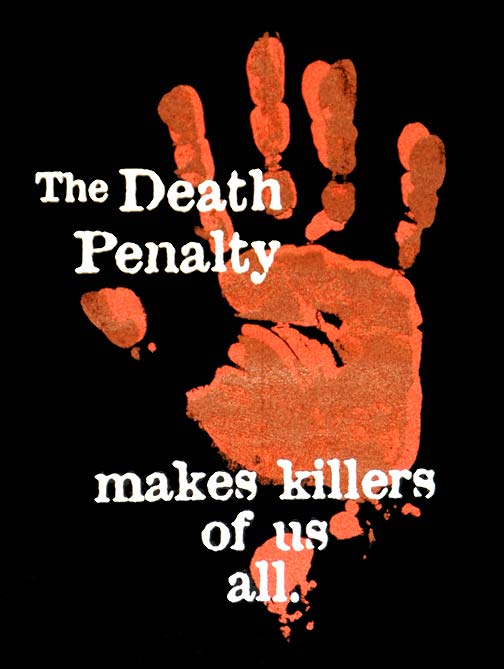
It’s no secret to the people I know that I’m adamantly anti-death penalty. Every few months the US tries to execute another prisoner and Texas apparently is doing it again tonight [Note: This was written a few days ago and the situation seems to have changed.]. As is often the case, the prisoner has mental health issues. According to Rachel Maddow, Scott Panetti represented himself at the trial and believes an alter-ego is the guilty party.

Strangely, the US supreme court has already ruled in this case that the guy is not mentally fit to execute. The current Supreme Court wisdom is that an execution falls under the heading of cruel and unusual punishment if the condemned is unable to comprehend the punishment.

Death-PenaltyIf we’re going to have capital punishment, that’s a pretty low threshold. Even still, Governor Perry is convinced the guy is faking it and has been for many years. Under that surety,  the state set a date and didn’t see fit to tell defence counsel, who read it in th he paper, with barely enough time and almost none of the resources to file for an extension and judicial review.

Sad, as always, but not surprised.

It seems that, despite Governor Goodhair’s best efforts, the 5th Circuit Court of Appeals has issued a stay. Fingers are crossed, but this doesn’t ameliorate the fact that the US maintains the death penalty as a punishment for certain crimes. The company this practice puts us in (China, Iran, North Korea) is often used as an argument against its continuation. Surely the US can take the moral high ground on an issue like this? I don’t think that’s a useful argument because it doesn’t sway those who hold the eye-for-an-eye point of view. Life for a life. Others say the victim’s family should have some say in how a punishment is meted. My preference is that justice be blind, especially where it is not tempered with mercy. Justice in places that still exercise the death penalty isn’t even colour blind, much less properly blind. There are reams of paper on how inept, incompetent, and massively underfunded defence counsel can be in Texas DP cases. Groups that take up DP defences do it essentially pro bono. The fees they get from the state barely cover the hours it takes to visit the law library much less actually put in the time it takes to fairly defend a client.

That such firms are paid at all, I suppose, is a step in the right direction. My grandfather was called to the bar in Washington, D.C. in the 1930s. He once told me that if you were a lawyer, you were required to take pauper’s defence cases for no fee. I gather it was something like jury duty – lawyers were all on a rota to take these on. Alas, I never asked what types of cases he ended up with, given that he generally practiced tax law. (My father was called to the bar in California in the mid 60s and did not have this onus.)

Of course, the problem is now compounded, no pun intended, by the means by which we can actually execute prisoners. No legitimate US pharmaceutical company will supply the US with execution drugs fearing protest and firms abroad won’t do it either. From what I gather, Iran usually uses the rope – and cranes – and China uses bullets, the better to harvest organs. That sounds really creepy. I don’t have a source to hand, but I’m pretty sure I read about that from a legit journalistic source. (Oh, they’ve decided to stop this practice come the new year, according to NPR.

From top to bottom it’s a problem before we even get into the morality. The actual sausage is bad enough.

I’m not saying anything new when I say that killing people in order to say that killing people is wrong sends the wrong message about killing in general. I’m a big fan of the financial argument – our legal system, even taking into account the paltry sums paid to represent defendants too poor to afford counsel of their own, is expensive. A recent Kansas study of 34 cases between 2004 and 2011 found costs for DP cases were much higher than those of non-DP cases:

The numbers below are in thousands:
DP                       non-DP
Defence costs (1)                     395.7                   99
Trial court costs (1)                72.5                     21.5
Defence costs (2)                    130.5                   64.7
Trial court costs (2)                16.3                      7.4
Prison housing/year               49.4                     24.7
(1) indicates cases that go to trial; (2) indicates cases in which a guilty plea is entered that didn’t go to trial.

In terms of time, DP cases that go to trial took approximately 40 days, whereas cases where the death penalty was not sought too about 17 days on average.

I’m not sure if Kansas is representative, but the page behind that link has studies for multiple states as well as federal numbers. One study suggests that commuting all of California’s current death row sentences to life without parole would save the state USD 170 million per year. At a guess, that would pay the salaries of about 2500 public school teachers.

170 million would feed and house and counsel a lot of PTSD-stricken veterans and mentally ill. These groups wind up in the criminal justice system at alarming rates themselves because we haven’t figured out how to address their needs on the scale our wars and systems generate them. (It’s been nearly fifty years since Governor Ronald Reagan shut the state-run mental health facilities, so it might be time to stop blaming him for California’s homeless issues and start fixing them.)

The racial disparity in DP cases, and the US prison population in general, is also hard to ignore and is also a legacy of Reagan, but one we can still blame on his political strategies. The drug sentencing laws (that Obama recently rescinded) are one aspect. Many argue that if we’re going to have a death penalty, at least it be fair. I think the voting populations of many states are just as fine with having 40% African American prison populations (when blacks make up 12% of the general population). Our demagogues happily promote such figures as reflecting the criminal nature of the population rather than the criminal nature of the US criminal justice system.

A lot of people who have thought about and lived the Black experience in America will have better and more cogent responses to the current situation. What with another unarmed black boy killed this week, more needs to be done. The hat of a young woman on the train with me reads “Comme der Fuckdown” which would be a good start. Again, I’m checking my privilege poorly, but I don’t think riots are the way to go. I’m also aware that if the media is showing a riot, that does not mean There’s a Riot Goin’ On. More needs to start with law enforcement. I recall a quote posted after Mr Brown’s murder that read something like “Why are Black boys considered problems before they are considered people?” I don’t think there’s a blog post solution to endemic racism and police militarization.

Slyfam-riot1My first thought after reading of the murder of Tamir Rice in Cleveland this week, however, was that police forces need to act more like machine shops. I want news reports that start ‘{insert city here} has gone 21 days without the death of an unarmed suspect. Without the deaths of a men or women just going about their business. Without a presumption that being Black is being Guilty. Without police forces conflating their work with that of the justice system.

And how about a competition that rates police forces on how well they protect and serve their entire communities?

And how about funding municipal governments in such a way that (unlike Ferguson, MO) they don’t rely on fines imposed unfairly on one group?

It’s not much of a start, but I’d love to see the result.

On this day in 2004, Jhon Balance of the band Coil fell off a balcony in his home to his death at the age of 42.

A flatmate introduced me to the music of Coil by way of their album Scatology in 1990. Scatology contains a frighteningly beautiful, slow, dark version of Tainted Love along with songs that more obviously betray the industrial origins of the band, given that the other core member of Coil was Peter Christopherson of Throbbing Gristle. Balance and Christopherson were lovers and were already examining the toll of the AIDS crisis in their music and their graphics. (In other circles, Christopherson, who died in 2010, was a member of the Hipgnosis graphic design collective.)

Balance and Christopherson were both members of Psychic TV before splitting off to form Coil in 1984.

Around the time I started listening to Coil, they released the acid house-inspired Love’s Secret Domain which went into heavy rotation on my CD player for quite a while. And is still one of my favourite albums.

Coil went into hibernation for much of the nineties – I’m sure I’ve read somewhere that Balance spent a good portion of the decade fighting various addictions, but started releasing new music again in 1998 with the Solstice and Equinox singles, Astral Disasters, and Moon’s Milk in Four Phases, among several others preceding their return to live performance in 2000 or so. The last several years of Balance’s life were astoundingly prolific. There are studio albums and live performances and collaborations and plans.

Not only were Coil prolific, their music spanned a wide range of styles. As noted, Love’s Secret Domain has an acid house component; early work like that found on Scatology and 1984’s Horse Rotorvator are perhaps gothic, but not in a romantic sense. Related bands like Current 93 often get the label Neo-folk. That could apply, I suppose. Moon’s Milk and Astral Disaster tend towards dark ambient. (And, again, talking about music is like dancing about architecture. Coil resisted musical categorisation to such an extent that they once issued the sticker above.)

https://m.youtube.com/watch?v=H2uACKqBzgE

About two years before his death Coil performed in Prague at Palac Akropolis. I’d been prepared to go to Vienna for a gig that occurred two days later but was announced about a month earlier, but happily they came to the town I lived in at the time. Songs from both performances make up the 2003 Live Four release. My friend Chris and I went to the show together. You might guess by the way I write about their styles and their albums, that I did a very poor job of convincing friends what a great show it would be. (I still suffer this.) Chris, however knew some of their music well, and neither of us were disappointed.

The show was nearly sold out and was one of the most compelling shows I’d ever seen, between the visuals, the musical performance and the attendant stage performance of Plastic Spider Thing (described by performers Massimo and Pierce as “a highly moral, yet sexually explicit exploration into the relationship between the spider and the fly”). I feared during the performance that the band, and Balance in particular, wasn’t actually connecting with the audience. It may have been my own projection, but it was not shared by Balance himself.

After the show, I purchased a CD at the merch counter (which Balance and Christopherson autographed), and had another beer. In a moment when Balance wasn’t chatting with someone else, Chris went up to him and asked about a sample used on Love’s Secret Domain. ‘Oh, he said, that’s from Nicholas Roeg’s Performance.’ The two of them talked about Roeg’s films for a few minutes and to break a silence, I piped up how much I had enjoyed the show. He replied that the best shows were those in which he could play off the energy of the audience and that he really felt it that night. Oh, okay then. I then mentioned having enjoyed Derek Jarman’s The Angelic Conversation, a movie for which Coil had performed the music. (It’s also notable for Judi Dench’s readings of several of Shakespeare’s sonnets.) He became quite wistful in that moment. That movie, an examination of (among other things) homoerotic desire, he told us, had been a love letter of sorts. Jarman himself had succumbed to AIDS a couple of years before, and I have little doubt that he wasn’t the only person involved who had already died. I know we spoke for the better part of an hour and I was tempted to ask him to come home with me. I didn’t necessarily want him, but he obviously needed to be held. Alas, I lived well outside the centre of town at the time, and wouldn’t have known how to explain the poet I’d brought home to my flatmates. So I lost that chance.

His death shocked people who followed the band because he’d been suddenly so productive. Three completed Coil studio albums (Black Antlers, The Ape of Naples, and The New Backwards) were released after his death. I’m not a believer in such things, but not long after he died, someone produced an extensive horoscope on Balance in which he drew the conclusion that few if any people of note had been born under the same convergence of astrological phenomena, and that perhaps meeting Christopherson had provided him opportunities the stars had not.