Archives for category: 70s

I’d not read Hunter Thompson’s Fear and Loathing in Las Vegas in at least twenty years and I’m not sure if before this week I’d ever actually finished the thing. Now I have, and on a certain level, I think I might be too old for it. It’s one of those books like Catcher in the Rye and possibly On the Road that are best enjoyed before the sheer irresponsibility of the story in the telling is too obvious. In the heart of Thompson’s drug-addled tale of not reporting on two events for which his alter ego Raoul Duke is paid, he makes a stunning indictment of what has become of the American Dream™.

In one of the novel’s more cogent paragraphs, Thompson spells out the moment when Hell’s Angels faced off on the Oakland/Berkeley border with anti-war protesters in 1965, somewhat to the detriment of the nascent anti-war movement and to the greater detriment of the American Left in general. Later, he starts discussing those Timothy Leary took down with him, followers ‘who thought they could buy Peace and Understanding for three bucks a hit’ , certain that some one or some thing was ‘tending the light at the end of the tunnel’ (p. 178).

He goes on to gather several leaders together who followed in the failure of Leary to unite the movement: Jesus, Manson, Hell’s Angels leader Sonny Barger, and concludes with the book’s most potent idea, ‘…no point in looking back. The question, as always, is now…?’ Whatever we’re going to do, we have to do it, rather than bemoaning that we haven’t.

While I put Duke and Dr. Gonzo’s tales of their American nightmare in an unfavourable bucket with Kerouac and Salinger (both of whom wrote some brilliant, long-lasting work, just not those novels for which they’re best remembered), another comparison that comes to mind is Sterne’s Sentimental Journey through France and Italy. In a similar way to Sterne, Thompson invites us into a series of vignettes that insist to the reader that they’re actually going somewhere, but don’t ever really make it there. Whereas Sterne’s volume ends without ever getting to Italy (as promised in the title), and possibly in the middle of a sentence, Thompson ends his without ever producing (as far as the reader can tell) the articles his character promised. The expectation from a book that is at least tangentially about writing is that there will be a submission and maybe even a reaction to it. Thompson subverts this by his alter ego barely attending or participating in the events he goes to Las Vegas to cover. To be fair, there is one extended sequence in which Duke and his attorney, Dr. Gonzo, attend one of the presentations of the National District Attorneys Association’s Conference on Narcotics and Dangerous Drugs (thoroughly ripped, as the two characters are for the entirety of the book), so our expectations are only partially subverted.
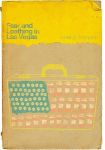
FandLinLVSubtitled A Savage Journey to the Heart of the American Dream, what strikes the reader (or at least this reader) about Fear and Loathing in Las Vegas is the savagery with which Thompson/ Duke treats primarily the female characters and really most of the book’s secondary characters. One way of looking at the nastiness of the interactions with the waitress in the chapter ‘Back Door Beauty & Finally a Bit of Serious Drag Racing on the Strip’ is that Thompson wants to implicate all of us in the nastiness that America became after the “Main Era” ended. The Main Era is what he names that time in the 60s when ‘You could strike sparks anywhere. There was a fantastic sense that whatever we were doing was right, that we were winning’ (p. 68). He continues, ‘We had all the momentum; we were riding the crest of a high and beautiful wave. So now, less than five years later, you can go up on a steep hill in Las Vegas and look West, and with the right kind of eyes you can almost see the high-water mark – that place where the wave finally broke and rolled back.’ (I love the idea of a ‘steep hill in Las Vegas,’ a place in the middle of a desert and nearly as flat as The Netherlands.)

So that moment of mind-altered optimism was undone, or undid itself through subverted protest, Nixon’s treachery, an unwinnable war, and the crackdown of the original war on drugs that Nixon instigated with the help of Elvis Presley. But in the retelling, Thompson says, yes, it all fell apart and to a one, even me, we became nasty and crass.

Thompson shares that, beyond the Strip, you find ‘the shoddy limbo of North Vegas…out there with the gunsels, the hustlers, the drug cripples and all the other losers,’ and here Duke and Gonzo drop into the North Star Coffee Lounge for late night eats. Their waitress, extensively described as, ‘large in every way, long sinewy arms, and a brawler’s jawbone…A burned out caricature of Jane Russell: big head of dark hair, face slashed with lipstick and a 48 Double-E chest that was probably spectacular about twenty years ago…but now she was strapped up in a giant pink elastic brassiere that showed like a bandage through the sweaty rayon of her uniform, (p. 158)’ finds herself on the receiving end of a pass from Gonzo, a napkin with ‘Back Door Beauty’ scrawled on it. On receipt, she lays into our heroes with vitriol. Duke just watches while Gonzo deflects the waitress’ accusations and cuts the receiver off the pay phone with a switchblade when she threatens to call the cops.

Duke understands that Gonzo has struck a nerve, ‘The glazed look in her eyes said her throat had been cut. She was still in the grip of paralysis when we left,’ but doesn’t comment or dissuade Gonzo from his behaviour. We as readers follow along, but Thompson not only lets his narrator off the hook, he relates the events that follow as being drawn verbatim from a tape recording transcribed by the editor. He doesn’t give Duke the opportunity to respond and lets himself off the hook at the same time.

From a wider perspective, Thompson’s after roping the reader into some kind of complicity. The more you enter the heads and the behaviours of the main characters the less you can say that you’re not part of the great destruction being wrought. Thompson attempts, through the excess of his protagonists, to separate the freaks – the ones who stepped out of the mainstream before that wave receded – from the normals who flock for whatever reason to Las Vegas’s casinos from the rest of the country. However, through that excess, he implicates all who see themselves on some version of the correct side of that divide. To what we now call coastal elites as well as those citizens of flyover states, Thompson seems to say: ‘You’re all in on this. We’re all in on this. Through silence or engagement. And I’m in on it as well.’

I’m not sure that this is what the man who famously asserted, ‘I wouldn’t advocate drugs, alcohol, violence, or insanity to anyone, but they’ve always worked for me’ meant to imply.

I wanted to add something about how Thompson’s anti-Nixon stance (against all hypocrisy propounded and promoted by the Nixon White House) had come back to taunt him when George W. Bush was selected for a second time, and might have contributed to his suicide a month into Shrub’s second term, but this doesn’t seem to be borne out by a suicide note which indicated that 67 was ‘17 years more than [he] needed or wanted.’ On the other hand, In October 2004, Thompson wrote: ‘Nixon was a professional politician, and I despised everything he stood for—but if he were running for president this year against the evil Bush–Cheney gang, I would happily vote for him.’ Six months after Thompson’s death, there was a hell of a memorial.
Island / Atlantic Records, 1974

Released just six months after Starless and Bible Black and right on the heels of Fripp dissolving the group (again), Red has been identified as King Crimson’s apotheosis. It is indeed damn fine stuff. Violinist David Cross was expelled from the band during sessions for basically not being able to keep up with the hardness of the sound they were creating, and indeed he’s only evident on two tracks. Former members Ian MacDonald and Mel Collins were brought in to round things out.

Side 1 consists of the instrumental title track; the album’s ballad, Fallen Angel; and the aptly named proto-metal One More Red Nightmare. Side 2 consists of the the improvisation Providence, recorded on the previous tour, and the album’s closing epic, Starless.

Red is, interestingly, the only song from this album that later incarnations of band continued to play into the 80s and 90s (and still). This is possibly because the album as a whole relies on a lot of overdubbing. With its multiple time signatures and sections, and its relative brevity, this one track sums up everything the band had been working on up to that point.

Fallen Angel, which recounts the death of the narrator’s brother in a knife fight, is strangely beautiful. I love how John Wetton holds the vocals together, never letting his range falter. The cornet and oboe (contributed by session musicians, not Collins and MacDonald who both contribute to Starless and MacDonald to One More Red Nightmare) give the track a special poignancy. (In terms of theme, location, and arrangement, it wouldn’t have been out of place somewhere on Genesis’ The Lamb Lies Down On Broadway, released the same year.)

The beauty of Fallen Angel leads to the the oddness of One More Red Nightmare in which the narrator recounts the horror of being aboard a falling airplane (Pan American nightmare / Ten thousand feet funfair) only in the last lines to awaken ‘safe and sound / Asleep on the Greyhound’. Last weekend my wife and I visited New York and from the Empire State Building’s observation deck could see the Met Life building which was still the Pan Am building the last time I was on that deck in about 1984.

Side two mirrors the second side of Starless and Bible Black, consisting of an instrumental improvisation and an epic. Providence (named for the city in which it was recorded, much like Asbury Park on USA) is a weird interweaving of noises that I’m mostly unsure what to make of. At times it doesn’t sound as though the band were playing in the same room, but then it pulls together before breaking apart again. I’m sure in these write-ups I’ve used variations of that same sentence. That sort of thing is very much in the nature of KCs improvisational experience. I find it more intriguing than many of the band’s other live improvs and it seems to make sense in context.

Finally, there’s the album’s longest track, Starless. What started as a Wetton composition rejected for the previous album ended up as this stupendous beast with parts written by each member (including Cross), contributions from Collins and MacDonald and words composed by Palmer-James. Like some of the best pieces of the Pete Sinfield era, this track combines relatively depressing lyrics (Cruel twisted smile / And the smile signals emptiness for me) with music that is by turns mad and manic.

Robert Fripp, commenting on both the size of the current KC lineup and amount of studio complexity that went into Red suggested that the band could now play all of this album without extra trickery. I don’t have the quote to hand, but KC Mark VIII have indeed performed all of the tracks save for Providence on recent tours. For many of the dates the last couple of years, the dgmlive website offers one track for free (with registration, natch). So:

  1. Red – https://www.dgmlive.com/tour-dates/2020
  2. Fallen Angel – https://www.dgmlive.com/tour-dates/2065
  3. One More Red Nightmare – https://www.dgmlive.com/tour-dates/1907
  4. Starless – https://www.dgmlive.com/tour-dates/2038

THE NEXT STEP IS DISCIPLINE.


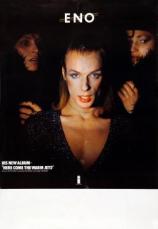
Brian Eno – Here Come The Warm Jets – 2017 half-speed master reissue.
When I first purchased this album on CD in 2002 or so, I knew three of the songs. Driving Me Backwards and Baby’s On Fire appear on the Ayers/Cale/Eno/Nico live album (which I originally purchased for the Velvet Underground connection, not the Roxy/Soft Machine connections). Album opener Needles In The Camel’s Eye is used over the opening credits of Todd Haynes’ criminally underrated Velvet Goldmine.
eno_jetsAnd there’s a reason Haynes used it: That opening rush of instrumentation (which accompanies a rush of glam-rocking teenagers chasing a pop star) pulls the listener right in. The intrigue doesn’t let up through the album’s 42 minutes. Lyrically, it’s almost all (in the words of Blank Frank) incomprehensible proverbs, but musically it’s a gorgeous grab-bag of styles, the way the best glam albums were back in ’73. This new remastering does a wonderful job of separating the musical components so that you can hear the strange fuzzed out guitar on the title track as something separate from the drums, keyboards, and the vocals (which are still too indistinct to figure out).
Aside from those songs, I mostly knew Eno for a lot of non-pop work – ambient work like Tuesday Afternoon (and Music For Airports), production jobs (U2, Devo, Bowie), and his collaboration with David Byrne, My Life In The Bush Of Ghosts. And as I write that, I realise I knew bits of 801, Bauhaus’ cover of Third Uncle, and a good bit of the first Roxy Music album. I’m pretty sure I bought Roxy’s debut the same day I acquired Warm Jets and, for the same reason – a bunch of its songs are used in Velvet Goldmine as well.
I wish I could be more articulate, but there’s nothing about this album’s 10 tracks that isn’t insanely cool. Occasionally I find myself annoyed with albums on which each track is faded out, as if neither the musicians nor the producer knew where the song ended. HCTWJ is the opposite – every track knows what it’s doing – there are crossfades between songs – like how Some Of Them Are Old weaves right into the the title track at the end of the album. On Some Faraway Beach (the original opener of side two, here the opener of side three), a slow piano-based track which ends abruptly on a strange but clear keyboard run is followed by rocker Blank Frank, but the transition between them has always felt absolutely purposeful to me. Blank Frank is another revelation here in terms of the clarity of the instruments. Keyboards and drums and guitars all seem to be in competition, but they’re all winning. Oddly, this song does fade out, but over only five or six seconds. The martial drums that anchor the next track, Dead Finks Don’t Talk (apparently a kiss-off to Bryan Ferry) work their way through some very strange guitar work before surrendering to a blast of distorted synthesizer which concludes just where it needs to.
Two thumbs up. Go buy it.
(Eno’s other three mid-70s rock albums, Taking Tiger Mountain (By Strategy), Another Green World, and Before and After Science have also been reissued on vinyl with the half-speed master treatment. I’m sure those are tasty too, but I don’t love those albums quite as much as I love this one.)

I don’t recall why I first bought The Age of Plastic by the Buggles. I might have heard Video Killed The Radio Star; it might have been because I knew the Yes connection, though I’m pretty sure I knew the album before the Drama tour (which my sister saw, but I did not). Al of that said, it had a huge impact on me. I played it quite a lot when I was 13 or 14. I’m quite sure I knew it well before we had MTV. Those eight songs were all mini movies in my head, the way the best pop is. (One track is indeed about a real movie studio, Elstree.) The fact that they’re all quite sci-fi as well appealed to my teenage literary tastes.

Much later I found the Bruce Woolley version. Woolley co-wrote it with Trevor Horne, and released a more guitar-heavy version with a crew called The Camera Club, which also featured a pre-Age of Wireless Thomas Dolby and Matthew Seligman. The most recent issue of Mojo (#283) has interviews with Woolley, Horne, and Geoff Downes who was the other half of the Buggles. At the close of the article, it’s mentioned that Woolley has recorded a new version with Polly Scattergood. It’s a very beautiful, slower, lower interpretation that reminds me of why the original excited me so much when I was a kid. (Keep an eye out in the vid for Thomas Dolby.)

After replacing Jon Anderson and Rick Wakeman for one album (Drama) and ill-fated tour (Horne didn’t have Anderson’s range or vocal stamina and on the later dates especially, his voice was a liability), the Buggles released a second album, Adventures In Modern Recording, but had already gone their separate ways before its release.

Horne went on to produce a stack of classic albums (Welcome to the Pleasuredome, The Lexicon of Love, 90125, Seal, Dear Catastrophe Waitress, and Who’s Afraid of the Art of Noise to name a few) and Downes founded Asia and took prog rock into that weird 80s pop direction. Asia’s a weird animal, too. Downes was the only consistent member (in fact there was one lineup of Asia that even he wasn’t in on) of almost 30 who have passed through, but at different times it was fronted by John Wetton and Greg Lake (both ex-King Crimson among many other bands).

When John Wetton passed away, I flitted through a bunch of videos of ELP and Asia and King Crimson and came across a fantastic concert he and Downes performed in a church which featured a gorgeous arrangement of Elstree. (Track four on this video.)

But back to The Age of Plastic. Giving it another listen now (and it’s a pretty consistent part of my listening – I don’t think a year goes by that it doesn’t come up in the rotation), I’m both 13 again and trying (as I still do with the music I love) to get my friends to hear its brilliance, and the 50 year old wannabe rock historian. More often than not, my friends thought I was enthusing on The Bugaloos, anyway.

The music is almost entirely keyboard/synthesiser-based, but the arrangements are impeccable and multi-layered. Considering the new wave acts of the time, the arrangements put them more in the category of disco (when there were still live string sections) and the intricate productions of Joe Meek. Johnny On The Monorail has both a disco bassline an almost a surf-like hook, and a 70s folk guitar bridge.

Horne is quoted in the album’s wikipedia page as having wanted to make music like Elton John was doing, but didn’t feel he had the chops. He then heard Kraftwerk and learned ‘you didn’t even have to emote’ to make hit songs. That said, all of the musicians had been working for most of the decade (Downes, Horne, and Woolley all worked with a singer named Tina Charles who had several hits, for example), so it’s not a surprise that the album has so many facets. It still rates five stars with

228_inthrough_bag_israel_front

Israeli cover of Led Zep’s In Through The Out Door.

In August, 1979, in the midst of the punk revolution in the UK and after two years off the road (four since they’d last played in the UK), Led Zeppelin staged two huge shows in at Knebworth over two weekends in August, performing for about 400,000 people. These shows included the first live performances of Hot Dog and In The Evening from the forthcoming album In Through The Out Door. The album should already have been released, but there were production issues and it wasn’t released until the week after the second show.
The following year, the band toured Europe, but on the eve of the American tour the following year, drink finally did in drummer John Bonham. Given that lead singer Robert Plant’s son had died during the American leg of the 1977 tour (thereby putting the kibosh on the European tour for Presence), this was pretty much the last straw for the band and they called it a day.
In Through The Out Door is a curious affair. In terms of production, it’s cleaner than 1977’s Presence, but as a whole, it’s a less focused affair. I may feel this way only because my sister and I bought it the week it was released and played the hell out of it. I don’t think I owned a copy of Presence until I bought one of those dreadful tinny CDs in the mid-90s. (The mastering of the whole catalogue for CD in the late 80s was horrible. The range was shrunk, the warmth pulled into some kind of musical black hole, and even to someone who listens to most music on relatively cheap earbuds, the overall sound was painful.)
Of ITTOD‘s seven tracks, one is a straight-up country tune (Hot Dog), one could be boogie-woogie without too much effort (South Bound Suarez) and others sprawl into disco territory (Carouselambra, In The Evening). But from the faded in digeridoo of In The Evening to the slow blues of I’m Gonna Crawl, I find it their most interesting album – at least the most interesting that was recorded in one go. (Physical Graffiti reaches farther and has greater heights, but pulls on music the band had created over the course of the three previous albums.)
After 36 years, the new reissue is as pleasing as any vinyl I’ve ever owned. It’s the only one of the new reissues I’ve purchased so far (tempted by Physical Graffiti, to be sure, primarily for Night Flight and to listen to Boogie With Stu sped up to 45 the way my sister and did way back when).