Archives for category: 70s

In between other things, I’ll be sharing my views on the music of Siouxsie and the Banshees, including the Creatures and Glove side projects. As with the other catalogues I’ve reviewed, I’ll be looking at the original album releases as opposed to the bonus-track laden reissues (not that those bonus tracks aren’t without merit).

Released: November, 1978

Lineup: Siouxsie Sioux (vox), Steve Severin (bass), John McKay (guitars), Kenny Morris (drums)

Tracklist Side 1:
Pure
Jigsaw Feeling
Overground
Carcass
Helter Skelter

Tracklist Side 2:
Mirage
Metal Postcard
Nicotine Stain
Suburban Relapse
Switch

Recorded after the release of debut single, Hong Kong Garden, and also produced by Steve Lilywhite. One of the first salvos of the post-punk era, The Scream contains elements of punk and glam, and with elements of the macabre, it set the stage for what became goth. And did so a year before Bauhaus hit the stands with Bela Lugosi’s Dead.

In terms of subject matter, the lyrics run from the mundane (Nicotine Stain) to, indeed, the macabre (Carcass, Suburban Relapse). I first got into the Banshees in ‘81 or ‘82 and started collecting their singles and having friends tape their albums. I’m sure I had this on a cassette with the second LP, Join Hands, on the other side. I listened to their music a lot, but the full albums I found really difficult to get into. Listening to this one now, I find it almost comforting in its familiarity, but surprising at the same time. The buried saxophones in Suburban Relapse and Switch feel lifted from a Roxy Music song (which kind of makes sense – Sioux and Severin, the band’s only stable members from start to finish, met at a Roxy gig in ‘75). Kenny Morris’ spacious drumming leaves so much room for the other members to thrive as well. I think Severin is underrated as a bassist, possibly because he makes the rhythms feel so obvious.

In between there’s the almost obviously punk cover of the Beatles’ Helter Skelter and the almost Can-like Metal Postcard. I’ve always found the English version of Metal Postcard a little strange, because the version I had, and played steadily for several years, was the German-language 45 (Mittageisen) released the following year.

Overground and Suburban Relapse are both about the trades between outward normality and an interior that doesn’t match expectations. This acknowledgement of the human balancing act was one of those things that fueled the goth aesthetic. Jigsaw Feeling almost foregoes the outward normality and addresses the splits inside, “One day I’m feeling total / the next I’m split in two.”

The album’s opening track, Pure, fades in with a slow build of bass, then guitar, then a wordless moan from Siouxsie that sounds as though it’s coming from down a long hallway. Jigsaw Feeling comes in with bass triplets and a single repeated guitar chord for the first 40 seconds. Combined with the almost two minutes of Pure, it’s two and half minutes before the album’s first words, ‘Send me forwards, say my feelings.’ A bold move for a debut album. David Bowie didn’t try the same trick until StationToStation, 12 years into his career.

By the time the album concludes with the 7-minute Switch, an indictment of science, medicine and religion for the ways in which they direct and confuse and experiment with no real understanding of how people work, the listener has been on a journey. A deeper lyrical analysis might reveal an inner-directed childhood point of view in some tracks followed by the more adult concerns (infused with that childhood confusion) found in the last three tracks.

Next up: Join Hands
I had an astoundingly specific musical dream last night in which I was attending a gig by a reformed Rocket from the Tombs. RFFT were an early 70s proto-punk band from Cleveland fronted by Dave Thomas. The other original members included Craig Bell, Johnny Mandansky, Peter Laughner, and Gene O’Connor. The band lasted a year before the band split. Thomas and Laughner formed Pere Ubu while O’Connor and Mandansky joined Stiv Bators to form Frankenstein and later the Dead Boys.

Right, In the dream, I was watching a lineup RFFT that also included Robert Forster, one of the founders of Australian pop band the Go-Betweens. In the dream Forster was the founding member of the Go-Betweens who had passed away. In the waking world it was Grant McLennan who died of a heart attack in 2006. Forster is a going concern.

The gig took place in the large back room of a diner. It was brightly lit and the stage was barely raised at all. And there was a serious mosh pit. The song in the dream was 30 Seconds Over Tokyo and before the song was over, the mosh pit spilled its way into the diner.

We had friends over last night who I regaled with tales of this year’s Glastonbury Festival. One of the acts I brought up was Kamasi Washington (a fair distance, musically from RFFT), and in a later dream, I was at the office and rushing out to catch a bus to see Washington, but I saw the bus (#71) drive by as I was leaving. I must have been in San Francisco because I ran down a hill to catch the train at Market and Montgomery, but I took the wrong entrance and I and another guy ran two or three flights downstairs only to find that the platform wasn’t there. A guy working on a car at the bottom of the stairs told us to go back up and take the other entrance. As I was running up the stairs I woke up. And I’ll conclude with this excerpt from Kamasi’s Show Us the Way.


Guinevere Turner writes in the May 6, 2019 New Yorker about growing up in a commune and discusses the differences between communes and cults. ‘(Leader Mel) Lyman never ordered his followers to kill anyone the way Charles Manson did, but if Lyman had asked, I’m pretty sure that they would have complied.’ (The Others)

That said, I spent some formative years in a commune/cult and not long after my family left, the leader of this cult did ask two of his followers to attempt murder.

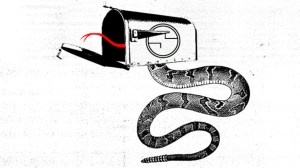
Lance Kenton was about 21 (and the one thing said about him in every article on this subject is that he was the son of big band leader Stan Kenton) and Joe Musico, a damaged Vietnam war veteran aged about 28, under the direction of Synanon’s leader, Charles Diederich, used the rather ingenious method of cutting the rattles off of a rattlesnake before putting the snake into the mailbox of attorney Paul Morantz. They were found guilty and each served a prison sentence and probation time.

My family had all left Synanon by the close of 1977 and the snake incident didn’t occur until about a year later. (I should verify, but in my memory the Morantz attack, the People’s Temple mass suicide and the murders of Harvey Milk and George Moscone all ran together in the news. So perhaps by this definition, Synanon counts as a cult, or at least it did by that point. I have vague memories of an increased focus on self defense while I was still there, but that might be an amalgam of readings and memories and discussions that happened later.
From certain points of view, there might be objective assessments of the whole situation but 40 plus years later, I’m generally unwilling to dig into them. I don’t get much out of the subjective assessment either, given that it took me 25 of those 40 years to get to the other side of my own Synanon experience.

The death of Paul Morantz in 1978 would only have benefitted Chuck Diederich. Morantz had made something of a name representing individuals who had cases against Synanon and other such places based on mistreatment. And he’d won some pricey verdicts as well. It’s not as though there weren’t other lawyers going up against Synanon at the time, but Morantz had been successful and was showing no signs of stopping.

CED, according to one very biased account that insists on referring to Synanon members as ‘Synanites’ (a term we never would have used), spent a lot of time on the Wire, the closed-circuit radio network demonizing Morantz and calling on followers to do something about him.

Anyway, this brings me to the cult at the heart of the executive branch of the US government. The president’s fixer has just started a prison term for crimes that only benefitted the president. Diederich’s call for someone inside to to his dirty work sounds eerily like what we’ve heard from Trump and specifically from Cohen’s defense of his own actions. (Fall Guy – Michael Cohen’s Last Days of Freedom by Jeffrey Toobin in the same issue of the New Yorker.)

Mel Lyman’s Family organization – the cult to which Guinevere Turner belonged from birth to the age of about 12 afforded her a great deal of security and was home in a way that Synanon wasn’t really for me. Noting that I have friends who were there much longer than I was and who saw the other end of a period of distinct cruelty against those of us in the school. Their attitudes about the place are very different than mine or my parents’. For a period, the school was run by a guy who had no pedagogical background. This wasn’t uncommon – most people worked jobs inside that had no relationship to whatever training they may have brought in. Unless it was lucrative. My father was a patent lawyer and he continued doing the same work and gave most of his income back to the community. If not all. The fact that the person in charge of the school, Chris Benton, had not educational background didn’t set him apart from anyone else teaching us. His background however was as a drill sergeant. And corporal punishment wasn’t outside of his remit. (This despite the fact that Synanon had strict policies against physical violence, threatening physical violence, not to mention swearing and drug, alcohol, and tobacco use.)

I left at the age of 10 1/2 when my father and stepmother left in September of 1977 (my mother and stepfather had left in mid-‘76. The story behind all of the relationships is complex and for another blog entry), almost three years after entering. It took a long time for me to come to terms with the place. Psychoanalysis in the wake of my divorce helped, I suppose. And simply getting to middle age and that point where there’s no longer any profit to be had from carrying the baggage.

Turner made a certain kind of peace with her experiences on a return visit at the age of 18 – the casual sexism with which the men their expected to be waited on put paid to her longing to return to The Family’s way of life. She makes an interesting point about the probable profusion of cults in America:

If you haven’t heard of a cult, it’s because it didn’t go down in flames. Its members are just quietly doing what they do, which means that there are many more active cults today than we are aware of.

Manson and David Koresh’s group in the 90s (for another example) and Synanon went down in flames. Folks like Lyman’s group laid low. I’d suggest that the probability a cult will go down in flames is directly proportional to the degree it goes head to head with existing power structures. Synanon got under the skins of nearby residents no matter where it set up (for a variety of reasons – the fact that it sold itself as a drug rehab organization harking back to its roots is one) and there was a certain amount of that antagonism built into Chuck’s messiah complex.

The issue we’re running into here is that Manson, Koresh and Diederich, and let’s add Philadelphia’s MOVE commune to the list, all in their own ways got the goat of the power structures (and the media). Outright murder got Manson on the map. The others? Different in their different ways.

What do we get, though, with the Cult of Trump in which the leader is the power structure? Increasingly there seems to be no way of stopping him short of something that turns the rest of the structure against him. That has historically taken a long and very difficult time.

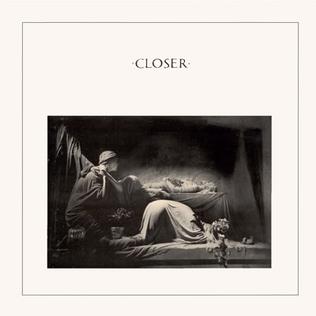
This past weekend included a listen to Joy Division’s Substance (1988) and continued reading of bassist Peter Hook’s Joy Division memoir Unknown Pleasures. I first heard Joy Division in 1987 when I went out record shopping with my friend Natalie. She and I had a lot of overlapping tastes, but she was a proper goth and I was just into the music. I knew a lot of Joy Division-adjacent stuff, but hadn’t heard anything by them. She recommended their second album, Closer. I was 20, living in San Francisco, and (as I would for several years) spent a lot of my time not processing my father’s death the previous year. I was hard to reach and generally hard to communicate with. The thing Joy_Division_Closerabout Closer, and JD in general for me at the time – I knew a little of the history – I’d even seen New Order (the band formed out of the remains of Joy Division) perform. That would have been in 1985 at the Santa Monica Civic – hadn’t heard any of their music prior and the show was boring – listening to live recordings from that period now – yeah, they were a dull live act). I recall playing this album a lot that year, and feeling all kinds of despair associated with it, primarily because I knew of the untimely death of lead singer Ian Curtis. One of my flatmates at the time told me it was familiar and asked if he would have heard something else by the band. It’s possible, I probably told him, but this tastes and mine were quite different. Yeah, I listened intently to Closer, but I didn’t know (yet) their biggest hit, Love Will Tear Us Apart, which was a little weird. But this was before someone could send you an email saying ‘you’ll like this song’ and before you even read the next sentence, you could be listening to the song.

So, yeah, Lawrence probably had heard Joy Division before me, though hipster that I was, I was loath to admit it.

Anyway, Closer threw me into a funk that was hard to escape but I was compelled to listen to it more and more. I bought Substance the following year and found that I especially liked the post-punk stuff (Atmosphere, Love, Dead Souls, These Days), but really didn’t know what to make of the earlier, punkier tracks. Later I’d buy the Short Circuit compilation (which includes At a Later Date recorded when they were still a punk band called Warsaw) on the same day I purchased Iggy and the Stooges’ Metallic KO. The following week, a friend told me the apocryphal tale of Ian Curtis committing suicide on the eve of Joy Division’s first American tour because he believed they’d never make a record as good as Metallic KO. A cursory search indicates that Curtis played Iggy Pop’s The Idiot and watched a Herzog film before taking his own life at the age of 23. His epilepsy wasn’t a secret to those nearest him, though in the late 70s, people didn’t know so well how to be supportive of an epileptic friend.

Hook notes that everything Joy Division recorded was classic – something he credits to band chemistry, youth, and Curtis’ lyrical brilliance. With this in mind, I can probably say that everything JD recorded , especially after An Ideal For Living, supersedes everything on Metallic KO (much as that document of two late shows from the original incarnation of the Stooges, including their last show in 1974, is brilliant in its own twisted way). Whether JD’s work supersedes The Idiot, well that’s a bit subjective.

Later I would have a huge poster of the cover of Closer on my wall, next to a huge poster of the cover of Aladdin Sane. As usual, there’s no real conclusion to this story. Even the fact that I’m reading Hook’s memoir right now is a little random. I purchased it for the kindle months ago when it was probably on offer for 99p, about what it cost to see Joy Division open for the Buzzcocks in 1979. It simply came up when I was scrolling through to find what next to read.

In this review, I look at the 40th Anniversary editions of two King Crimson live albums. I’ve been a fan of the USA album since before I knew where it stood in the KC canon. Earthbound, however, was never high on my listening list. Having launched into this adventure of rambling through the King Crimson discography, however, I was inclined to give it another go, especially as the notoriously lo-fi recordings are accompanied by an (expectedly cleaner) radio session, Live at Summit Studios, in this release. More on Summit later.

My favourite thing about Earthbound, recorded on the Islands tour in early 1972, is Boz Burrell’s voice. Being a fan of the classic mid-70s lineup that produced USA, Red, Starless and Bible Black, and Larks’ Tongues in Aspic, the limitations of Wetton’s voice always grated on me. With this in mind, however, these recordings also reveal in stark relief why leader Robert Fripp gave the Islands lineup the boot. Fripp himself had already moved on before they went on the road to meet contractual obligations. The other three members, Mel Collins on flutes and saxophones, Burrell on bass/vocals, and Ian Wallace on drums, are very loose in their playing and seem to want to be more of a boogie band than a progressive rock outfit. The original release consisted of 21st Century Schizoid Man, two improvs, a particularly sloppy Sailor’s Tale, and an extended jam on Groon, the instrumental b-side of the very jazzy Cat Food from 1970. The initial release of Groon was only about four minutes (four different takes can be found on the 40th Anniversary Edition of In the Wake of Poseidon), but on this tour, it was regularly extended past fifteen.

The CD portion of this release extends the initial album with Pictures of a City, Formentera Lady, and Cirkus. The DVD portion extends it further with Ladies of the Road, The Letters, and full versions of The Sailor’s Tale and Groon.

kc-eb-usa-back-smThe opening Schizoid man pushes the needle to the red in terms of both saturation and energy. While the structure remains the same, the improvisations in the middle exceed what is expected. Mel Collins’ sax work is intense, and marred somewhat by drumming that seems to be, possibly, part of a different song. Fripp ropes everyone back in with some searing runs. Boz’s treated vocals are more menacing that we hear in later versions, which is somehow appropriate.

Peoria lets us in with some bass/horn/drum interplay, but if Fripp’s guitar is in there, it’s very low in the mix. Sailor’s Tale fades in and closes out side 1. It’s the only song on Earthbound’s original release that also appears on the album they were touring, Islands. It’s a bit sloppy – and perhaps it’s this tendency to sloppiness that frustrated Fripp, but on its own terms it works.

Read the rest of this entry »