
Released:
September, 1979
Lineup: Siouxsie Sioux (vox), Steve Severin (bass), John McKay (guitars), Kenny Morris (drums)
Tracklist Side 1:
Poppy Day
Regal Zone
Placebo Effect
Icon
Premature Burial
Tracklist Side 2:
Playground Twist
Mother/Oh Mein Papa
The Lord’s Prayer
Following the release of non-album single The Staircase (Mystery) in March, Join Hands was recorded in May and June. Lead single Playground Twist was released in June, and the album three months later. I first heard it in ‘83 or so and found it beastly difficult listening. Opening track, Poppy Day was actually composed to fill the two minutes silence observed in Britain on Remembrance Day.
Saxophones introduce Regal Zone, but instead of playful glam effect they added to songs on The Scream, in this instance, they’re more like blasts of a war trumpet. With imagery that includes helmets of blood and squirming bodies, we’re still in realms of death that don’t really let up for most of the album, either lyrically or musically. Placebo Effect and side one closer Premature Burial (the latter based on an Edgar Allan Poe story) continue this imagery.
Icon, in its second half offers side one’s musical ease from the album’s musical intensity. I was listening to this album while stretching after my run and found the rolling toms easy to listen to. Lyrically, we’re still in arenas of conflict.
Those rolling toms, so reminiscent of Maureen Tucker’s work in the Velvet Underground suggest that the structure of Join Hands owes something to the Velvet’s White Light/White Heat. Side one contains relatively short songs with recognizable pop structures, whereas side two contains one pop song succeeded by nearly 20 minutes of what Laurie Anderson would have called ‘difficult listening’. (I know this argument assumes that The Gift on side one of White Light/White Heat has a recognizable pop structure. It doesn’t. But that’s a topic for another essay.)
By the time the original listeners flipped this over to side two, the bells of Playground Twist, already a top 40 hit and performed on Top of the Pops, must have been a welcome respite. Its waltz-time signature however puts the listener on guard that this isn’t going to be any easier. Mother/Oh Mein Papa, recited mostly to the sound of a music box, has new lyrics to a German music hall song later a hit in English for Eddie Fisher, among others. Rather than the nostalgic memories of ‘my father, the clown’, Siouxsie sings of the suffocating parent who wants to mold the child. ‘She’ll stunt your mind til you emulate her kind’ is eerily similar to Pink Floyd’s Mother, released later the same year, ‘She won’t let you fly, but she might let you sing.’
The original release’s closer is a 14-minute tour de force rendition of The Lord’s Prayer. Noting that the Banshees’ first performance (the only performance of the lineup that featured Marco Pirroni on guitar and Sid Vicious on drums) was an extended rendition of this song. Does its inclusion on this album suggest that they were at a loss for material? It’s possible, but given how prolific the band was, this is unlikely. Troubles within the band, whatever those things that precipitated the departures of McKay and Morris on the eve of the tour might have been, are more likely. The words of the prayer are interspersed with snippets of other pop songs (Twist and Shout, Knocking on Heaven’s Door), show tunes, and wordless wails and yodels. The inclusion of Tomorrow Belongs To Me, repurposed from Cabaret, brings the war references of the opening of the album full circle.
Even though Kenny Morris and John McKay would leave the band before the next album, Kaleidoscope, Morris’ drum sound on this album defined their sound in many ways. the toms in Icon are especially emblematic of the Banshees’ sound.
The 2006 reissue follows The Lord’s Prayer with the punk single Love In A Void (the b-side to the next single, Mittageisen) and closes with Infantry, an instrumental originally meant to close the album, but left off the original release. (Wikipedia indicates there’s a Record Store Day edition from 2015 that includes Infantry after The Lord’s Prayer. That would be a nice version to have.) Infantry is a slow, echo-laden piece for solo guitar and effects pedals with a repeated motif that slowly fades out. I think this track makes for a more appropriate, purposeful closing to a very difficult and worthwhile album.
Next up: Kaleidoscope
 The Belew lyric Facts of Life, which closed out side A is another false start on this album. (Does one even know if this album was sequenced for LP release? Not I.) It’s musically interesting, but lyrically weak. The foolish aphorisms that don’t lead anywhere lead us to believe that Belew was just noodling some more, while giving the illusion of some kind of profundity. ‘Like Abraham and Ishmael fighting over sand/Doesn’t mean you should, just because you can/That is a fact of life…Nobody knows what happens when you die/Believe what you want, it doesn’t mean you’re right/That is a fact of life.’ I think the conclusion the lyrics draw in each verse isn’t supported by the arguments – at a poetic level, it would be more satisfying if he’d left the title phrase out of the sung lyric.
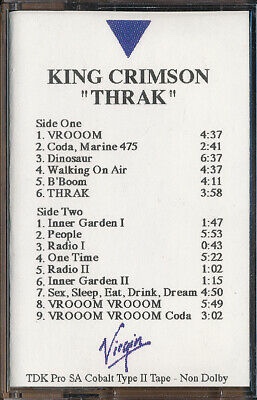 The instrumental B’Boom follows. After a short introduction, percussionists Bruford and Mastelotto go head to head. This is the first time KC had had two percussionists since that brief period around the recording of Larks’ Tongues In Aspic and this kind of interplay in Crimson got lost again after this album until Fripp regrouped with three drummers in the front line. The song, at least in its title, brings us back to a long improv performed on the LTIA Tour at the Zoom Club called Z’Zoom. (Note that the Zoom Club gig also included two more improvisations: Zoom and Zoom Zoom which together run for over an hour. The band might be referring back to them in the tracks Vrooom and Vrooom Vrooom. I might have to delve back into that recording.)
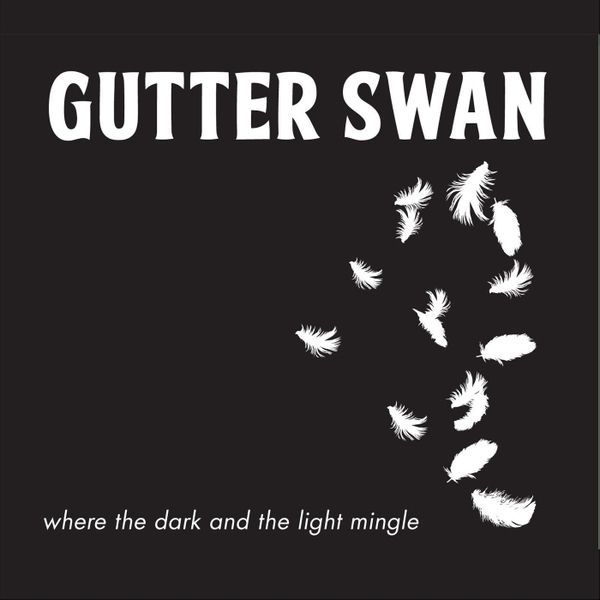 Where the Dark and the Light Mingle concludes with Richard Buckner’s Desire, in which our narrator is done with their last partner, having said too much and too drunkenly, ‘shot my insides out with grief and Mr. Kessler’ and just needs to hit the road. Fed up with life and death and lust and addiction, the road beckons.
