
So this month, I’ll be diving into the studio recordings of King Crimson. I’ve been a fan since the early 80s and have seen them perform four times. (I’ll see them again in July. Woot!) I considered reviewing the albums alphabetically rather than chronologically, but was dissuaded.
While Robert Fripp is the only constant in almost 50 years of KC, both Giles brothers appeared on either or both of the first two KC albums.
There are two ways to consider this album, neither of them very useful. One way is to look for aspects of it that point to what Michael Giles and Robert Fripp would do the following year with In the Court of the Crimson King. The fact is that very little of Cheerful Insanity resembles anything in the first few years of KC. The other way to look at is to consider where it falls in the music being made at the same time. This is more helpful, I suppose, because there are bits of the album that resemble early Moody Blues, early Pink Floyd, generic English folk rock and its proggy offspring (Genesis, Jethro Tull, Yes).
I first heard this album sometime in the mid-90s when I was collecting as best I could anything with Fripp’s name on it. I couldn’t hear anything in it (and still don’t) that resembles the weirdness of that late-70s/early 80s period when he’d been applying that arpeggiating guitar technique to everything he touched (including, for example, the stylings of the first and third Roches LPs. And much as I enjoyed that early prog, Cheerful Insanity just didn’t cut it.
Part of the issue I had was that a very young Fripp only wrote three of the songs. Little Children on side A suggests why Fripp left the lyrics to others after that. This song is notable for vocals provided by The Breakaways who famously backed Petula Clark and Cilla Black on several singles.
 Suite No. 1 and Erudite Eyes, which close side B have a more Frippish feel to them than the rest of the album. Suite No. 1, which clocks in at just under six minutes, starts with some Paganini-like runs that are joined by bass and keyboard, but after a minute and a half or so, the baroque gymnastics are replaced with a piano/strings/vocals arrangement that brings to mind the Chi-Lites’ Have You Seen Her. This segment is followed by a harpsichord-guitar duet which is followed by a reprise of the Paganini. A single track broken into three possibly unrelated forms, pulled together by a reprise of the theme? The application of jazz theory to folk motifs is one of the main threads of early progressive rock – it’s just weird to hear it applied so strangely.
Erudite Eyes is really the only song that points to the musical strangeness that was to come. It begins as a waltz, turns into a polka, returns to waltz-time and moves into improvised psychedelic strangeness before the second minute is up.
Lyrically, the whole affair is pretty strange. Newly-Weds suggests the discord of couples keeping up with the Joneses (He worries all day about wolves at his door…but on the other hand, she’s got a ring). One In A Million’s look at a man ‘content with the things at the moment, except the yellow line by the pavement’ echoes Revolver-era Beatles (Eleanor Rigby, Taxman).
The biggest issue I have with the whole album is the interspersed comedic numbers. Most of the songs on side A are bookend with episodes of The Saga of Rodney Toady, a ‘sad young man’ who girls run away from at school dances and whose parents are ‘fat and ugly’ and tell him that will ‘meet a fat and ugly girl just like Rodney’s mother and they would get married.’ These interludes don’t speak back to the music and actually detract from enjoying the album.
Side B’s songs are interspersed with repetitions of the sentence ‘I know a man and his name is George’ spoken in the correct order once and then in permutations (Know I George his name and a man, for example) and in increasingly annoying voices. One could argue that the rearrangements of the words reflect the possibilities inherent in the structured and random mutations of music that lie at the heart of King Crimson’s most intriguing work (for me, this includes tracks like Fracture, Level 5, and Starless).
After this album was released, Peter Giles left, and Ian MacDonald and Judy Dyble (late of Fairport Convention) joined and they made a collection of high quality home recordings released in 2001 as The Brondesbury Tapes. This collection is mainly notable for Dyble’s vocal on an early version of I Talk to the Wind. Soon after, Greg Lake joined and the Crimson King was born.
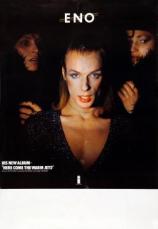 And there’s a reason Haynes used it: That opening rush of instrumentation (which accompanies a rush of glam-rocking teenagers chasing a pop star) pulls the listener right in. The intrigue doesn’t let up through the album’s 42 minutes. Lyrically, it’s almost all (in the words of Blank Frank) incomprehensible proverbs, but musically it’s a gorgeous grab-bag of styles, the way the best glam albums were back in ’73. This new remastering does a wonderful job of separating the musical components so that you can hear the strange fuzzed out guitar on the title track as something separate from the drums, keyboards, and the vocals (which are still too indistinct to figure out).
 (Oh No I Must Have Said) Yes seems to be a response to the various failings of the electorate in the past year, though the recording was complete before, for example, the Brexit referendum…
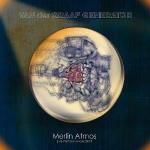 Merlin Atmos, recorded in 2013, is a live album featuring the trio line-up that had recorded ALT, A Grounding In Numbers, and Trisector. A such, it leans on these later albums, It opens with Hammill’s solo epic Flight from the 1980 release A Black Box. It’s a proper full-side piece in multiple parts in the vein (sort of) of A Plague of Lighthouse Keepers (which takes up side 2 of Merlin Atmos‘ vinyl release).
 Joe Jots