Blues and early rock and roll records brought over to the UK in late 50s and early 60s inspired young Englishmen no longer required to participate in national service. [http://en.wikipedia.org/wiki/Conscription_in_the_United_Kingdom#After_1945] to form bands.
The Rolling Stones for example: http://www.noisemademedoit.com/wp-content/uploads/2012/07/mick-jagger.jpg
In 1957, Parliament ended mandatory conscription with those born in 1939. The oldest Beatles (Ringo and John) were born in 1940. Two members of the Rolling Stones, Ian Stewart and Bill Wyman (ne Bill Perks) were old
enough to do national service. Wikipedia indicates that Wyman actually did, and took his stage name from a national service colleague. No member of The Who or the Kinks was old enough to do national service.
American soldiers stationed in the UK and Germany brought over the sounds of the blues. But the appreciation of English lads for American blues music spawned a scene that included Page, Clapton, Beck, the Yardbirds, the Rolling Stones, The Who, and (to a lesser extent, oddly enough), the Beatles. Poppier bands, including Gerry and the Pacemakers and Herman’s Hermits piggybacked onto the successes of these English blues-based rock bands in the US.
The paragraphs that follow fall into that well-known category of writing known as Rock Critic Clap Trap. I argue one point here, but it’s all but guaranteed I’ll be arguing another way next time.
My argument is that none of the British Invasion bands had vital and influential careers much into the 70s, save one. The Beatles were over by ’69 and their continued influence was based on their work as the Beatles, not the solo work. The last Stones album worth its salt is ‘72’s Exile on Main Street. Every album that came after is held up to Exile and found wanting. (Love Emotional Rescue and Some Girls though I do, they don’t hold a candle.) The Who’s vitality carried through to the mid-70s, but with Keith Moon’s death (Not to be removed) in ’78, they were pretty much over (the ’82 stadium tour with the Faces’ Kenney Jones on drums and the Clash opening notwithstanding).
That one would be the Yardbirds.
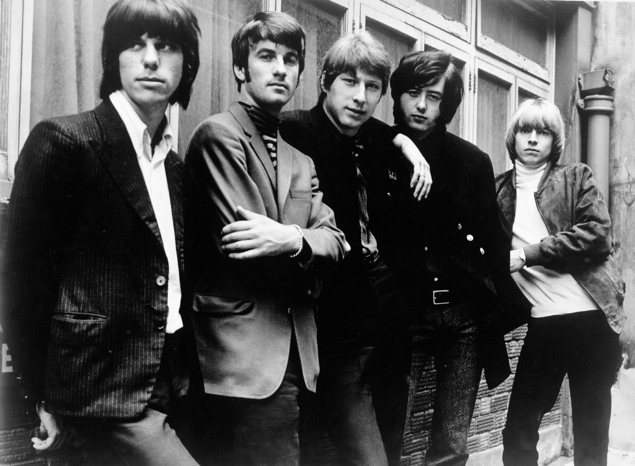
Like the Stones, they started out as a bunch of white guys doing covers of American blues. Their first three albums, recorded between 64 and 65 leaned heavily on Chess covers. The first album featured guitarist Eric Clapton, a self-professed blues purist. The second and third also had Jeff Beck.
Their first album, 1964’s Five Live Yardbirds consisted entirely of American rock and blues covers including three Bo Diddleys, a Chuck Berry, and a Howlin’ Wolf. A later expanded edition (20 tracks compared the 10 on the original release) had one Keith Relf original, but added more of the blues covers. They handle the covers admirably but what’s most apparent to me is that they’re enjoying making the music. Relf’s original, Honey in Your Hips, relies on that Bo Diddley beat, and I think owes a bit to Carl Perkins (vocally) and Larry Williams (for the choice of lyrical content, such as it is).
In ’65, For Your Love was an amalgamation of single and EP tracks cobbled together for the US market in advance of an American tour. The title track was the first of three hits for the Yardbirds penned by Graham Gouldman (later of 10cc among other acts). Its poppier leanings led to Clapton decamping for John Mayall’s Bluesbreakers. This album is also the first to feature Jeff Beck.
The following release, 1965’s Having a Rave-Up with the Yardbirds, also cobbled together for the US market contained songs from singles and the earlier albums, and both Beck and Clapton tracks. Two more Gouldman songs, Evil-Hearted You and Heart Full of Soul kept this album on the charts for almost nine months.
But 66’s The Yardbirds (aka Over Under Sideways Down and aka Roger the Engineer) featured all original material by the band. It opens with Lost Woman, a blues –based track that would have been pretty comfortable on the earlier albums. We know we’re heading into new territory with the sitar opening of Over Under Sideways Down. The album combines pop, two blues instrumental from Beck (The Nazz Are Blue, Beck’s Boogie), psychedelia
(Hot House of Omargarashid). The closer, Ever Since the World Began offers something oddly psychedelic before moving into something like folk blues and concludes without resolution which is still weird in pop and not done often, much less on the last track on side 2.
Somewhere between Over Under and the follow-up, Little Games (the final Yardbirds album until a 2003 regrouping), session musician Jimmy Page joined. For a short while, both Beck and Page shared duties in the band. The obligatory club scene in Antonioni’s classic Blow Up features them onstage together performing Stroll On. However, shortly after this, Beck was sacked (according to W’pedia) “both for being a consistent no-show and difficulties caused by his perfectionism and explosive temper” – an odd combination of reasons to be sure.
 The Beck/Page band didn’t record very much else together, and Page, it seems, took a lot of control of the band. Seven of the ten tracks on Little Games bear Page writing or co-writing credits. The album leans towards harder electric blues than Over Under had done. Side one opens with two such hard blues before backing up a step into Page’s White Summer, a song that would be a live staple in Page’s next band. There were other switches in line-up as well – Bassist Paul Samwell Smith left to concentrate on music production and rhythm guitarist Chris Dreja took over the bass. (Among other things, Samwell-Smith was the music director for the movie Harold and Maude.)
There are detours into psychedelia and the pseudo-music hall of Stealing Stealing. Like White Summer, the guitar on Only the Black Rose presages the acoustic sounds Page would later pursue. By ‘68, the remaining original members of the band were keen to do other things. Clapton had gone on to form the psychedelic blues trio Cream with Jack Bruce and Ginger Baker and Relf and McCarty were more interested in folk music – they went on to form Renaissance with Relf’s wife Jane on vocals, though Keith Relf left that band after the first album.
Strangely, the last addition to the band, Page, was left with the contractual obligation to finish the ‘68 tour. Several vocalists were considered including Terry Reid, who had toured the US with Cream. Reid declined, but recommended an unknown named Robert Plant. Plant in turn recommended his friend John Bonham for the drum kit. The New Yardbirds were rounded out by a session bassist named John Paul Jones who had played bass on the Yardbirds single Happenings Ten Years Time Ago. This quartet finished the contractual tour of Scandinavia, but decided a new name was needed (for a variety of reasons) when they settled in to record an album in ’68. The phrase Lead Zeppelin was lifted from a comment Keith Moon had made regarding the group who recorded the song Beck’s Bolero (Beck/Jones/Hopkins/Moon/Page). A change of spelling set the stage for the band that would rule rock and roll for the next twelve years. (Sorry about that – more clap trap.)


 Joe Jots
