A lot of rereads this year. And I’m mostly reading easy fantasy stuff because times are a little hard.
1. Mr. Penumbra’s 24-Hour Bookstore by Robin Sloan – recommended by my friend Karen – a real winner. Nice evocation of San Francisco and the life of the independent bookseller of yore.

2. Jigsaw by Ed McBain – Always a great crime in the 87th precinct.

3. Cruel and Unusual by Patricia Cornwell – My first Scarpetta – looking forward to reading more

4. Ajax Penumbra 1969 by Robin Sloan – Great back story for Mr. Penumbra’s 24 -Hour bookstore. Interesting to know how the characters got where they were.

5. John Carter and the Giant of Mars by Edgar Burroughs – Short and sweet. I can only read one or two of these a year, though. Pretty cheesy.

6. Neptune Crossing (Chaos Chronicles #1) by Jeffrey Carver – This was a 99p goodie from one of those daily book bargains. Having really enjoyed it, I found that the whole trilogy could be had for something like 4.99. Cool. I’ll play your silly game.

7. Day After Night by Anita Diamant – Really good telling of what it was like to settle in Palestine after WWII. Recommended by my wife. I trusted it would be good having really enjoyed The Red Tent. Would have been nice had the acknowledgements given a nod to Elie Wiesel.

8. Strange Attractors (Chaos Chronicles #2) by Jeffrey Carver – Yeah, #2 was a good continuation – stonking space opera with interesting robots, fantastic aliens of many kinds, and incredible scope. Looked forward to #3.

9. Gulliver’s Travels by Jonathan Swift – They call ’em classics for a reason.

10. The Maltese Falcon by Dashiell Hammett – Again, they call ’em classics for a reason.

11. The Infinite Sea (Chaos Chronicles #3) by Jeffrey Carver – Well, this was a goodie too, but as I got to 75-80% of the way through, I was really wondering how Carver was going to wrap it up. Yeah, got to the end, and he hadn’t wrapped it up at all. Three more volumes at 4.99 each. Kinda felt had, but I’ll probably buy the next ones.

12. 11/9 by Ben Lovejoy – A dandy thriller with plot holes kept to a minimum.

13. Trouble is my business and other stories by Raymond Chandler – Not a duff one in the bunch. But there’s a reason he’s considered a master of this stuff.

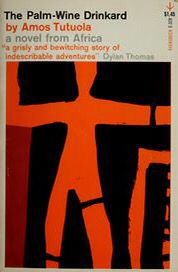
14. The Palm-Wine Drinkard by Amos Tutuola – Never managed to finish this when I was in college. One way to look at it is as a collection of pre-colonial/cargo cult African mythology. That’s incredibly reductionist, though.

15. Casino Royale by Ian Fleming – I’d read the Bond short stories and figured I’d dig some of the novels. Good stuff.

16. Ciardi Himself – 15 Essays in the reading, writing, and teaching of poetry by John Ciardi – interesting collection by the bloke who did my favourite translation of the Inferno.

17. Star Wars Aftermath by Chuck Wendig – Really glad Wendig got chosen for this big-time gig – writing the novels that bridge episodes VI and VII. I’ve enjoyed his blog and his other work for years. He’s bloody prolific and worth delving into.

18. Live And Let Die by Ian Fleming – see above.

19. Night by Elie Wiesel – Given my feeling about the conclusion of Diamant’s novel, and that Wiesel’s obituary had just been printed, I gave this a reread. Still brilliant, but bloody sad. Of course it is, though.

20. The Robert Silverberg Science Fiction Megapack – High point: The Night of No Moon.

21. Thief’s Covenant by Ari Marmell – reread in advance of the second Widdershins novel, False Covenant. YA fantasy featuring a great female hero who is the last worshipper of a god who resides in her head. Trust me, it’s a good one.

22. The Second Fritz Leiber Megapack – Great sci-fi for cheap. The Last Letter was probably my favourite piece here.

23. The Cricket In Times Square – Another reread of a classic children’s story. I probably read it the first time when I was about 11.  

24. The Return of Vaman by Jayant Narlikar – one of several science-based sci-fi stories included in a Humble Bundle (same with the next one). Interesting, but not brilliant.

25. The Caloris Network by Nick Kanas – Yeah, interesting bit of sci-fi that takes place on Venus. 

26. The Pendragon Protocol by Philip Purser-Hallard – reread in advance of The Locksley Exploit. Tasty 21st century renewal of both the Robin Hood and Arthurian legends. First of a trilogy.

28. The Second Murray Leinster Megapack – There were a lot of good pieces in this – some great sci-fi and a couple of thrillers. Nightmare Planet, Murder Madness, and the Runaway Skyscraper were high points

29. Hooves Above The Waves by Laura Clay – Three tasty fantasy/horrorshort stories set in Scotland. 

30. Turing and Burroughs by Rudy Rucker – Interesting story that assumes Turing faked his death and met the beats in Tunisia and went on to wreak havoc in the United States. Displays a great love of the characters, but falls somewhat short. 

31. Mythology 101 by Jodie Lynn Nye – reread (probably first read it in ’86 or so) – Very sweet story of a college student who learns that there are elves who have set up a village in the basement of the library. The same library he’s been campaigning to have demolished in favour of a modern new one. I gather there are several sequels.

I may finish either False Covenant or Post-Apocalyptic Nomadic Warriors before the end of the year, but I may not. The Locksley Exploit will wait until after that.

Well, the electoral college failed yesterday to do what it was put in place to do – to save the republic from the election of a madman, demagogue, or simply one unqualified to hold the office.
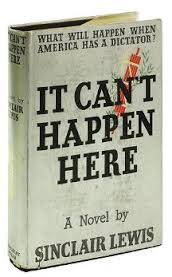
it-cant-happen-hereAnd we now have all three, plus his coterie of supremely unqualified department heads. No, they’re all qualified, and sworn, to destroy the very agencies they’ve been chosen to lead. There’s the treasonous way in which he was ‘elected’ and the questionably legal means by which the Trump organisation has prevented effective recounts in states he ‘won’ by small margins.
I’m not the only Cassandra predicting that fascism has finally come to the US. I’d like to believe I’m wrong. I’d love to be proven wrong, but all evidence seems to point to the last nails being hammered into the coffin of the American experiment.
And the election of someone who can be baited in less than 140 characters to say and do things that are (to say the least) diplomatically unsound at a time of such global uncertainty, leads me to consider (not for the first time) that if we’re not already in World War III, we’re not far from it. The assassination of Russia’s ambassador to Turkey yesterday would indicate a step closer to that horrible scenario if it weren’t for a weird history of assassinations of Turkish diplomats. (I hadn’t recalled the spate of these things that occurred in the 70s and 80s, but Rachel Maddow enumerated them on last night’s programme.)
It’s possible that the fall of Aleppo might signal something resembling the fall of Poland in 1939, but history doesn’t repeat that cleanly, and obviously no one has signed on to an agreement that would only now precipitate a wider conflict. Given Russia’s role in both Syria and in the US election, it’s not as though we’d be entering on the opposing side at this point.
The Trump election and Farage’s victory in the Brexit vote and a few other western political occurrences seem to argue for a rise in right-wing populism. Austria managed not to elect a fascist leader president a few weeks ago in a runoff election and the victory of a gent to the left was hailed as a triumph of sanity. Yeah, but the fascist still got 47% of the vote. And now that same fascist, Heinz-Christian Strache, is in talks with Trump’s new national security adviser. In the last couple weeks Geert Wilders, the bleach blond leader of the Dutch fascists (Partij Voor Vrijheid – the party for freedom, whatever that means) has been seeing a rise in his prospects. Elections for the Dutch lower house (tweede kamer) occur next year. I need to do some research, but I think that the current PM is not running again.
And, in the category of fascist power grabs, we have that craziness in North Carolina. Republican governor loses race, so Republican legislature passes a bunch of laws stripping the new governor of most of the governor’s power, just in time for the outgoing guy to sign them.

bob_dylan

So after the announcement that Bob Dylan had been awarded the Nobel Prize for literature, I decided to listen to his entire studio catalogue. 37 albums. I made it most of the way through. His last album is not on Spotify (Nederland) yet, but here are the pithy comments I posted to the Music Obscurica group of my progress. And links to (usually) related videos.

1. Usually I try to read something, a poem or a short story at least, but each new recipient of the Nobel in literature. My new goal is to listen to one Dylan album per day for the next few weeks. I listened this morning to Dylan’s first album for the first time. I love lots of Dylan, but was never a completist, and knew most of the songs only from other people’s versions. Back in ’91 or so (follow me here), I saw Diamanda Galas on her solo piano tour. Her intro to this song made mention of the original and to Dylan’s ‘awful’ version of it, and that she was there to reclaim it. I quite like her version, but that night was my introduction to…

Blind Lemon Jefferson: See That My Grave Is Kept Clean: https://www.youtube.com/watch?v=pX3mxjtpyBc

2. Trying to listen to Bob Dylan’s discography. I know there’s brilliance in the lyrics, but Another Side of Bob Dylan is nearly unlistenable. I listen to some difficult music – I crank up Swans’ Public Castration Is A Good Idea for pleasure, but wow, there’s a hole in the bucket Dylan’s carrying his tunes in. [NB: I apparently didn’t post consistently for the first few]

3. A Dylan A Day #(Buick) 6:

This might be the first in his discography that I actually like. This is partly true because it’s the album of his I probably know best. Have owned more than one copy. These weren’t songs written for someone else to improve/do correctly. These were done well in the first place. The presence of other musicians meant that Dylan actually had to sing in key. And yeah, it’s all good stuff/no filler.

I don’t think I prefer the Dead’s version of Queen Jane, but when I think of the song, I always hear Bob Weir’s vocal: https://www.youtube.com/watch?v=0xA-_51DCKM

Read the rest of this entry »

…About how we never/all saw this coming. But a few folks did. And it’s been brewing for 4, 8, 36 years. Or longer. A couple of months ago, about when Hillary’s ‘basket of deplorables’ comment was making the rounds, I remembered Mitt Romney’s ‘binders of women’ reference from one of his 2012 debates with Obama. Mitt was monumentally out of touch, and not half the orator Obama is, but he was making a valid point: He knew that he needed to improve the gender balance in his administration and he told his key players to bring him some CVs to work with.

And the left nailed him to the wall over it.

Don’t get me wrong: I preferred to have the Obamas’ grace, dignity, and gravitas in the White House these last eight years. In retrospect, I wondered what more could have gotten done had it been Romney working with his own party. Mind you, the GOP might have done to him what they did to John Boehner.

I had my first conversation about the election with the gentleman at the dry cleaner this afternoon. We were talking in English because my Dutch is lousy, and he said ‘Congratulations on your new president,’ without irony that I could detect. We chatted for a few minutes and he indicated a low opinion of Mrs. Clinton. It wasn’t the time or the place to get into it with him, maar na negen jaren ben ik nog nooit zo gemotiveerd om nederlands te leren. (After nine years, I’ve never been so motivated to learn Dutch.)

I do hope we survive the next four years, but I fear for the republic.

I hadn’t seen Casablanca in several years when I started this little essay, save for the clip of the Marseillaise which I always pull up on Bastille Day (but before that horrible attack in Nice). I watched it again on a flight back from the US a few weeks ago, though, to make sure my notes made sense.

As we get to know Rick Blaine, the facts of his life come in drips. We learn that he lives by his own code which is honourable but not in the most conventional sense, that he’s carried a torch for a woman he never expected to see again, and that he’s on the run from the US for an arms-related issue. (This is tricky because what we learn from Laszlo is that he fought in Spain on the side of the Loyalists. Is that sufficient to put him on the wrong side of the US? We don’t really know the reason he’s on the run.

He’s anti-fascist on principle, and seems to thrive where there’s little in the way of order.
Having been in Paris at the time of the initial occupation, he packed up for French-administered Morocco and set up Rick’s Cafe Americain, expecting he’d be able to do business there for the duration. The Americans hadn’t taken sides and didn’t look set to do so.

The movie came out in November, 1942, so about a year after US entry into the war. But when precisely does it take place? We get one hint: in a stupor, Rick asks his friend Sam ‘If it’s December 1941 in Casablanca, what time is it in New York?’ only to receive the answer, ‘My watch stopped.'(What is the nature of their relationship? They’ve been together for several years, and Sam is something more than an errand runner, pianist, and drinking buddy, but he’s those things too.)CasablancaJP

Having identified the ‘beginning of a beautiful friendship’ with the French police captain, we can guess that either the next day or the day after that, Casablanca will hear the news of the attack on Pearl Harbor and Rick will be back in the war.

As we near the 75th anniversary of US entry into World War II (and shortly after that, the 75th anniversary re-release of the film), we find ourselves on a similar precipice. There’s a whole lot of war going on, but we’ve not formally declared World War III. Does Brexit signify that the UK (the Untied Kingdom?) will enter hostilities with Turkey and Russia on a different side than the US and the EU? For example.

In 1991, I was oh so certain that we wouldn’t get out of the 20th century without another great war. I think I figured that by the time I turned 50 we’d be at the other side of it, not just getting ready to enter it. But, as I’ve argued elsewhere (and not originally), we’ve spent the last century fighting the ongoing skirmishes of WW1. Alliances shift, but we’re still keen to be at war. Just because we can’t picture an Anglo-Russian invasion of Iran today doesn’t mean equally strange alliances aren’t afoot. In that category of unintended consequences (you know, everything that’s going on in the Middle East that was predicted in 2002 in some form or another), the results of the Brexit referendum are just all of a piece.

Every time I skim social media, there’s a link to some new atrocity (all the places we’re bombing or the bombing of which we’re financing) or case of legislative poor judgement (today’s example is France banning the burkini – let’s alienate all the people we really don’t want to alienate, shall we?). Each one leads me to the conclusion that the war is just going to get closer even if we don’t declare it. Happily sat in relatively unharmed Nederland, I can claim my own neutrality. At what point to I have to declare which side I’m on?