Trying to keep on top of my reading for you, my dear readers, and not have to scramble to post everything at the end of the year.
January
Becky Chambers – A Psalm for the Wild-Built
Jose Saramago – The Gospel According to Jesus Christ (Weird and deep and thick – read it hot on the heels of The Alchemist and that was a strange combo. A great read if you’re well versed in the gospels but can deal with what is often considered blasphemy by the faithful.)
Hedda Beekman – Simone op de Schaats (Charming little Dutch story of a teenage girl who helps a friend who lost use of her legs to enjoy the ice. About my level of Dutch comprehension.)
Herman Melville – Moby-Dick (A reread inspired by a Bluesky group under the hashtag #AMonthOfDick. Always a joy. Not just 101 Uses for a Dead Whale.)
February
Becky Chambers – A Prayer for the Crown-Shy (Chambers does it again with this two-part look at what the world could be like if we do it right. She recognizes that we have to fuck it all up entirely before we can get there. And we seem to be doing that sooner rather than later.)
Chloe Dalton – Raising Hare (Enjoyable story of a woman who discovers a baby hare in the snow at the start of Covid and learns to raise it and look after its offspring as well, learning lessons of ecology and history along the way.
March
Ocean Vuong – On Earth We Are Briefly Gorgeous (Very good and also sort of niche queer literary fiction.)
Catherynne Valente – Space Oddity (Sequel to Space Opera and also really good. She’s up-front that what she’s created is the intersection of The Hitchhiker’s Guide to the Galaxy and the Eurovision Song Contest. What is amazing is that she’s made it work. Beautifully.)
Robert C. O’Brien – Mrs Frisby and the Rats of NIMH (Hadn’t read this since I was about 11. Someone on the socials mentioned it and I wanted to read it again. Still good.)
Ian McEwan – What We Can Know (My first McEwan and I don’t know if his focus on the ins and outs of academia and literary research is just in this volume or if it’s a thing with him. That said, I loved how the second half answers almost all of the questions of the first and how the answer to the book’s central mystery isn’t answered until literally the last page.
I’m usually more on top of tracking my books in Goodreads – just didn’t this year until I noticed a couple of hours ago that I’d recorded two for 2025. Busily added the rest that I’d read/listened to as noted in my journals. Grand total (I think) of 31.
Dutch: I’ve started reading Dutch kids books that I find in Little Free Libraries. It’s helping a little bit. I’d do myself a greater favour by reading the kranten (newspapers – I learned yesterday the root of this word is ‘courant’ a French term for newspaper also used in English). Anyway:
Wipneus en Pim bij de Trappertjes by B.G. Van Wijckmade
Lotje Met Chimp naar het Circus by Jaap ter Haar
Audio:
The Silk Roads: A New History of the World by Peter Frankopan (highly recommended – fascinating stuff)
Galapagos by Kurt Vonnegut
To Hell With Poverty by Jon King (narrated by the author, a history of the initial run of the band Gang of Four. Andy Gill had passed away before its publication, so can’t argue with King’s general assessment that he was a serious expletivedeleted.)
Brotopia: Breaking Up the Boys’ Club of Silicon Valley by Emily Chang (depressing insofar as the inherent sexism of the Valley hasn’t changed in 40 years and it’s only getting worse. But a great piece of reporting.)
Ideaflow: The Only Business Metric That Matters by Jeremy Utley and Perry Klebahn.
Speaking My Mind by Leo Varadkar (Very interesting, but I fear he’s too protective of his own [well-earned, don’t get me wrong] legacy. He could have taken more risks with it. Also: before reading, bone up on the main Irish political parties. He writes for an audience that knows one from another.)
Head On by John Scalzi
Vita Nuova by Dante Alighieri
Other stuff: The Glass Room by Simon Mawer
The Posthumous Memoirs of Bras Cubas by Machado de Assis (This is an early 19th C. Brazilian classic read by just about every high school student there – it was recommended to my office book club by a Brazilian colleague. I quite enjoyed it, but what I really wanted to talk about in our discussion of it is how it’s informed by Vita Nuova (see above), Tristram Shandy, and Candide. Which no one else in the group had read. I doubt I’ll make the time to write the essay that ties them all together, but I want to.)
The Midnight Library by Matt Haig (Light slightly fantastical reading that I enjoyed. Read it for both the office book club and the local expat book club this year.)
Nana and Luna by Delacorta (same main characters as Diva – light reading if you can ignore the 14 year old protagonist’s highly sexualised presentation. The 80s were a different time.)
Guards, Guards by Terry Pratchett (Classic Pratchett.
Fifteen Dogs by Andre Alexis (expat book club entry – interesting but ultimately depressing to me. As a new dog owner, I found the deaths of dogs hard to take.)
The River Has Roots by Amal El-Mohtar (Gorgeous. Highly recommended.)
The Accidental Further Adventures of the Hundred Year Old Man by Jonas Jonasson. (If you enjoyed the first one, you’ll enjoy this one too.)
Mexican Gothic by Silvia Moreno-Garcia (Moreno-Garcia is an excellent writer and this one’s a treat – super-creepy mid-20th century set take on the old gothic novel, with nods to The Yellow Wallpaper.)
The Planets by Andrew Cohen and Brian Cox (Gorgeous tour of the solar system with the depressing notation that the likelihood of other planets like Earth in our galactic neighborhood is very slim.)
The Seven Husbands of Evelyn Hugo by Taylor Jenkins Reid (I enjoyed this one and am likely to check out more – pretty sure I have Daisy Jones and the Six in my TBR. Hugo is an actress from the golden age of Hollywood who contracts a writer for a Vanity Fair-like mag to write her life story. With twists.)
The Fisherman by John Langan (Recommended by my friend Matt, this was a doozy. I don’t do horror, generally, but I was intrigued by his description of it being stories within stories. Langan was meticulous in his construction of this tale. I’m going to read more by him, but this is his only novel. Several short story collections await.
Patti Smith – Just Kids (reread for expat book club – so good, but so sad. While I’m well familiar with the setting and the people Smith talks about, the Dutch members of the club – not entirely expat, come to think of it – and the 28 year-old Ukrainian woman found the name-dropping a little hard going.
The Three Stigmata of Palmer Eldritch by Philip K. Dick (It’s PKD – if it weren’t weird, you’d be surprised.)
Strange Angels by Andrea Speed (sweet queer fantasy of competition between gods among other things.)
The God of Small Things by Arundhati Roy (Gorgeous and winding and it helps to create a family tree in the first chapters so you know what’s going on later. Very sad but so well done. Roy definitely earned her Booker with this one.)
Unleashed by Emily Kimelman (Sydney Rye Mysteries #1) (Beginner detective takes on the powerful of NYC with the help of a fantastic dog. #2, Death in the Dark, is a novella. I’ve got #3, Insatiable, queued up.)
The Safekeep by Yael van der Wouden (Netherlands-set novel of a trio of siblings and the strange history of the house their parents bought after WW2. Also: The best-written sex I’ve come across in ages. Some, but not all, members of the office book club were put off.)
James by Percival Everett (I enjoyed this retelling of the Huck Finn story from Jim’s perspective. A Pulitzer Prize in literature is usually a mark of quality. Amusingly, the woman at Marcus Books in Oakland who sold it to me said that she’d read several other works by Everett and didn’t think this was close to his best.)
The Alchemist by Paulo Coelho (I missed this when it was in competition with Grisham’s The Firm for the book everyone on Muni was reading, and I think it would have served me better had I read it at 25 or so, but I enjoyed it. Very strange to read a tale of a shepherd boy in search of Truth just before picking up my current reading, The Gospel According to Jesus Christ by Jose Saramago.)
My relationship to Judaism has always been weird. When my parents were still together (they split when I was 4), we must have observed many of the rituals in the home, even though Fullerton, CA was a long way from the New York and DC locales of the rest of our family and heritage. Why do I say we must have? My Bobe (my mother’s mother – second generation American) relished telling a story of some early visit we made to see her and Zade (my mother’s father, first generation – arrived from Ukraine in 1912 or so, I think). It must have been when I first visited them in DC as a walking, talking person (as opposed to a toddler). The way she told it, I walked around the table, and looked at the candlesticks and wine glasses and large pictures of a pair of ancestors from the shtetl, and asked in all innocence, ‘Are you guys Jewish?’ My grandparents found this hilarious.
Nowadays. Between then and now, I’ve gone through periods of greater and lesser connection. At the moment, I’m starting to learn a little about Yiddish culture and taking a Yiddish class online. It’s a period of greater connection, let’s say. Last week, I was listening to The Shmooze, a podcast from the Yiddish Book Center. The interview subject was Judy Batalion, a playwright and author from Montreal who recounted the sources of her latest book, The Light of Days: The Untold Story of Women Resistance Fighters in Hitler’s Ghettos. She grew up knowing about Hannah Senesh, as I did – this one incredibly brave Hungarian Jewish woman living in Mandatory Palestine who parachuted into Nazi-occupied Hungary, was captured, tortured, and killed by firing squad in 1944. Batalion was researching other such women and found an entire book published in Yiddish in the US in 1948 or so, which told of other such brave women. And that book sank into obscurity, and Szenes (to use the original spelling) became the synecdoche in Hebrew school history for all those incredible women. This book one book sent Batalion on her own path, resulting in a 500-plus page book on the subject.
In that Shmooze interview, Batalion makes the point that those women did what they did out of a certain necessity, and for the simple reason that they risked less than the men by doing it. Men who were caught would have their trousers dropped, because only Jewish men were circumcised then. The women and girls had often gone to school with the non-Jewish girls, so their Polish was that spoken in the general populous, not the Polish of the yeshivabuchers who went to schools within the shtetl an mostly spoke Yiddish and Hebrew.
And this got me thinking about how we think about heroes, about Israel and its very male leadership. And, oddly, I read today about a female-created female superhero, Miss Fury, who had a 10-year run that ended in 1951. Not the same as actual heroes of the anti-Nazi resistance, but categorically similar, in that Fury’s creator, June Tarpé Mills, is another woman whose work was subsumed by the mid-20th century’s habit of glorifying the masculine and shutting away all the women who dared.
I think there’s a group psychology that comes into play in groups that need to be rescued. And I fear diving into what the survivors of the Holocaust had to deal with who then moved into a world where they could actively defend a new homeland but knew that they hadn’t been able to defend their previous homes. I’m an armchair psychologist at best. But hiding the stories of those girls and women who ran explosives between the ghettos and went out on other missions against the Nazi occupation serves to make a monolith of all the victims of the Holocaust. If all were victims, then the ghetto uprisings, and subsequent liquidations, were anomalies, rather than the rule. (Sometimes you hear someone say, ‘If I’d been in Germany, I would have fought back. Why didn’t the Jews fight back?’ The answer is, We did.)
There are a lot of people who study these matters of language and culture and history who know these things better than I do. But there’s one connection to draw about the decline of Yiddish and the loss of these stories. When Jews were settling in Palestine before World War I there were discussions of what the language of this new country (still a dream, but עם טירצו and all that) should be. Hebrew won out over Yiddish and there are a few what ifs regarding what that society would be like if things had gone the other way. I fear that the psychology of powerful men taking power would still fight for society to forget women who fought back.
Virginia Woolf (1882-1941) was a prolific writer primarily known for her novels To the Lighthouse, Mrs. Dalloway, and Orlando, and the feminist essay A Room of One’s Own. I was introduced to these novels in college and returned to them after certain cinematic excursions into the material. Dalloway and Woolf were central the novel and film The Hours. Sally Potter made a film of Orlando in the 1990s starring Tilda Swinton and featuring Quentin Crisp in the roll of Queen Elizabeth I.
Orlando (1928) is an outlier in that it’s in many ways a love letter to Woolf’s erstwhile lover, Vita Sackville-West. It’s comic, and light-hearted, which aren’t generally words associated with Woolf’s work. I picked it up again last night after a long time away from it. I try to find emotionally light reading for that half an hour at 2AM when I’m generally awake these days and don’t want anything too involving. Wodehouse often fits the bill, for example. However, I’d forgotten the opening paragraphs and was rather shocked by the sheer racism of those passages.
He…was in the act of slicing at the head of a Moor which swung from the rafters. It was the colour of an old football, and more or less the shape of one, save for the sunken cheeks and a strand or two of coarse, dry hair, like the hair on a cocoanut. Orlando’s father, or perhaps his grandfather, had struck it from the shoulders of a vast Pagan who had started up under the moon in the barbarian fields of Africa; and now it swung, gently, perpetually, in the breeze which never ceased blowing through the attic rooms of the gigantic house of the lord who had slain him.
Of course I have no idea why this passage never previously struck me, but it’s the nature of these times to question our assumptions, or lack thereof. The terms Moor, pagan, and barbarian to describe a single person, dead long before the action of the book begins, but obviously a source of the titular character’s emotional (and probably financial) inheritance. Woolf follows this statement with fairly glowing terms about the Orlando’s beauty, poetry, and outlook. But I return to those opening sentences and wonder at that casual approach Woolf takes.
1928 or no, it surprises me, and raises again the question of how one interacts with historical texts – do I say this person whose insights into the human condition are some of the most incisive in literature is no longer someone I’ll read, for the political reasons that we use to take other artists out of our personal spheres of influence?
It’s a casual racism in which shorthand is used to make up for characterization. Similar to the Jews in J.B. Priestley’s The Good Companions, and possibly all of the non-Europeans in Joseph Conrad’s “Heart of Darkness”.
In The Trouble with “Heart of Darkness”, David Denby offers this opinion submitted by Edward Said: ‘Most imaginative writers of the nineteenth century…failed to connect their work, their own spiritual practice, to the squalid operations of colonialism. Such writers as Austen, Carlyle, Thackeray, Dickens, Tennyson, and Flaubert were heroes of culture who either harbored racist views of the subject people then dominated by the English and the French or merely acquiesced in the material advantages of empire. They took empire for granted as a space in which their characters might roam and prosper; they colluded in evil. Here and there, one could see in their work shameless traces of the subordinated world…’
Woolf, though writing 30 years after “Heart of Darkness”, seems to fall squarely within the canon Denby and Said are citing. Her hero is an heir to the fortunes of Elizabethan colonialism just as much as the characters in Austen and Dickens.
Denby’s essay is a counterpoint of sorts to Achebe’s An Image of Africa: Racism in Heart of Darkness. ‘Heart of Darkness projects the image of Africa as “the other world,” the antithesis of Europe and therefore of civilization, a place where man’s vaunted intelligence and refinement are finally mocked by triumphant beastiality..’
I’m pretty sure a reread of “Heart of Darkness” is in order right now. One of the thrusts of Achebe’s argument against Conrad is that he reduces the natives of the Congo to caricatures with neither language nor art. The excuses made for Conrad include an argument that this wasn’t the story he was writing. Denby addresses this – that arguments against HoD are often that he should show the same modern sensibilities towards the non-European elements of his story as he does to the European. This isn’t Conrad’s job, but the shorthand he uses to compare the savage internal world of Europeans with a non-existent savage external world of Africa is similar to the shorthand with which Woolf opens Orlando. And there is most definitely a conscious or unconscious racial/racist aspect to this shorthand.
Denby suggests that Achebe, as a novelist and not an academic, doesn’t bring the necessary rigor to this discussion. And it’s easy to write off some of what he says as unsupported assertions about Conrad’s racism in general (actually well sourced by Achebe) and the racism in “Heart of Darkness” in particular. I think I’ll run with my initial take on the matter which is that the racist tropes that both Conrad and Woolf employ are in service to easy analogies. The stories of the Africans, pagans, or Moors aren’t the stories either are telling. On the other hand, Conrad’s ‘dog in breeches’ comparison (cited by Achebe) is simply sloppy writing – Woolf using the terms Moor, pagan, and barbarian interchangeably to describe the same severed head is also sloppy writing.
Neither Conrad nor Woolf (who, in Orlando’s introduction, thanks no fewer than 20 fairly illustrious literary contemporaries for their feedback) are careless writers. But I think both writers are relying on a European readership to recognize the tropes and to play along with how these tropes define and refine the portrayals of their main characters.
In this way it’s easy to contrast light with dark using these tropes, in the same way that Kurtz’ fall has to do with his adoption of the local nature and culture and his submersion in the native, dark part of the world, and his collusion in the enslavement and killing of the natives. The Grove of Death sequence cited by Achebe is essential to the story of Kurtz’ fall because it shows how the colonials used the natives to death in their trade. Orlando, like Woolf and Sackville-West herself, is a product of these activities – the wealth of the west is based on this kind of exploitation top to bottom and so is the exploitation pointed out in that opening paragraph.
I don’t know what to make of the fact that Woolf’s father was a prolific writer on ethics, science, and humanism and that her paternal grandfather and great-grandfather were prominent abolitionists.
Given how much input Woolf accepted regarding the history covered in Orlando, and how much she left in place, it’s hard to deny that the views expressed in the novel are her own, or those shared with Sackville-West, or those of the first readers. How else to explain the shorthand?
Later, the character Orlando compares the exploits of his ancestors (who killed individuals of different nationalities) with those of one particular poet. The poet, not the murderous ancestors, is immortal, and Orlando, too, ‘[perceives], however, that the battles which Sir Miles and the rest had waged against armed knights to win a kingdom, were not half so arduous as this which he now undertook to win immortality against the English language.’
Is Woolf saying that as Orlando grows, he grows from the limited mortality of his murderous ancestors into the immortal poet? It’s possible, but doesn’t reduce the shock of those opening lines. As the book progresses and Orlando (who remains about 30 years old from 1600 through to 1928) evolves away from that racism of that opening paragraph and the reader might be forgiven for thinking the attitude expressed there is that of the author and not the character himself. An argument might be made that because Orlando’s sex changes from male to female (in chapter 3), that this attitude belongs to the barbarity of maleness. And, in fact, the language of the story becomes more genteel for much of the story’s remainder.
As the book nears its conclusion, the narrator considers several of the lives Orlando has lived, ‘…a biography is consider complete if it merely accounts for six or seven selves, whereas a person may well have as many thousand. Choosing then, only those selves we have found room for, Orlando may now have called on the boy who cut the n*****’s head down; the boy who strung it up again,’ and two dozen more that we’ve met in the course of the novel. Again there’s the shock of her racist language when we thought we were or she was done with it.
There’s probably an answer to the question of Woolf’s racism if one delves into the letters and the diaries, and reads far more than I have. Or we can accept that she’s the product of her time and her place and her class. Oddly, she wrote of Ulysses that it was ‘egotistic, insistent, raw, striking, & ultimately nauseating…When one can have cooked flesh, why have the raw?’ One question of Orlando is, why when Woolf could have prepared the meal to perfection, did she garnish it so crudely?
One of my current pieces of reading is Quentin Crisp’s 1968 autobiography, The Naked Civil Servant. This went on my to-read list when Crisp passed away in 1999 (at just short of 91 years of age) and it’s taken me two decades to follow up. Early on in the book, he shares an anecdote of a classmate who was flogged by the headmaster having been caught in a tryst with a fellow student. I’d thought to just quote a sentence or two, but the entire paragraph is worth sharing for a couple of reasons. Both the brutality of his self-assessment (a hallmark of the book – he pulls no punches on himself) and the precision of its reflection of the larger world.
His sin was the occasion of the only public beating that I have ever witnessed. The entire school was assembled in the big hall and seated on benches on either side of the room. In the open space in the middle the modern Romeo bent over and the headmaster ran down the room to administer the blows. After the first two strokes the younger brother of the victim left the room. Even now I can’t help wishing that we had all done the same. What made this exhibition so disgusting was not the pain inflicted. Today a go-ahead schoolmaster would say, ‘This delights me more than it delights you.’ In many parts of London, such goings-on are just another way of making a party go with a swing. What was most insufferable was that a simple form of self-gratification should be put forward as a moral duty. Before that day I had disliked the head; afterwards I hated him. (p. 18, emphasis mine.)
The conflation of self-gratification and moral duty comes up in a variety of circles. One can consider it in the context of politics, military justice, familial dynamics, and general human interaction. This quote struck a nerve with me because my own schooling included a headmaster-equivalent who made an example out of kids when they were, for example, late by paddling us in front of our classmates. This was in the period my family lived in Synanon, a commune where children were kept separate from their parents. It was also a place that preached a doctrine of non-violence. Very confusing. The lines between self-gratification, morality, straight-up sadism, and personal confusion on the part of that tormentor have been blurred by more than 40 years of intervening time and the total lack of closure with the person in question.
In the political sphere, we see this dynamic play out with the conservative insistence on austerity for the poor who have somehow worked terribly hard to earn their punishments at the hands of the social system. I’m not sure if conservatives in England or the United States even mask this in the guise of moral duty any more, but there was a time. Authoritarian behaviour is not at its root sexual or deviant, until you call it something else. Is this the nature of authority in general, though? We run into folks like the current so-called leaders of the US and UK demanding the kind of moral purity from the poor that they have never exhibited or felt the need to exhibit. There’s a joke that goes around that Boris Johnson doesn’t even know how many children he has. Trump’s are from three different wives, and those who remember the impeachment of Bill Clinton have a hard time forgetting that the man who led the charge had left one wife while she was undergoing treatment for cancer and the second shortly after her diagnosis with MS. Was Gingrich’s hypocrisy and the ways he wallowed in it at the time a form of self-gratification? I shuddered at his insistence that he and his fellows on the right side of the aisle possessed some moral high ground over those on the left, and that the prosecution of the Lewinsky affair was some kind of moral duty, but I’ve always been unabashedly on the other side.
What can we say about the verbal ganging up that goes on in social media? Do we confuse various forms of virtue signalling with moral duty? And are these things confusions of self-gratification? I don’t follow many conservative leaning people on social media, but we do our own dirty work between ourselves on the left in which my support for candidate X can’t be good because candidate Y is the only one who can win (for example and for whatever reason). As if the positional debate were somehow invalid. Is this one of those places where moral duty masks self-gratification? Crisp, of course, is discussing sexual gratification, but how different is this from the gratification of our own moral upstandingness?
I want to argue that certain workplace dynamics fall into this category, but the ways in which middle management manipulates the rank and file are just a refraction of how middle management is manipulated by the various upper members of the hierarchy. Gideon Kunda in his 1992 work Engineering Culture posits that there’s much that we do in the workplace to ingratiate ourselves within an organization. Kunda quotes one person as saying, ‘Like the joke. you get to choose which 20 hours to work out of the day.’ (p. 18) How we feel about management in the context of the modern technological workplace is a product of our personal feelings and how we feel about/react to/interact with authority, both consciously and unconsciously. This workplace masochism seems to me to be an identification of a company’s stated morality with one’s own gratification on the organizational ladder.
I haven’t even delved into the various interplays of moral duty and self-gratification in the context of organized religion. Crisp is ostensibly describing a secular institution in England in the early 1920s. It’s no leap at all from there back to the Jesuit schools James Joyce describes or the Magdalen Laundries, the latter of which conflate venality and greed with claims to the satisfaction of moral duty and upholding the moral center of Irish life.
Crisp’s identification of self-gratification with moral duty is limited to that one instance of authority in the school, but it extends to how we operate in society. My tormentor was also acting out the morality of the organization, just as we attempt to act out the morality of the political world within social media.


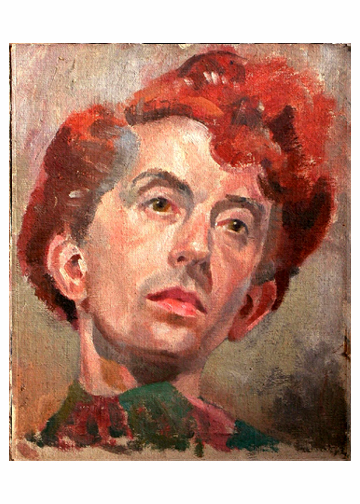 The conflation of self-gratification and moral duty comes up in a variety of circles. One can consider it in the context of politics, military justice, familial dynamics, and general human interaction. This quote struck a nerve with me because my own schooling included a headmaster-equivalent who made an example out of kids when they were, for example, late by paddling us in front of our classmates. This was in the period my family lived in Synanon, a commune where children were kept separate from their parents. It was also a place that preached a doctrine of non-violence. Very confusing. The lines between self-gratification, morality, straight-up sadism, and personal confusion on the part of that tormentor have been blurred by more than 40 years of intervening time and the total lack of closure with the person in question.
 Joe Jots