Archives for category: Music

Setlist:
Larks’ Tongues in Aspic, Part One
Pictures of a City
Meltdown
Hell Hounds of Krim
The ConstruKction of Light
Banshee Legs Bell Hassle
Easy Money
Level Five
Epitaph
The Talking Drum
Larks’ Tongues in Aspic, Part Two
Starless
E: In the Court of the Crimson King
E: 21st Century Schizoid Man

As with most previous incarnations of King Crimson, the latest is a lineup of insanely talented musicians. In this case, the band is trying to take on the aspects of its entire history. Noting that Crimson is whatever guitarist and bandleader Robert Fripp says it is, it’s impressive to see and hear them incorporate several tracks from the band’s 1969 debut, In the Court of the Crimson King. The title track, added on this tour hadn’t been performed by the band since 1971; 21st Century Schizoid Man wasn’t played by the 80s incarnation, but has been a mainstay since the Thrak tour in 1996. (I saw them on that tour in Berkeley and Adrian Belew introduced it saying ‘I don’t think we’ve played this here before.’) Epitaph was added to the set last month, having not been performed since the initial tour for the album in 1969.

At the other end of the timeline are tracks from the final studio albums of the Adrian Belew-fronted editions of the band, an instrumental version of the title track of 2000’s ConstuKction of Light and Level Five from 2003’s The Power to Believe (between 2003 and 2010, there were a couple of tours with Belew and line-up changes, but no albums), and new pieces Hell Hounds of Krim and Meltdown.

While the renditions of Epitaph and Crimson King were both faithful, and sound very much of their time, Schizoid Man, with its combination of improvisation, treated vocals, and heavy guitar has always been the earliest example of jazz metal. Pictures of a City dates from 1969 as well, though it didn’t appear on record until the following year’s In the Wake of Poseidon. This is the only other track from King Crimson’s early progressive period in the set. The three albums that followed Crimson King all featured Mel Collins on saxophones and flutes, and the current tour is the first Collins has played with the band since 1972. (Not that he hasn’t been busy enough – his CV includes work with Camel, Roger Waters, and some Crimson-related acts including 21st Century Schizoid Band.)

The heart of the set, for me, were the pieces from the ’72-’74 golden age. Following the tour for 1972’s Islands, Fripp disbanded the group (one could cite ‘creative differences’), only to reform it a few months later with two percussionists, Bill Bruford from Yes and an absolutely insane bloke named Jamie Muir; John Wetton (bass/vocals); and David Cross (violin/mellotron). The three albums recorded by variations on this lineup, Larks’ Tongues in Aspic, Starless and Bible Black, and Red are classics, recently reissued in 15+ CD sets that include as much related live material as the band have in their archives. Following Red, there was no tour as Fripp disbanded the crew again. (This time it had a lot to do with an absolutely lousy record contract – lousy even by the standards of the time, from what I’ve read.)

Between ’74 and about 1980, Fripp appeared on a number of projects – producing Peter Gabriel’s second solo album, his own solo album Exposure, projects with Brian Eno, David Bowie’s Heroes album, Talking Heads’ Fear of Music, and a crew called The League of Gentlemen (with Sarah Lee who would join Gang of Four and Barry Andrews who was between XTC and Shriekback). LoG recorded one album in the runout groove of which was etched ‘The Next Step is Discipline’. Discipline was to be the name of Fripp’s next band which consisted of Fripp, Bruford, Tony Levin (bass, about whom more below), and Adrian Belew (guitar/vocals). When it came down to it, Fripp decided this was the next incarnation of King Crimson and retained the name Discipline only in the title of that lineup’s first album.

Belew is a gregarious character whose had already worked with Zappa, Bowie (the Heroes tour and Lodger album), and Talking Heads among others. He fronted the various lineups of KC between 1981 and 2008. These included the three different lineups that recorded Discipline, Beat, and Three of a Perfect Pair between ’81 and ’84, Vrooom and Thrak in the mid-90s and The ConstruKtion of Light and The Power to Believe between 2000 and 2003. Fripp decided he was after something else with the new group and did not invite Belew along. Oddly, Belew has fronted The Crimson ProjeKct with all six members of the Stick Men (Levin, Mastelotto [about whom more below as well], and guitarist Markus Reuter) and The Adrian Belew Power Trio. These shows leaned heavily on the 81-84 material as well.

The title track of Red, another piece of proto-heavy metal, and Larks’ Tongues in Aspic Part 2 were mainstays of KC sets from the 1981 reformation onward, but Starless (also from Red, but containing the refrain ‘Starless and bible black’) hadn’t been performed until this tour since the tours that led up to Red’s recording in ’74. The Talking Drum was a mainstay of the double-trio lineup of the mid-90s and briefly in 2008.

The current incarnation of King Crimson is an interesting bunch. Fripp as always seated upper right on guitar. Next is Jakko Jakszyk on guitar and vocal. Jakko has worked on an large number of projects since the early 80s including stints with Level 42 and Tom Robinson and work with a pre-Porcupine Tree Gavin Harrison. In 2001 he joined with members of the earliest KC incarnations to form 21st Century Schizoid Band. In 2010 he worked with Fripp on an album that, with contributions from Collins, Harrison, and Tony Levin became A Scarcity of Miracles, which is very much in the KC vein.

Tony Levin on bass and Chapman stick has been in most KC lineups since 1981. He first worked with Fripp on Peter Gabriel’s second solo album (which Fripp produced), and played on Fripp’s 1978 solo album Exposure. Next to Levin on the top row of the stage stood Mel Collins surrounded an array of horns.
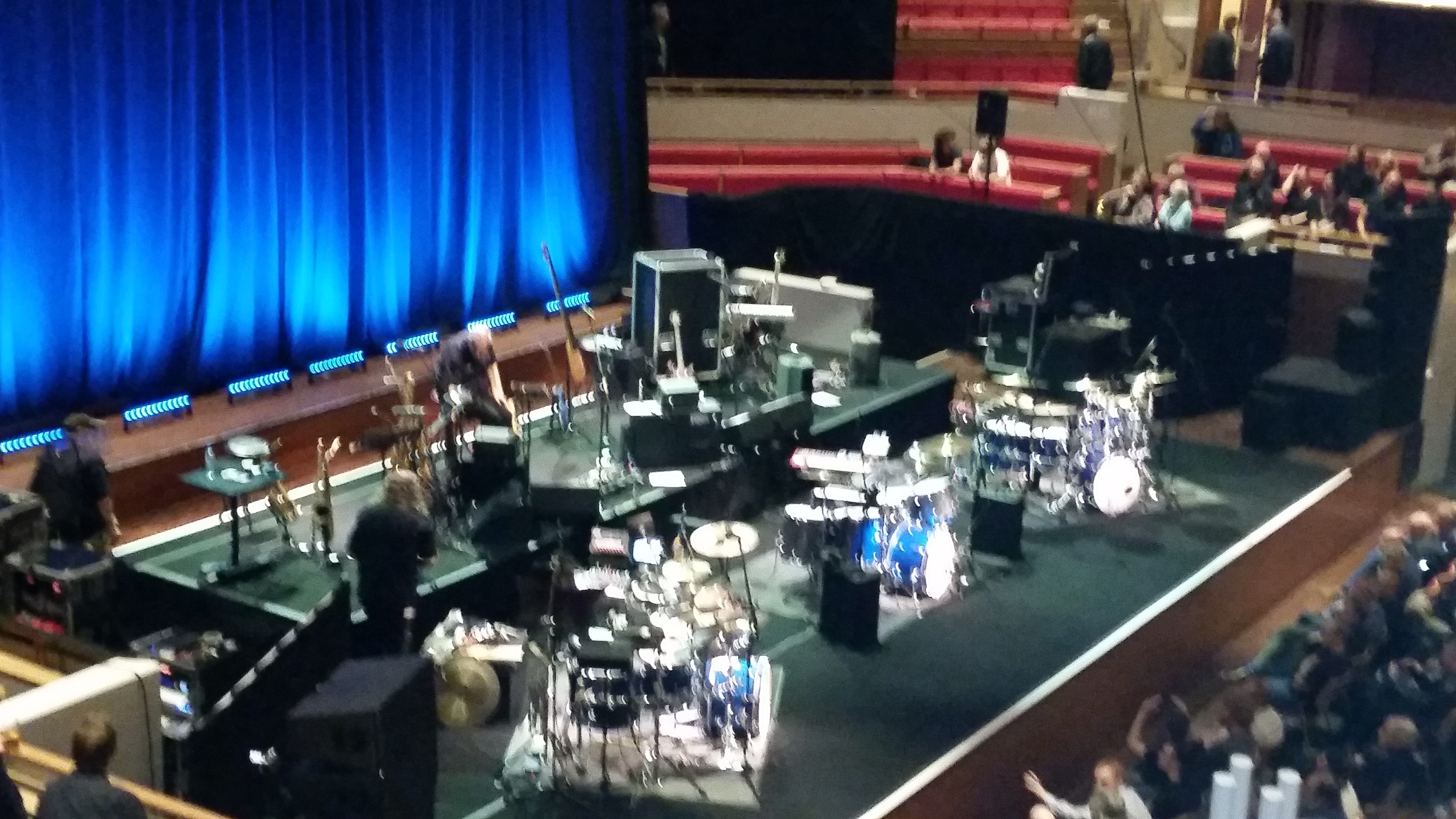
 The front row of the stage on this tour is populated by three drummers. On the left is Pat Mastelotto who has recorded since the early 80s (including as a founding member of Mr. Mister who had two #1s that you might recall). He and Harrison both recorded with Barbara Gaskin in the early 80s. He’s been with Crimson since the mid-90s. Front and centre is one who might be the oddest member, Bill Rieflin. Rieflin is best known in some circles for his participation in a number of 90s era industrial acts including Ministry, Pigface, and KMFDM. However, he was also in The Minus Five with REM’s Peter Buck and took to the drumkit for REM’s last couple of albums/tours. His short-lived Slow Music Project featured Buck and Fripp. And finally, in front of Fripp, Gavin Harrison. At 52, Harrison is the youngest member of the current lineup, and is possibly best known for his membership in Porcupine Tree since 2002. He’s been a professional musician since the early 80s as well and has been in KC since 2008.

Mastelotto is the most physical and almost manic, while Harrison is the most fluid of the drummers. In the opening piece  of the set, Mastelotto took on the crazy percussion work originally done by Jamie Muir. (See this version from 1973 – Muir’s the one with the Van Dyke; Bruford is the one in overalls.) Watching Harrison’s playing is almost like watching water flow. While none of the three is an imprecise player, Rieflin is the most precise in terms of stature and attention. Sitting bolt upright most of the time, he looked almost uncomfortable, but worked with great synergy with the other two drummers and with the rest of the band. The band requested that the audience make no recordings or photos during the show and for the most part this was respected. Alas, the band has been vigilant about taking down videos posted from the tour. Early on, there was a medium-quality clip of 21st Century Schizoid Man that featured Harrison’s gorgeous drum solo. I have high hopes that a professional video or audio recording of this tour will be released sometime in the not too distant future.
Adventures this week included a wander around central Innsbruck, Austria and a visit to Das Geigenbaumuseum (violin museum) in Mittenwald, Germany. 

In Innsbruck, Rachel took note of a plaque that honoured the Allied soldiers who liberated the city and Austria itself. ‘There’s a difference,’ she said, ‘between liberation and defeat.’ In the 30s, two of the main parties vying for control of the Austrian parliament with the Christian Socialists (also known as the Austrofascists) and the Nationial Socialists. When it looked like the National Socialists were going to win 40% of the vote in Innsbruck, Engelbert Dollfuss and the Austrofascists banned state and municipal elections. While Dolfuss was against reunification with Germany as long as the Nazis were in power, he was allied with Mussolini. His successor Kurt Schuschnigg (1934–1938) also maintained an anti-unificaiton stance, while also maintaining Dolfuss’ Catholic corporatist policies. Yes, the Nazis marched on Austria in 1938 and installed a puppet governmnent, but did so to cheering crowds. (Note: while all this info is nicked from Wikipedia, I’m entirely open to especially this last generalisation being shown as incorrect.)

So what are we doing in Germany and Austria? Our plan this year was to holiday in Scotland – enjoy a week of the Fringe and maybe drive about and taste some whisky. When the euro crashed, we decided to stay in the eurozone. We wrapped our holiday around my desire to re-visit Fussen, home of two of Mad King Ludwig’s crazy castles. In advance of that, we’re spending a week in Seefeld, Austria mostly hiking, taking in the spas, and enjoying the fact that mountains exist somewhere (just not in the Netherlands, where we spend most of the year. 

Back to Mittenwald and the museum: Interesting exhibits, but a dearth of postcards. The museum provides a history of the town by way the families who established the town as an instrument-making center in post-Renaissance central Europe as well as by description of the town as a trading centre between Italy and points north.

Rachel wasn’t interested in the violin museum, and I wasn’t keen on the Leutasch Geisterklamm (Leutasch Spirit Gorge) walk that she wanted to do. Metal walkways anchored several hundred feet up the side of a mountain – not so keen, me. I’d done a chair lift the day before and feel I have appeased the deities of my acrophobia for this trip. So I left Rachel at the entrance to her walk and drove the four kilometres to Mittenwald where we planned to meet a few hours later. 
  The museum is on Ballenhausgasse – as far as I can figure, Ballenhaus is the local equivalent of a customs warehouse where trade goods are stored until duties are paid. This makes some sense as the Ballenhaus is about 80 metres down the lane (Gasse) with a plaque on the wall. Both the house in which the museum is located and the balllenhaus are about 300 years old. 

The museum takes up two floors. The upper floor displays are concerned with the actual instruments, their makers, and the various processes used to create them. The ground floor’s are mostly concerned with the town’s and the museum’s history and are punctuated with banners containing text in German and in English. My interest in the entire experience took a dive with one particular text covering the history of museum. It was founded in 1930 and moved to its current location in 1960. Apropos of little, the display indicates that until 1938, Ballenhausgasse had been called Judengasse. Does that mean what I think it means? The word wasn’t translated on the English column of text. Yes. Jews Lane. 

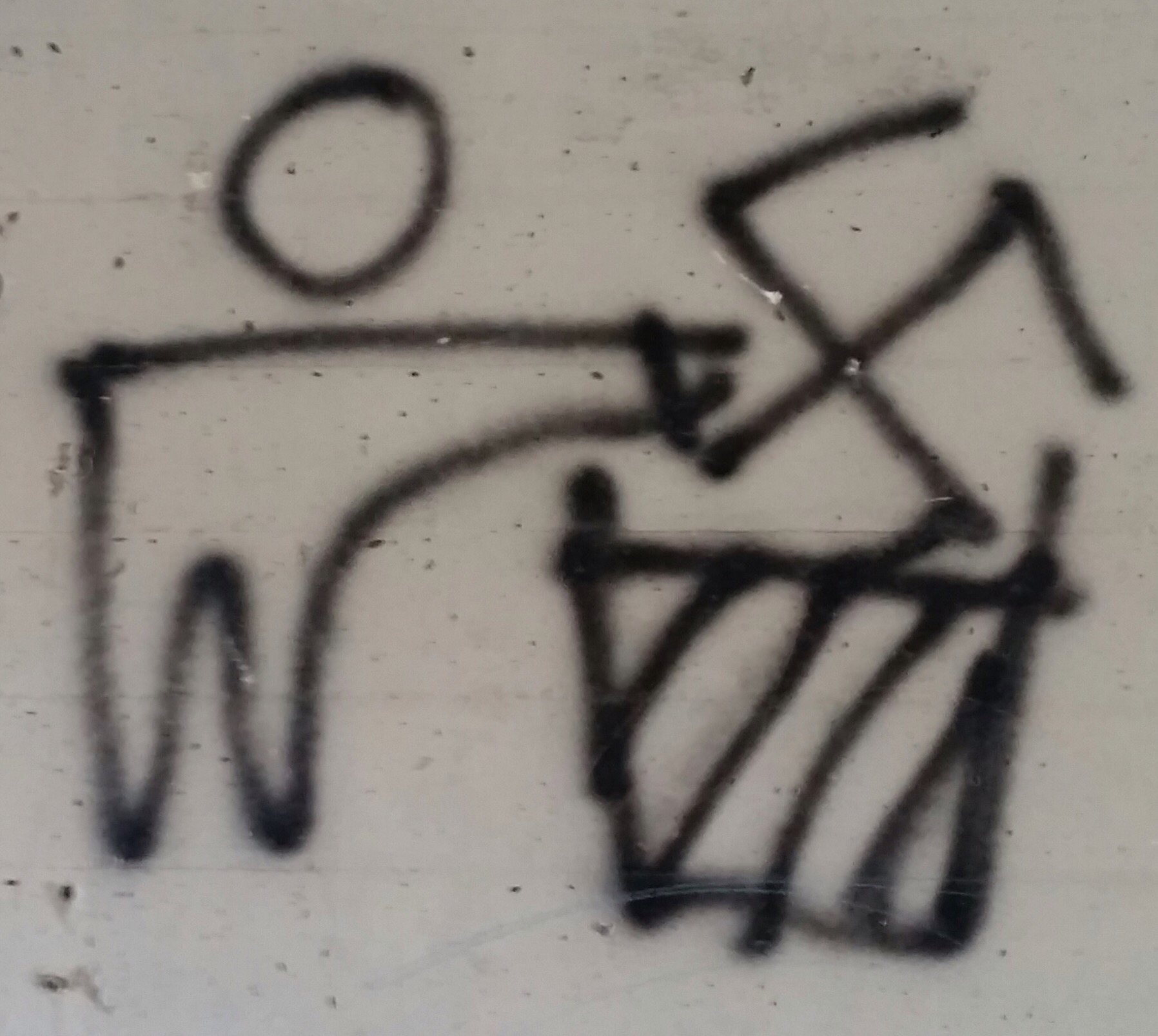
Perhaps no explanation, beyond the year of the change, is really necessary. On the other hand, towns, villages, and cities all over this part of the world had thriving Jewish communities. And then they didn’t. The obliteration of the people in these places is a matter of established record. I don’t believe it’s been long enough to excuse with a mere, ‘Well, naming the street for the building just made more civic sense.’ The grafitti artists of Seefeld, 20 kilometres away know that fascism and its attendant horrors are a continuous threat.

One of my favourite pieces of music is Terry Riley’s In C. While he’s considered one of the godfathers of so-called minimalist music, I’ve a feeling many critics feel Riley has a lot to answer for. I disagree.

On a certain level, it’s an astoundingly simple conceit: several dozen short phrases all in the same key. Any number of musicians can participate and the musicians play the phrases as many times as each one would like, until they all come together at the end. Historically, one musician keeps time by tapping middle C on a piano. In more recent versions, the pulse is often handled electronically, for reasons that aren’t hard to imagine.

RileyI’d heard of it when I was young, but never heard it until the 25th Anniversary concert version was released on CD in 1995. Some versions run as little as 20 minutes. This version, which features 128 musicians including all four members of Kronos Quartet, runs 76 minutes.

Here’s an interesting version that’s about 23 minutes, to give you an idea, though I like the versions that pull the piece in different directions. The recent Africa Express rendition is especially beautiful.

A couple of weeks ago, I thought of a version of In C I’d love to hear, or at least to know that it existed. Near my office is a building site on which there was a pile driver doing its work, gently echoing between nearby buildings. In my imaginary rendition, that pile driver is the pulse. 

Other instruments would include angle grinders, jack hammers, chainsaws, hydraulic routers, lathes, and so forth. As these tend to be one- or two-note instruments, my idea would is that they’d be sampled and run through some kind of digital music software to finally formulate a (pardon me) riveting industrial rendition. In the article Lamb Stew, Will Mackin writes about marking of hazards whilst setting up a camp in Iraq and includes in their number, ‘a two-story-tall barbed-wire tangle in the shape of a swan, which buzzed in the wind like a kazoo.’ That swan of barbed wire is another instrument in my imaginary version of In C

 A more realistic dream of another piece of music I would like to hear is an extended version of XTC’s Senses Working Overtime (1982). In its first three minutes, it builds a crescendo that crashes over the bridge and, were they not a fairly tight quartet, it could have descended into chaos in the last two. On the mix tape of my absolute favourite songs of my adolescence, this might top side A. My dream version builds up more like Ravel’s Bolero, with just one or two instruments – a small drum and a finger-picked mandolin perhaps, building up and adding instruments over ten or twelve verses and five or six choruses before the bridge, and descending back to silence over the two final choruses. I’m undecided as to whether it would have vocals, though I’m tempted by the idea of a sweet alto like Unwoman trading couplets with a growling Scott Walkeresque tenor.

In my last entry in this occasional history, I made the claim that the Yardbirds were the most important band of the 60s in term of their lasting influence through the 70s. Why? The main reason is that three of the four most influential guitarists (and possibly musicians) that came out of rock and roll passed through this band: Jimmy Page went on to form Led Zeppelin; Clapton formed Cream, Blind Faith, and Derek & the Dominoes before embarking on a prolific solo career; and Jeff Beck’s technique has been respected and imitated throughout rock music despite a less prolific/critically lauded output following his collaborations with Rod Stewart. Beck’s 70s power trio Beck, Bogart, and Appice possibly matched Cream for sheer brilliance.

Note: Most influential != greatest

The fourth would be Jimi Hendrix. We’ll get to him in a future post.

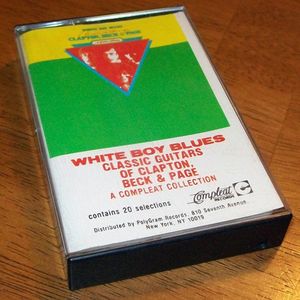
whiteboybluesI also discussed in the last post something of the love these bands had for the old blues artists. What I didn’t know is that many of them played with the blues greats when they toured England. I recently read Ian MacLagan’s autobiography. MacLagan was a keyboardist in a number of bands (including The Small Faces and The Faces (the latter of which featured Rod Stewart on vocals) with whom he’s most closely associated, the Rolling Stones, The New Barbarians, and in the last decade or so, Billy Bragg -Alas he passed away a couple of months ago. MacLagen got his start with an act called The Muleskinners. He discusses first a missed opportunity to back Howlin’ Wolf (the agent told them a date that was a week early and they had to hustle to get enough petrol to get back to London from Sheffield).

“We got another chance to play with The Wolf later though, when Marquee Artists brought him, Sonny Boy Williamson and Little Walter over from the States. As a rule, the Yardbirds backed Sonny Boy, and if they weren’t available, the Authentics got the job. This pecking order for backing blues legends ended when it eventually reached The Muleskinners. We didn’t mind. We were more than honoured to get the chance to meet and play with such fabulous players. Let’s face it, we had a lot to learn and who better to learn it from than the greats?” (All the Rage, Kindle edition, Location 793.) )

Clapton’s path is interesting: He ditched the Yardbirds claiming they were abandoning their blues roots. Fair enough. His tenure in John Mayall’s Bluesbreakers provides much evidence of his dedication to the form. The weird thing is, he took this side trip into psychedelia with Cream. Cream didn’t last long as a band (less than two years, IIRC), but they produced four or five classic albums. Cream’s bassist, Jack Bruce passed last year, though most thought drummer Ginger Baker would be the first to go. As with almost all the songs on Fresh Cream, Bruce supplied lead vocals. Blind Faith only released one, but it’s also six tracks of classics.

Read the rest of this entry »

Blues and early rock and roll records brought over to the UK in late 50s and early 60s inspired young Englishmen no longer required to participate in national service. [http://en.wikipedia.org/wiki/Conscription_in_the_United_Kingdom#After_1945] to form bands.

The Rolling Stones for example: http://www.noisemademedoit.com/wp-content/uploads/2012/07/mick-jagger.jpg

In 1957, Parliament ended mandatory conscription with those born in 1939. The oldest Beatles (Ringo and John) were born in 1940. Two members of the Rolling Stones, Ian Stewart and Bill Wyman (ne Bill Perks) were old
enough to do national service. Wikipedia indicates that Wyman actually did, and took his stage name from a national service colleague. No member of The Who or the Kinks was old enough to do national service.

American soldiers stationed in the UK and Germany brought over the sounds of the blues. But the appreciation of English lads for American blues music spawned a scene that included Page, Clapton, Beck, the Yardbirds, the Rolling Stones, The Who, and (to a lesser extent, oddly enough), the Beatles. Poppier bands, including Gerry and the Pacemakers and Herman’s Hermits piggybacked onto the successes of these English blues-based rock bands in the US.

The paragraphs that follow fall into that well-known category of writing known as Rock Critic Clap Trap. I argue one point here, but it’s all but guaranteed I’ll be arguing another way next time.

My argument is that none of the British Invasion bands had vital and influential careers much into the 70s, save one. The Beatles were over by ’69 and their continued influence was based on their work as the Beatles, not the solo work. The last Stones album worth its salt is ‘72’s Exile on Main Street. Every album that came after is held up to Exile and found wanting.  (Love Emotional Rescue and Some Girls though I do, they don’t hold a candle.) The Who’s vitality carried through to the mid-70s, but with Keith Moon’s death (Not to be removed) in ’78, they were pretty much over (the ’82 stadium tour with the Faces’ Kenney Jones on drums and the Clash opening notwithstanding).

That one would be the Yardbirds.

Like the Stones, they started out as a bunch of white guys doing covers of American blues. Their first three albums, recorded between 64 and 65 leaned heavily on Chess covers. The first album featured guitarist Eric Clapton, a self-professed blues purist. The second and third also had Jeff Beck.

Their first album, 1964’s Five Live Yardbirds consisted entirely of American rock and blues covers including three Bo Diddleys, a Chuck Berry, and a Howlin’ Wolf. A later expanded edition (20 tracks compared the 10 on the original release) had one Keith Relf original, but added more of the blues covers. They handle the covers admirably but what’s most apparent to me is that they’re enjoying making the music. Relf’s original, Honey in Your Hips, relies on that Bo Diddley beat, and I think owes a bit to Carl Perkins (vocally) and Larry Williams (for the choice of lyrical content, such as it is).

In ’65, For Your Love was an amalgamation of single and EP tracks cobbled together for the US market in advance of an American tour.  The title track was the first of three hits for the Yardbirds penned by Graham Gouldman (later of 10cc among other acts). Its poppier leanings led to Clapton decamping for John Mayall’s Bluesbreakers. This album is also the first to feature Jeff Beck.

The following release, 1965’s Having a Rave-Up with the Yardbirds, also cobbled together for the US market contained songs from singles and the earlier albums, and both Beck and Clapton tracks. Two more Gouldman songs, Evil-Hearted You and Heart Full of Soul kept this album on the charts for almost nine months.

But 66’s The Yardbirds (aka Over Under Sideways Down and aka Roger the Engineer) featured all original material by the band. It opens with Lost Woman, a blues –based track that would have been pretty comfortable on the earlier albums. We know we’re heading into new territory with the sitar opening of Over Under Sideways Down. The album combines pop, two blues instrumental from Beck (The Nazz Are Blue, Beck’s Boogie), psychedelia
(Hot House of Omargarashid). The closer, Ever Since the World Began offers something oddly psychedelic before moving into something like folk blues and concludes without resolution which is still weird in pop and not done often, much less on the last track on side 2.

Somewhere between Over Under and the follow-up, Little Games (the final Yardbirds album until a 2003 regrouping), session musician Jimmy Page joined. For a short while, both Beck and Page shared duties in the band. The obligatory club scene in Antonioni’s classic Blow Up features them onstage together performing Stroll On. However, shortly after this, Beck was sacked (according to W’pedia) “both for being a consistent no-show and difficulties caused by his perfectionism and explosive temper” – an odd combination of reasons to be sure.

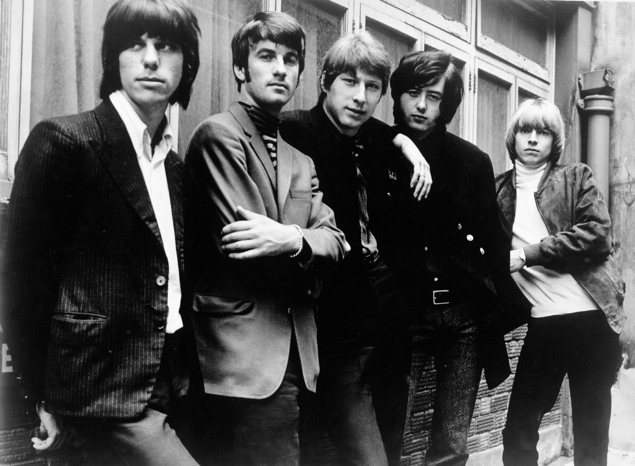
Rock Group "The Yardbirds"The Beck/Page band didn’t record very much else together, and Page, it seems, took a lot of control of the band. Seven of the ten tracks on Little Games bear Page writing or co-writing credits. The album leans towards harder electric blues than Over Under had done. Side one opens with two such hard blues before backing up a step into Page’s White Summer, a song that would be a live staple in Page’s next band. There were other switches in line-up as well – Bassist Paul Samwell Smith left to concentrate on music production and rhythm guitarist Chris Dreja took over the bass. (Among other things, Samwell-Smith was the music director for the movie Harold and Maude.)

There are detours into psychedelia and the pseudo-music hall of Stealing Stealing. Like White Summer, the guitar on Only the Black Rose presages the acoustic sounds Page would later pursue. By ‘68, the remaining original members of the band were keen to do other things. Clapton had gone on to form the psychedelic blues trio Cream with Jack Bruce and Ginger Baker and Relf and McCarty were more interested in folk music – they went on to form Renaissance with Relf’s wife Jane on vocals, though Keith Relf left that band after the first album.

Strangely, the last addition to the band, Page, was left with the contractual obligation to finish the ‘68 tour. Several vocalists were considered including Terry Reid, who had toured the US with Cream. Reid declined, but recommended an unknown named Robert Plant. Plant in turn recommended his friend John Bonham for the drum kit. The New Yardbirds were rounded out by a session bassist named John Paul Jones who had played bass on the Yardbirds single Happenings Ten Years Time Ago. This quartet finished the contractual tour of Scandinavia, but decided a new name was needed (for a variety of reasons) when they settled in to record an album in ’68. The phrase Lead Zeppelin was lifted from a comment Keith Moon had made regarding the group who recorded the song Beck’s Bolero (Beck/Jones/Hopkins/Moon/Page). A change of spelling set the stage for the band that would rule rock and roll for the next twelve years. (Sorry about that – more clap trap.)