Archives for category: UK

In my last entry in this occasional history, I made the claim that the Yardbirds were the most important band of the 60s in term of their lasting influence through the 70s. Why? The main reason is that three of the four most influential guitarists (and possibly musicians) that came out of rock and roll passed through this band: Jimmy Page went on to form Led Zeppelin; Clapton formed Cream, Blind Faith, and Derek & the Dominoes before embarking on a prolific solo career; and Jeff Beck’s technique has been respected and imitated throughout rock music despite a less prolific/critically lauded output following his collaborations with Rod Stewart. Beck’s 70s power trio Beck, Bogart, and Appice possibly matched Cream for sheer brilliance.

Note: Most influential != greatest

The fourth would be Jimi Hendrix. We’ll get to him in a future post.
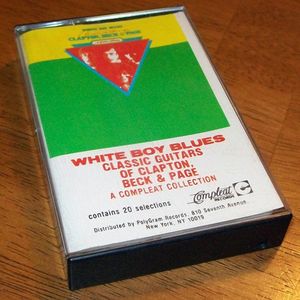
whiteboybluesI also discussed in the last post something of the love these bands had for the old blues artists. What I didn’t know is that many of them played with the blues greats when they toured England. I recently read Ian MacLagan’s autobiography. MacLagan was a keyboardist in a number of bands (including The Small Faces and The Faces (the latter of which featured Rod Stewart on vocals) with whom he’s most closely associated, the Rolling Stones, The New Barbarians, and in the last decade or so, Billy Bragg -Alas he passed away a couple of months ago. MacLagen got his start with an act called The Muleskinners. He discusses first a missed opportunity to back Howlin’ Wolf (the agent told them a date that was a week early and they had to hustle to get enough petrol to get back to London from Sheffield).

“We got another chance to play with The Wolf later though, when Marquee Artists brought him, Sonny Boy Williamson and Little Walter over from the States. As a rule, the Yardbirds backed Sonny Boy, and if they weren’t available, the Authentics got the job. This pecking order for backing blues legends ended when it eventually reached The Muleskinners. We didn’t mind. We were more than honoured to get the chance to meet and play with such fabulous players. Let’s face it, we had a lot to learn and who better to learn it from than the greats?” (All the Rage, Kindle edition, Location 793.) )

Clapton’s path is interesting: He ditched the Yardbirds claiming they were abandoning their blues roots. Fair enough. His tenure in John Mayall’s Bluesbreakers provides much evidence of his dedication to the form. The weird thing is, he took this side trip into psychedelia with Cream. Cream didn’t last long as a band (less than two years, IIRC), but they produced four or five classic albums. Cream’s bassist, Jack Bruce passed last year, though most thought drummer Ginger Baker would be the first to go. As with almost all the songs on Fresh Cream, Bruce supplied lead vocals. Blind Faith only released one, but it’s also six tracks of classics.
Read the rest of this entry »

Some friends are having a pretty vehement discussion over on Facebook about Charlie Hebdo, the Je Suis Charlie movement (if one can call it that), and the nature of privilege when it comes to old straight white males viciously lampooning minority populations.

Je suis CharlieNone in these discussions felt that violence was justified, but a couple have pointed to what might be called the bullying of the Charlie Hebdo cartoons. It’s more nuanced than taht, to be sure, but they acknowledge the power differential between, for example, the French muslim population and the white majority. The host of this discussion included this in her analysis of the situation:

Imagine you have a neighbour, living next door. Imagine that every morning, you leave for work at the same time. Your neighbour greets you, compliments you on your outfit, says something nice about the weather and wishes you a good day. Assuming that these sentiments are genuine, and that your neighbour is not simultaneously inflicting wild all-night parties or boundary disputes on you, then I would assume that you are living at peace with your neighbour.

But what if, every morning, you and your neighbour leave for work, and instead of compliments, your neighbour always finds something about you to laugh at. Maybe you choose not to wear makeup, or your job requires you to wear jeans rather than a suit, or your uniform is specified by your employer. Every morning, your neighbour points and laughs, because he or she fundamentally does not understand your situation, finds it threatening, and tries to rid you of your perceived power and difference by poking fun.

Are you living at peace with this neighbour?

So in light of this discussion, I asked my French muslim colleague, a young woman from northwestern France, “What do you make of the Charlie Hebdo situation?” to which she asked me to be more specific. “What do you think of the Je Suis Charlie response to the massacre of the Charlie Hebdo journalists?” Her reply was essentially one of support for Charlie Hebdo – “Listen, they attack everyone. No group escapes them – Catholics, Jews, liberals, conservatives.”
It may make a difference that she’s university educated, middle class, and liberal. I’m not sure.

Mehdi Hasan, a journalist for the Al Jazeera and the Huffington Post, on the other hand, shares
As a Muslim, I’m Fed Up With the Hypocrisy of the Free Speech Fundamentalists, in which he takes on the politicians, journalists, and celebrities embracing Je Suis Charlie. Money quote:

Lampooning racism by reproducing brazenly racist imagery is a pretty dubious satirical tactic. Also, as the former Charlie Hebdo journalist Olivier Cyran argued in 2013, an “Islamophobic neurosis gradually took over” the magazine after 9/11, which then effectively endorsed attacks on “members of a minority religion with no influence in the corridors of power”.

Good point, that. This discussion will continue, but I had a few points to add.

Police cautions to be scrapped in England and Walesn

The warnings in question are those sometimes offered to minor offenders rather than charging them with an offence.

The reasoning offered is that ‘victims shouldn’t ‘feel that criminals are walking away scot-free.’

I definitely appreciate that the recommended new system includes making apologies and restitution to victims. This is a step in the right direction. As is scrapping verbal warnings for violent offences including rape. That the current justice system hasn’t taken rape seriously enough to prosecute consistently in Britain makes my skin crawl.

Much to be said on that.

What worries me, however, is a trend towards giving victims a say in how punishment is administered. I think it undermines a push towards a system of properly blind justice. Because the systems in (to be fair) most of the world don’t actually work as they should, we might think that giving the victim a say in punishment will make it more fair, more just. The fact is, however, that someone who has been victimised is likely to want something harsher for the perpetrator than the crime might merit.

Less probable is the likelihood that victims might face retribution from the perpetrator’s circle if they are seen as having had a hand in a criminal’s sentencing.

To be honest, the article seems to be a bit of a hodgepodge. The new program is a pilot to see how better to prosecute low-level crime. This I can support, I think. The last line of the piece is possibly the kicker: 230,000 cautions were issued in England and Wales last year. How does that compare to the number of crimes reported? To the number of not guilty verdicts in crimes that went to trial? To the number of wrongful accusations?How about the speed of trials? Recidivism rates of first-time offenders over time. One of the only quotes in the article comes from the shadow justice secretary. This is an issue because it’s an extended attack on prosecution policy under the Cameron government. This doesn’t help the reader understand the new programme and the writer doesn’t do anything to challenge the bias of the speaker who is trying only to score points against the Cameron government.

Another story in the news this weekend is about a push to get photos of politicians wearing t-shirts that read ‘This is what a feminist looks like’. In theory, I think this idea is fine. Cameron would’t put one on and took flack for it. This, I think is less fine. Don’t give a non-feminist a hard time for not putting on a shirt that publicises a campaign in which he obviously and honestly doesn’t believe. Give him flack for not doing things in his rather huge power that don’t benefit women. The t-shirt campaign is throwing soft balls to politicians who aren’t doing the work of making people’s lives better. It’s easy for Clegg and Miliband to jump on the bandwagon, because women, theoretically are a more important part of their constituencies than they are of Cameron’s.

When we’re after some substantive discussion on the subject, who jumps in but News Corp. No love lost between me and the Murdoch empire, but it’s not as though they work to make the discourse clearer and policy differences more stark. No. What does the Daily Mail report, as reported on the BBC this morning?

The Mail reports that the shirts (which retail for 45 quid, profits donated to charity) are made by women paid 62p per hour in Maurtius sweat shops. The charity in question, The Fawcett Society claims they were promised the shirts were made ‘ethically in the UK’. Halfway down the BBC article a Fawcett rep is quoted as saying “At this stage, we require evidence to back up the claims being made by a journalist at the Mail on Sunday.” The Beeb might have started their article on the matter the same way. When reading anything published in a News Corp paper (or spouted on their TV stations – Fox News to start with), your first question should always be, ‘In what way is this person lying to me?’

(I wish I had jotted down a recent Wall Street Journal piece that Rachel Maddow quoted. She goes all out against Fox News several times a week, but just because the WSJ used to be respectable doesn’t mean it still is since its takeover by News Corp a few years ago.)

…that even after the system metes out something that gets called justice, they still have the short end of things. Kat Lister’s got a really good write-up on HuffPo about how male perpetrators of violence are remembered and their victims forgotten, or worse.

Her Name Was Reeva Steenkamp

The meat of the story isn’t so much that Simon Jenkins couldn’t be bothered to name Reeva Steenkamp in his Guardian defense of Oscar Pistorius’ very short jail sentence. It’s that in article after article, we read of how the perpetrators have their lives ruined. Lister cites another Guardian article, this one claiming rapist “Ched Evans will never really be free”. Evans’ 22 year old victim has had to move and change her name after her name was made public on the internet. Lister writes, “If we’re discussing freedom, one might consider lifelong anonymity and online abuse the real prison here. So why is her freedom less of a consideration than his?”

Damn good question.

We have a lot of work to do.

It would do me good to read enough about Dutch politics to get as riled up as I do when a member of the current government of the UK gets me going.

Today the BBC reports on Environment Secretary Liz Truss and her words about the ugliness of solar energy farms and plans to cut government subsidies for them. (Oddly, later in the article, its said that the subsidies come from EU funds. Might be different subsidies.) Now, I make no secret of the fact that I’m an old-school lefty and think a whole lotta solar power beats the pants off a whole lot more fracking, coal-burning, or oil-drilling. Solar and wind farms are beautiful to me like Monet’s water lilies. That said, Truss makes an argument that the UK should be using its land for agriculture.

“We import two-thirds of our apples, and using more land for solar panels makes it harder to improve that,” she said. It’s a false argument on a number of counts, the most obvious being that the UK started buying cheaper apples from France in the 1970s, decimating (in the modern, not the Roman sense) UK apple cultivation. (I learned this on a BBC show about English apples a couple of years ago. This article cites EEC membership and the low yield of traditional English apple trees as a reason.) Another count? How about including, I don’t know, the secretary for agriculture, maybe, in discussions about agriculture. Ag might actually be in her remit, but I’ve got a feeling it’s not, given that it takes a rather long time to grow an apple orchard. Finally, it might just be poor reportage (wouldn’t be the first time), but when one is suggesting serious change to energy policy, aesthetic considerations should be rather lower on the priorities list.

The article goes on to cite a representative of the Solar Trade Association who says that 95% of solar farm land can still be used for farming and encouraging biodiversity.

To be blunt, I call bullshit on Liz Truss. Renewable energy isn’t good for the bottom lines of her supporters, so she undermines it. Happens all over. Given her title, you might think it otherwise, but in the Bizarro world of the current cabinet, it’s perfectly logical. Think of the recent Education secretary Michael Gove giving tax money to creationist schools and Health secretary Jeremy Hunt’s belief in homeopathy.