
So the BBC posted an article last week about music industry profits and greed with the title Music industry makes $26bn but wants streaming prices to rise.
Of course the music industry wants streaming prices to rise. They’re in the business of maximizing shareholder value by hook or by crook. Raising streaming prices, of course, doesn’t mean they’ll pay the artists any more, but the coffers of those at the top will be enriched. More.
The BBC article has an interesting table of the top ten earning artists worldwide last year, with the assumption that these are the artists who make up the bulk of that 26 billion in the headline. Four are from Southeast Asia, four from North America (including Taylor Swift at the top of that list), and two from the UK. The table doesn’t include their earnings.
Who the artists are and where they’re from aren’t very useful metrics for understanding the position or state of the music industry as a whole.
To get closer, sure I want to know what those artists earned, but the music industry is massive. What the artists earned might be peanuts compared to what the labels earned on the backs of their work. Also, the music industry is comprised not just of artists and labels, but of touring and ticketing organizations (dominated by LiveNation and Ticketmaster), distributors, agents, and all the people and infrastructure around secondary markets such as television and film.
Once upon a time, there were about a dozen major labels. When I was in high school, the shop I worked in sold almost entirely 45s. (When, you ask? I worked at American Pie on Venice Blvd from 1983-1985. I don’t know when it eventually closed.) The business model included a storefront, but was mostly dedicated to wholesaling. The records were organized by label and then by record number. It was MCA, Polgygram, WEA (Warner / Elektra / Atlantic), CBS (which was Columbia and Epic, later subsumed by Sony), Capitol/EMI, A&M/RCA and a small scad of independents. We dealt entirely in reissues of the oldies and the current top 40. Even those six conglomerates have shrunk to a smaller number. The thing is, at the time, they were all doing well as separate entities.
Fast forward 20 years for an anecdote about the times they’d fallen on. In 2005, EMI (and whatever agglomeration it then belonged to) pinned all of its financials on one release. One. The release in question was Coldplay’s X&Y. Great pop album. It did really well, but EMI, once home of the Beatles, Duran Duran, Kate Bush, and Pink Floyd, sold its recorded music division to Universal Music Group. UMG, by my own finger in the wind estimate, accounts for about 40% of the recorded music business. A list of UMG’s labels is here.
(A side note regarding EMI’s accounting: In 1985, coming off the massive success of Hounds of Love and The Whole Story, someone at EMI dropped the ball and forgot to renew Kate Bush’s contract. Her next albums came out on Columbia.)
My perspective is (as is usual) different than that of the BBC. The larger metrics I’d like to have at my disposal are those associated with the independent music sector. While I enjoy a lot of pop, I was amused by the fact that I could hum exactly one song by one artist on that list up top. (To get Shape of You by Ed Sheeran out of my head, a friend sent me a link to BTS’s Butter which is a straight-up banger, no doubt about it.) As noted, I don’t listen to a lot of pop, but the artists I do spend a lot of time on have carved out their own interesting niches.
The folks I discuss here are ones I’ve long been fans of – Bandcamp and other such platforms support thousands and thousands of artists, many of whom are more or less successful on their own terms as well.
Michael Gira finances the recording of Swans albums by releasing limited edition CDs of demos and live material. The fan base snaps them up and the band goes into the studio every few years. Gira owns his own label, Young God Records and has been known to manage his own distribution by hand (though they inked a distribution deal with Mute for their last album, 2019’s leaving meaning which I think is still in effect for the upcoming release, The Beggar).
Laura Kidd, whose first several albums came out under the moniker She Makes War, and now records as Penfriend. Her most recent release, One In A Thousand came out under the name Obey Robots with Rat from Ned’s Atomic Dustbin), runs her own label, My Big Sister Recordings. She does all her own marketing and promotion and her last two albums have debuted in high positions on the UK’s independent music charts. She’s been doing things her way for almost 15 years without major label support. Check out the Obey Robots track Elephant.
Godspeed You! Black Emperor is another band who run their own label (Constellation Recordings). I’m well aware that music that falls under the rubric of post-rock aren’t going to be raking in the big bucks. Even as a fan, I was unaware of their last album, G_d’s Pee AT STATE’S END!, until about a month after its April, 2021 release. They’ve been recording on and off since 1997’s F♯ A♯ ∞ (there was a break between 2002 and 2012 since which time they’ve released four insanely good albums) entirely on their own terms. When they tour, they sell out decent-sized venues without a lot of promotion. Given the chance to get their music to an even wider audience, the band holds to its principles. They allowed Danny Boyle to use a track in his film 28 Days Later but wouldn’t allow its inclusion on the soundtrack. My guess about this is that they stick to a singular artistic vision. Their albums, much like their concerts, are best experienced as full pieces, but there’s probably more to it. GY!BE are also one of those bands that allows taping of their shows and there’s an extensive list of concerts posted at archive.org. Here’s Job’s Lament from a gig last year in Minneapolis.
Unwoman, who creates cello-based music which is ostensibly pop, reaches her fans through Patreon and judicious use of social media. I’m not sure how I would have found her had she not been part of group I belonged to who met regularly at a pub on Haight street back in the 90s. She releases independently, using Bandcamp as a distribution tool (as do most of the artists I mention here). One way she keeps her fans engaged is by polling them to choose which covers she’ll record. The music itself tends to emotionally bare electronic/goth sounds (which is really reductive, I know), but she’s an experienced enough musician to have fun with songs like Everything Is Awesome.
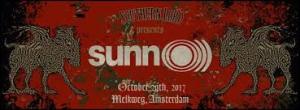
SUNN O))) is another one of those acts who make difficult music for the benefit of an ever-expanding audience. Two guys who drive their sound with feedback-heavy riffs, performing in hooded robes behind waves of fog to keep their appearance hidden. Like the other artists I talk about here, they’ve been in this game for a long time. Evolving from acts such as Burning Witch, Goatsnake and Engine Kid (by way of Thorr’s Hammer), they created Southern Lord Records to release their own material and since 1998 of cultivated quite a roster. (Around 70 acts call or have called Southern Lord home.) Interestingly, Southern Lord’s distribution is handled by UMG. SUNN O))) also post audience recordings of their shows to Bandcamp. As was said about the Grateful Dead back in the day, the albums are fine, but the best way to experience them is live. That said, the in-studio set they recorded for the BBC, Metta, Benevolence, isn’t a bad intro.
To bring the thing full circle, the acts I mention here have been actively engaging the music industry for anywhere from 15 to over 40 years. (Swans evolved out of the same early 80s No Wave scene that gave the world Sonic Youth.) Many learned the hard way or took the hard way to satisfy the drive to create unapologetic music. Taylor Swift, according to Wikipedia, wanted to be making pop from a very young age and with the help of parents who were in a position to do so, she worked within the industry to develop her skills and create music that would sell. And sell it she has, by the truckload.
I know I’m not Swift’s target audience, but I recall my boss at American Pie telling me that the ability to write pop music that sells is a skill. I believe we were talking about Van (“The Hustle”) McCoy who had just passed away, but the same holds true of many such artists, Swift among them. She took her early successes and has continued to build on them. While she’s not my cup of tea, I can’t help but appreciate that. There are, however, massive communities of creators of hundreds of different musical styles who I’d like to see accounted for in these discussions.

